
Net MRR churn: what net revenue churn is and how to calculate it
By Tiago Costa · Updated on July 9, 2026

Definition
What Net MRR churn is
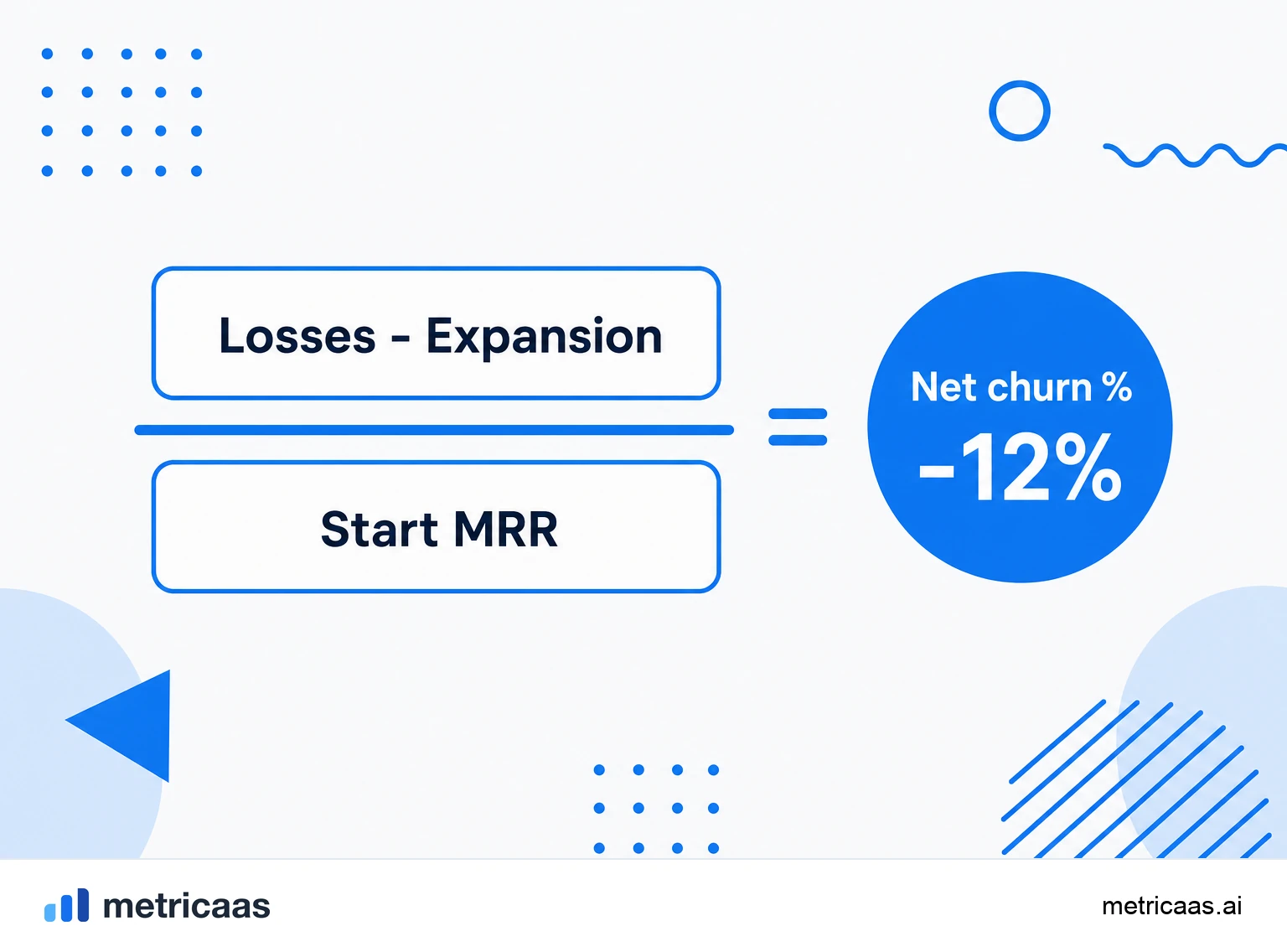
Net MRR churn measures how much recurring revenue the existing base lost, after subtracting the revenue that same base gained through expansion. It starts from the period losses (cancellations and downgrades) and subtracts the expansion generated by those who stayed, showing the net result of movement inside the book.
It is a revenue metric, not a customer metric: a single large customer who cancels weighs more than many small ones. And it always looks at the base that existed at the start of the period. New customer revenue enters elsewhere in the funnel and is never used to mask the churn of the base.
How to calculate Net MRR churn
The formula starts from the MRR at the beginning of the period and looks only at what happened to those customers:
- Net MRR churn = (churned MRR + contraction MRR - expansion MRR) / starting MRR.
- Churned MRR: revenue lost to subscriptions that ended.
- Contraction MRR: revenue lost to downgrades and plan reductions.
- Expansion MRR: revenue gained from upgrades and upsells of existing customers.
Example: a base of $100k in MRR loses $8k to cancellations and $2k to downgrades, but gains $6k of expansion. Net MRR churn is (8 + 2 - 6) / 100, or 4%. Note that the expansion does not come from new sales, but from the existing book.
Net MRR churn and Gross MRR churn
The difference between the two is one line of the formula: expansion. Gross MRR churn sums only the losses (cancellations plus contraction) over starting MRR and ignores any gain. Net subtracts expansion from those losses.
- Gross MRR churn: only what left. It never goes negative and measures the raw size of the leak.
- Net MRR churn: the balance after expansion. It can go negative and measures the net result of the base.
Looking at both together is what gives the full diagnosis. A low net with a high gross is a warning sign: the base loses a lot of revenue and it only stays hidden because expansion is holding up the result. If expansion slows, the leak appears.
Negative churn: when Net MRR churn drops below zero
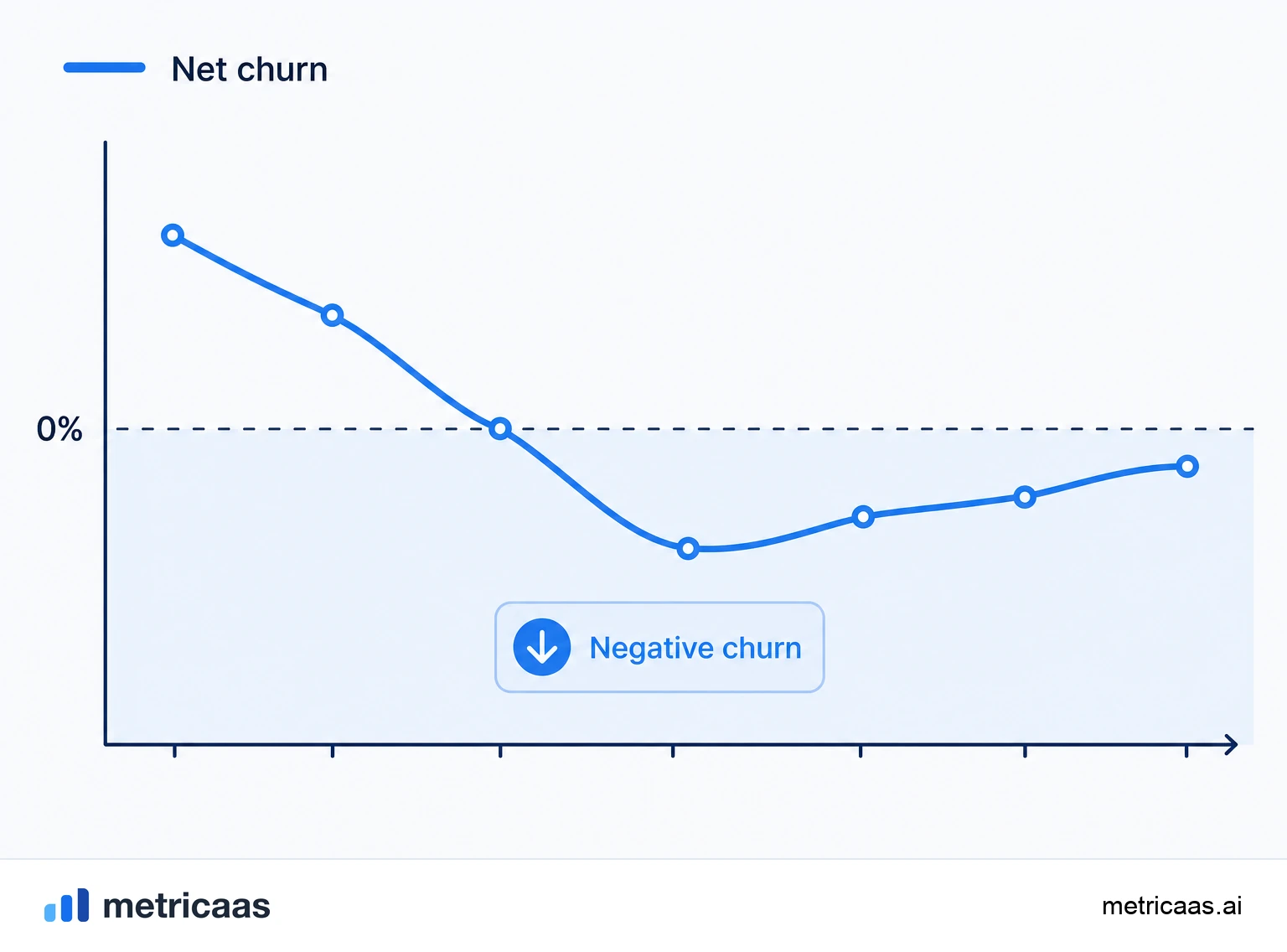
Because net subtracts expansion, it can go negative. This happens when the revenue gained from upgrades in the base outweighs everything lost to cancellations and downgrades. It is the coveted negative churn: the existing base grows on its own, even without a single new customer coming in.
This is the most efficient growth engine a SaaS can have, because it does not depend on spending more on acquisition. It tends to come from models that grow with customer usage, charging per seat, per consumption or by value tiers, where customer success naturally pushes the bill up over time.
Net MRR churn and NRR: two sides of the same coin
Net MRR churn is the mirror of Net Revenue Retention (NRR). One metric is practically the complement of the other: if the base retains 110% of revenue, net MRR churn is about -10%. If it retains 95%, net churn is about 5%.
- NRR above 100% equals negative net MRR churn.
- NRR below 100% equals positive net MRR churn.
They are the same reality told from two angles: NRR tells the glass half full (how much revenue stayed), net churn tells the glass half empty (how much net leaked out). Product and retention teams tend to track both in parallel, because each one highlights a different reading of the same movement.
Why Net MRR churn matters
Net MRR churn is one of the best thermometers of the long-term health of a SaaS, because it sums up in a single number whether the base grows or shrinks on its own. The lower it is (and better still, negative), the more the business sustains itself without relying only on selling to new customers.
The best subscription businesses run on negative net churn. The private SaaS survey by KeyBanc Capital Markets shows net revenue retention above 100%, which is the same as saying negative net MRR churn at the median. And, as SaaS Capital points out, retention tends to be stronger in larger contracts and weaker in self-serve, so the healthy benchmark depends on the audience the company serves.
Frequently asked questions
It is net MRR churn: the period losses (cancellations plus downgrades) minus the base expansion, over starting MRR. It shows the net result of the existing book.
Net MRR churn = (churned MRR + contraction MRR - expansion MRR) / starting MRR. If a $100k base loses $10k and gains $6k of expansion, net churn is 4%.
There are three movements: cancellation churn (subscriptions that end), contraction churn (downgrades) and expansion, which counts in your favor. Losses minus expansion give net MRR churn.
Gross MRR churn sums only the losses and never goes negative. Net subtracts expansion from the losses and can go negative when the base grows more than it shrinks.
It is when net MRR churn drops below zero, because base expansion outweighs cancellations and downgrades. The revenue of the book grows on its own, without new customers.
The lower the better, and ideally negative. The best SaaS companies run on negative net churn, the mirror of NRR above 100%, but the benchmark varies with customer size.
Related concepts

Gross MRR churn
Gross MRR churn is the percentage of recurring MRR a company loses to cancellations and downgrades in a period, with no expansion subtracted. It is always positive and never exceeds 100%, because it measures only the revenue leaking out of the existing base. It works as the worst case of retention: how much the company would lose if it recovered nothing in return.

Net Revenue Retention (NRR)
Net Revenue Retention (NRR) measures how much of the recurring revenue from your current base you keep over time, already accounting for upgrades and expansion, minus downgrades and cancellations. Above 100% it means the base grows on its own, even without new customers.

Expansion
Expansion (expansion revenue or expansion MRR) is the additional recurring revenue that comes from customers you already have, without relying on new sales. It comes from upsell (higher plan), cross-sell (more products), add-ons and usage growth. It is the force that pushes net revenue retention above 100% and makes the base grow on its own.