
Runway: qué es el cash runway y cómo calcularlo
Por Tiago Costa · Actualizado el 9 de julio de 2026

Definición
El runway (cash runway) es cuántos meses la caja de una empresa sostiene la operación al ritmo de burn actual.
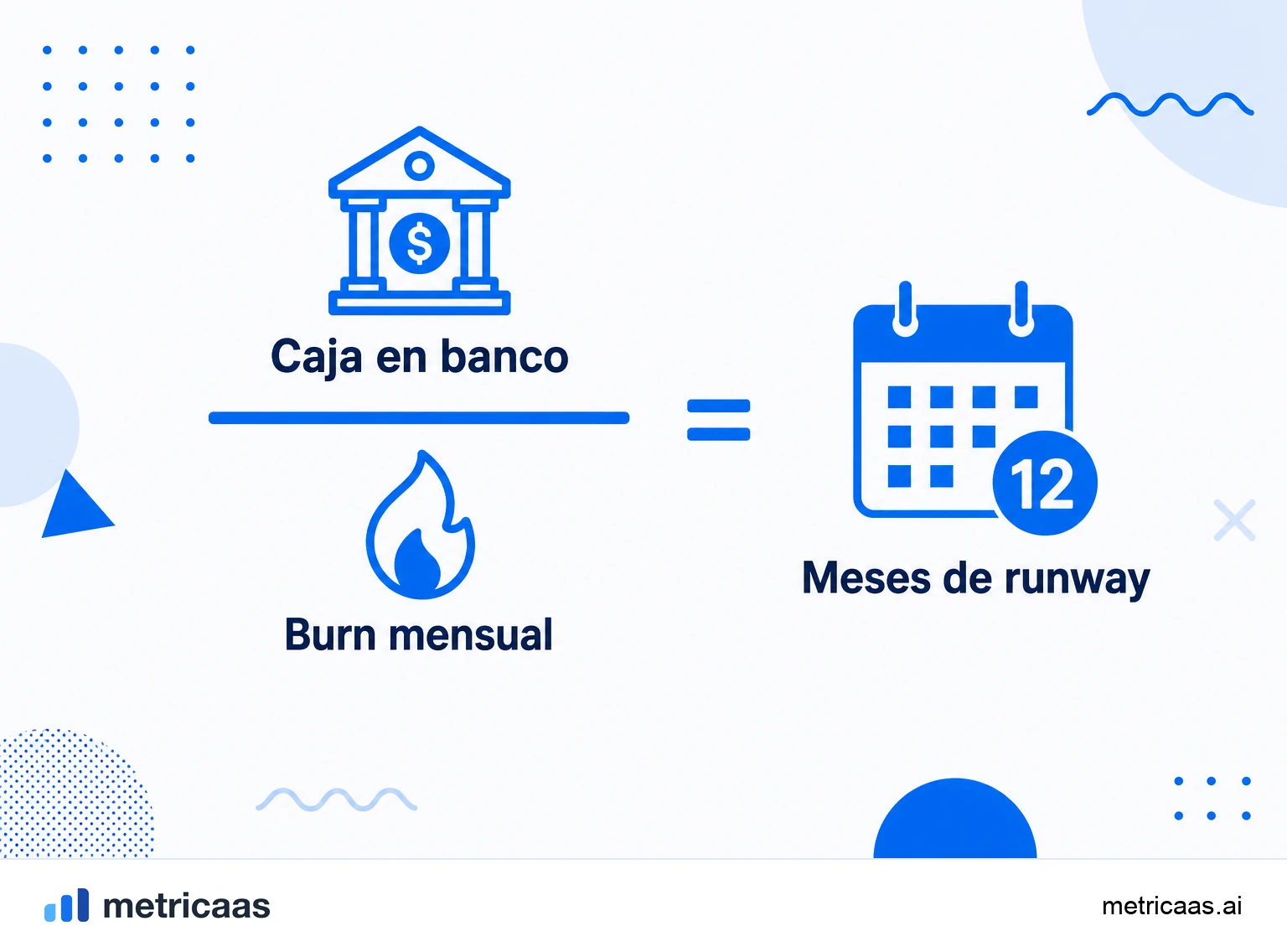
- Runway = caja disponible / burn neto mensual.
- Define la urgencia de captar dinero o llegar al break-even.
- La referencia común es mantener de 18 a 24 meses de caja.
Qué es el runway
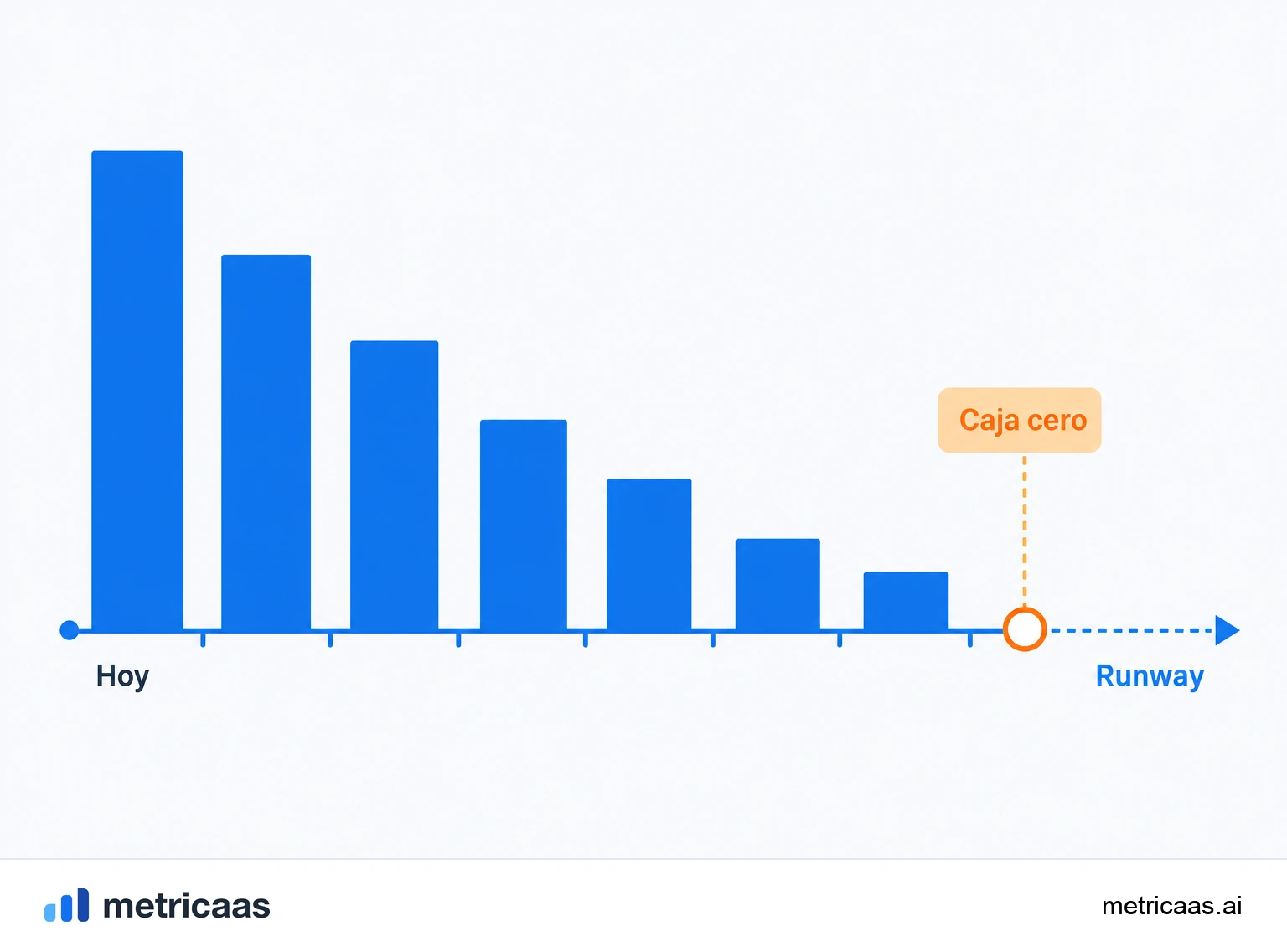
El runway (o cash runway) mide cuántos meses puede seguir operando una empresa con la caja que tiene, manteniendo su ritmo actual de quema de caja. Es el respiro financiero del negocio: cuánto tiempo queda antes de que se acabe el dinero si nada cambia.
Resume, en un solo número, la relación entre el dinero en caja y la velocidad con que sale. Por eso va de la mano del flujo de caja y del burn: la caja es el punto de partida, el burn es la velocidad, y el runway es el tiempo que resulta de esa división.
Cómo calcular el runway
La cuenta es directa: divide la caja disponible entre el burn neto mensual.
- Runway = caja disponible / burn neto mensual.
- La caja disponible es el saldo sumado de cuentas e inversiones de liquidez inmediata.
- El burn rate neto es cuánto sale de más de lo que entra cada mes, ya descontados los ingresos recurrentes.
Ejemplo: con US$1,2 millones en caja y un burn neto de US$100 mil al mes, el runway es de 12 meses. Si la empresa gasta más de lo que ingresa, el resultado sale en meses; si ya es superavitaria, el burn neto es negativo y el runway deja de ser una cuenta regresiva.
Runway y burn rate: la diferencia
Burn rate y runway son dos caras de la misma moneda. El burn rate mide la velocidad (cuánta caja desaparece al mes); el runway traduce esa velocidad en tiempo (cuántos meses dura todavía el tanque).
Conviene separar dos tipos de burn. El burn bruto es todo el dinero que sale en el mes. El burn neto descuenta los ingresos que entran, y es el que debe ir en la fórmula del runway. Confundir los dos acorta o alarga el runway de forma artificial: usar el burn bruto ignora los ingresos que ya cubren parte de los costos.
La regla de 18 a 24 meses
En el mundo de las startups, una regla práctica se volvió casi consenso: levantar caja suficiente para 18 a 24 meses de runway. La lógica es dejar tiempo de sobra para alcanzar los hitos que justifican la próxima ronda, con un margen para imprevistos y para un proceso de captación que suele tardar meses.
Un runway corto quita poder de negociación: quien tiene que cerrar ronda en 60 días acepta peores condiciones. Inversores como Bessemer suelen mirar no solo cuánto tiempo compra la caja, sino con qué eficiencia se convierte en crecimiento. Un runway cómodo compra lo más valioso para una startup: tiempo para acertar.
Cómo extender el runway
Solo hay tres palancas para alargar el runway, y conviene mover las tres a la vez:
- Recortar el burn: reducir costos fijos, renegociar contratos y frenar contrataciones que no mueven ingresos.
- Crecer los ingresos: acelerar el MRR y reducir el churn baja el burn neto sin recortar nada.
- Mejorar la economía unitaria: bajar el CAC y aumentar los ingresos por cliente hace que cada dólar invertido rinda más caja.
El número que amarra todo esto es el burn multiple: cuánta caja quema la empresa para generar cada dólar de nuevo ingreso recurrente. Cuanto menor, más eficiente es el crecimiento y más lejos llega la misma caja.
Por qué el runway guía las decisiones
El runway es el reloj que marca el ritmo de una startup. Define la urgencia de captar dinero o de llegar al break-even, e influye en casi toda decisión grande: cuándo contratar, cuánto invertir en adquisición, cuándo pisar el acelerador o el freno.
Los operadores siguen el runway de cerca porque separa a la empresa que controla su propio destino de la que corre detrás del dinero. Las encuestas de SaaS privado, como la de KeyBanc Capital Markets, monitorean el burn y la eficiencia de capital justamente porque, al final, el respiro de caja es lo que decide quién tiene tiempo para convertir un buen producto en un buen negocio.
Preguntas frecuentes
El runway es el número de meses que una startup puede operar con su caja actual al ritmo de burn corriente. Runway = caja / burn neto mensual.
Dividiendo la caja disponible entre el burn neto mensual. Con US$1,2 millones en caja y US$100 mil de burn al mes, el runway es de 12 meses.
La referencia común es mantener de 18 a 24 meses de caja, margen suficiente para alcanzar los próximos hitos y negociar la captación sin presión.
El burn rate mide la velocidad con que sale la caja al mes; el runway traduce esa velocidad en tiempo, cuántos meses dura todavía la caja.
Recortando el burn, acelerando los ingresos recurrentes y mejorando la economía unitaria (CAC e ingresos por cliente). Las tres palancas actúan sobre la misma caja.
Sin nueva caja ni ingresos suficientes, la empresa se queda sin dinero para operar. Por eso los operadores actúan mucho antes del cero, captando o recortando burn con meses de antelación.
Conceptos relacionados

Burn rate
El burn rate es la velocidad con que una empresa consume su caja, casi siempre medida por mes. El burn bruto suma todo el dinero que sale; el burn neto resta los ingresos que entran y muestra lo que de verdad quema la caja. Es el denominador del runway: cuanto menor sea el burn, más tiempo tiene la startup antes de necesitar nuevo capital.

Flujo de caja
El flujo de caja es la diferencia entre el dinero que entra y el que sale de una empresa en un período. Se divide en operativo, de inversión y de financiación, y no es lo mismo que el beneficio: la caja es lo que de verdad pasa por la cuenta. En SaaS, cobrar los contratos anuales por adelantado adelanta caja frente al ingreso reconocido.

MRR
El MRR (Monthly Recurring Revenue) son los ingresos recurrentes mensuales de un SaaS: la suma de todas las suscripciones activas normalizada a un mes. Es la métrica central de un negocio por suscripción porque muestra, de forma previsible, cuánto factura la empresa de manera recurrente cada mes, sin contar cobros puntuales.