
Voluntary churn: what it is, causes and how to reduce it
By Tiago Costa · Updated on July 9, 2026

Definition
Voluntary churn happens when a customer actively decides to cancel the subscription, a choice tied to perceived value.
- It is the opposite of involuntary churn, caused by payment failures.
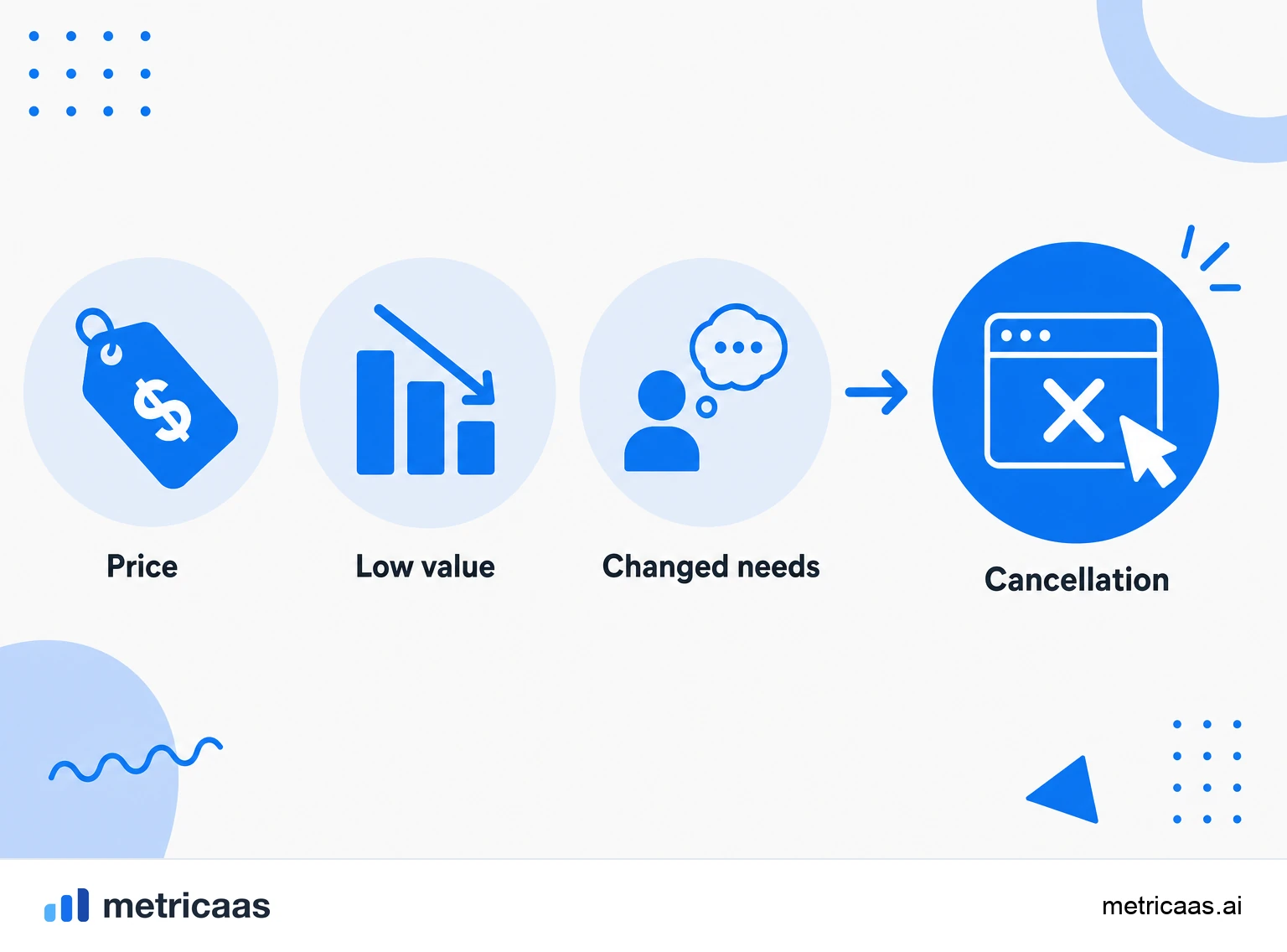
- Main causes: price, low perceived value, a change of need and competition.
- You fight it with activation, delivered value and product, not with billing.
What voluntary churn is
Voluntary churn happens when a customer actively decides to cancel the subscription. It is a conscious choice: they weigh what they pay against what they get and conclude it is no longer worth continuing. Unlike a technical failure, here there is a clear intent to leave.
This is the type of churn that says the most about your product, because it reflects the customer perception of value. When someone cancels of their own accord, they are telling you that the price, the result delivered or the fit with their need stopped making sense.
Voluntary churn vs. involuntary churn
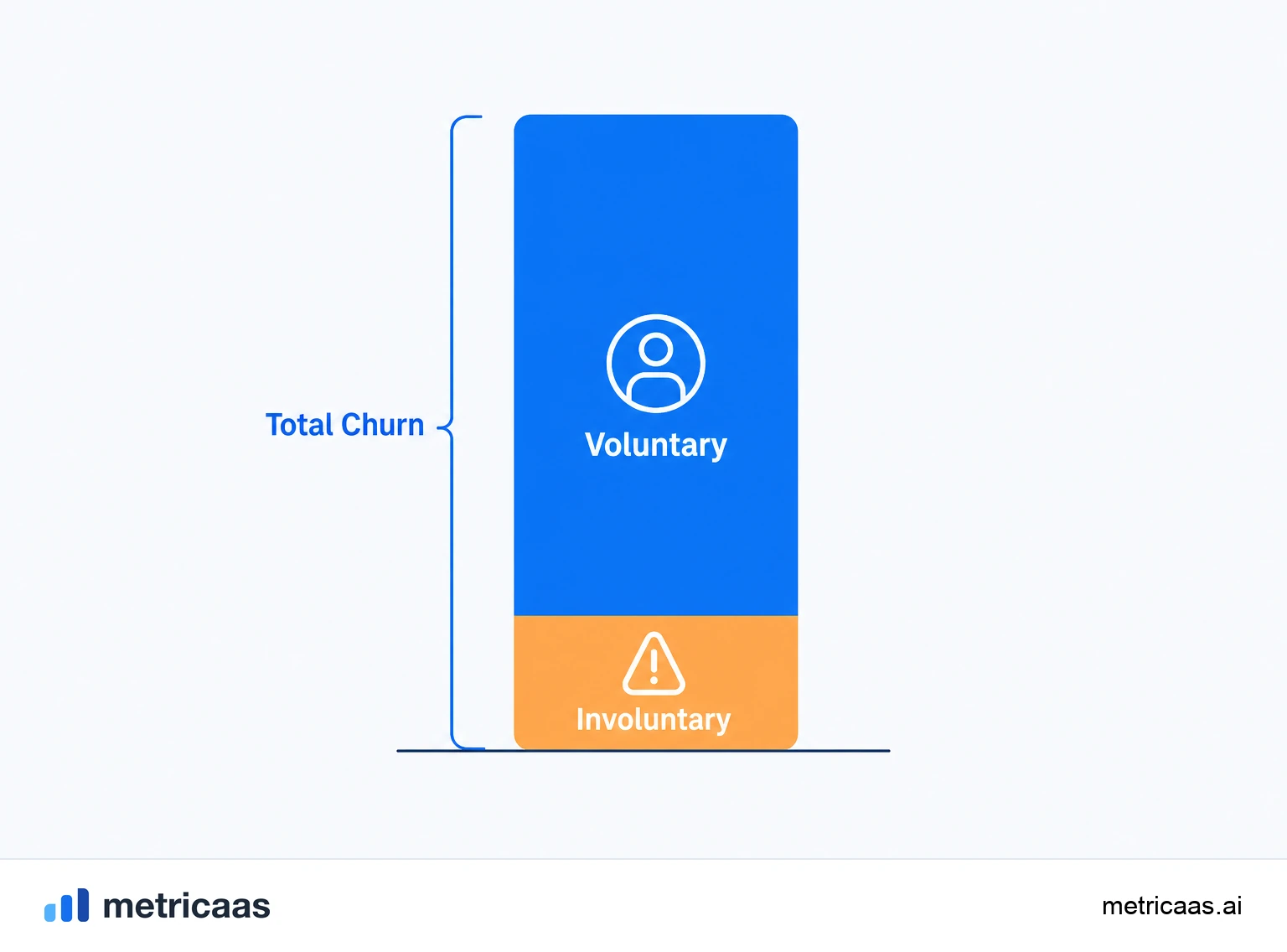
The difference is intent. In voluntary churn, the customer wants to leave. In involuntary churn, they lose access without meaning to, almost always through a payment failure: an expired card, a hit credit limit or a charge declined by the bank.
- Voluntary: an active decision. You address it with product, value and experience.
- Involuntary: an operational failure. You address it with billing, dunning and retries.
Separating the two is essential because the fixes are opposite. Treating voluntary churn with more payment emails does not work, and recovering a declined card will not convince someone who has already decided to go.
Main causes of voluntary churn
Voluntary churn rarely has a single cause. It usually adds up signals that accumulate until the customer decides to cancel. The most common are:
- Lack of perceived value: the customer sees no clear return on what they pay.
- Weak activation: they never reached the moment where the product delivers its promised result.
- Price: the cost no longer fits the budget or does not track the value delivered.
- Change of need: the problem the product solved is no longer there.
- Competition: another option started serving them better.
Notice that almost all of them point inward, to the product and the experience, not to the finance side. That is why voluntary churn is, at its core, a mirror of value delivery.
How to reduce voluntary churn
Because voluntary churn is born from perceived value, you fight it with product and customer success, not with billing. The most effective moves act before the cancellation:
- Activation: get the customer to a first quick result during onboarding.
- Recurring value: show, continuously, the return they get.
- Risk signals: monitor drops in usage and engagement to act before the decision.
- Expansion: customers who grow inside the product rarely leave. Expansion and retention go together.
A good rule is to look at the customers who stay and understand what kept them. Reproducing that path for new customers reduces churn at the source, long before any attempt to save someone who has already asked to cancel.
Voluntary churn, retention and NRR
Voluntary churn is the main enemy of revenue retention. Every customer who leaves of their own accord shrinks the recurring base and pressures NRR, which measures how much revenue you keep and expand within the existing base.
Retention is the cheapest growth engine there is. SaaS Capital shows that retention is one of the factors that most separate SaaS companies that grow from those that stall, with the best keeping most of their revenue year after year. And the private SaaS survey by KeyBanc Capital Markets points to net revenue retention above 100% at the healthiest companies, something only possible when voluntary churn is under control and expansion outpaces losses.
How to measure and predict voluntary churn
Measuring voluntary churn starts with separating it from involuntary churn and choosing the right lens. Gross churn looks only at lost revenue; net churn nets out expansion; and logo churn counts departing customers, not dollars. For voluntary churn, the most revealing move is to cross these views with the reason stated at cancellation.
Predicting is the next step. Cancellation surveys, usage drops and low-engagement signals form the basis of any churn prediction. The goal is not just to count who left, but to spot who is about to leave while there is still time to act. Well-measured voluntary churn becomes a map of where the product needs to improve.
Frequently asked questions
It is when a customer actively decides to cancel the subscription, driven by price, low perceived value, a change of need or competition. It is a conscious choice, not a technical failure.
Intent. In voluntary churn the customer wants to leave; in involuntary churn they lose access without meaning to, almost always through a payment failure like an expired card or a declined charge.
The main split is between voluntary and involuntary churn. From there, you measure it by revenue (gross and net churn) or by customers (logo churn), depending on the question you want to answer.
It depends on the segment and on whether it is monthly or annual. What matters more is separating voluntary from involuntary churn: a rate driven by fixable payment failures is very different from customers actively leaving over value.
With activation, recurring value and monitoring of risk signals, not with billing. Getting the customer to a first quick result and showing continuous return prevents cancellation at the source.
Related concepts

Churn
Churn is the loss of customers or revenue in a period. In a SaaS, it measures how many customers cancel (customer churn) or how much recurring revenue disappears (revenue churn). It is the metric that reveals whether growth is sustainable: the higher the churn, the more new sales you need just to avoid shrinking.
Involuntary churn
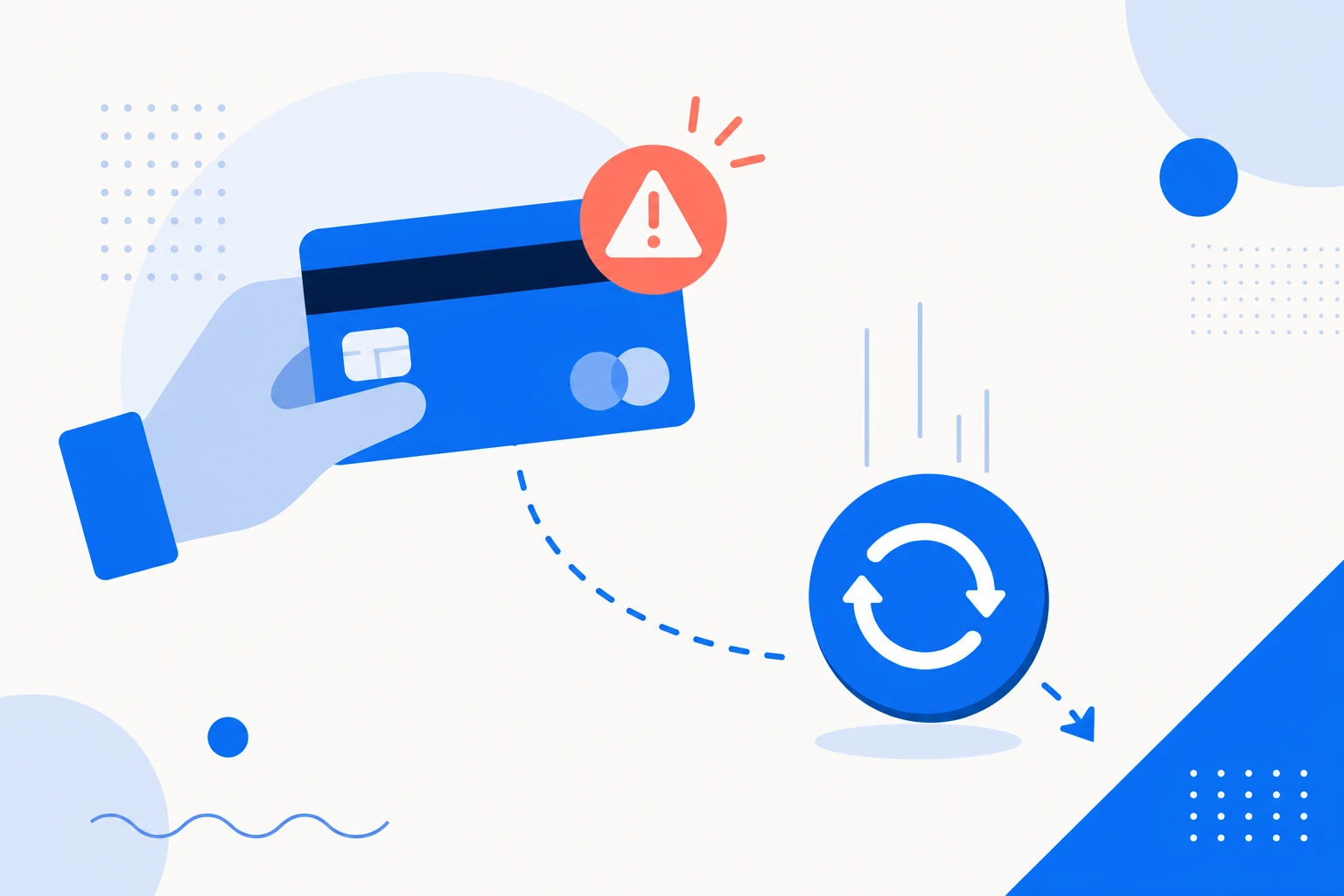
Involuntary churn is the cancellation of a subscription caused by a payment failure, such as a declined, expired or maxed-out card, rather than a customer decision. It usually accounts for a meaningful slice of total churn and is highly recoverable with dunning, that is, payment retries and requests to update the card.

Net Revenue Retention (NRR)
Net Revenue Retention (NRR) measures how much of the recurring revenue from your current base you keep over time, already accounting for upgrades and expansion, minus downgrades and cancellations. Above 100% it means the base grows on its own, even without new customers.