
Runway: what cash runway is and how to calculate it
By Tiago Costa · Updated on July 9, 2026

Definition
Runway (cash runway) is how many months a company's cash sustains operations at the current burn rate.
- Runway = available cash / monthly net burn.
- It sets the urgency to raise money or reach break-even.
- The common benchmark is to keep 18 to 24 months of cash.
What runway is
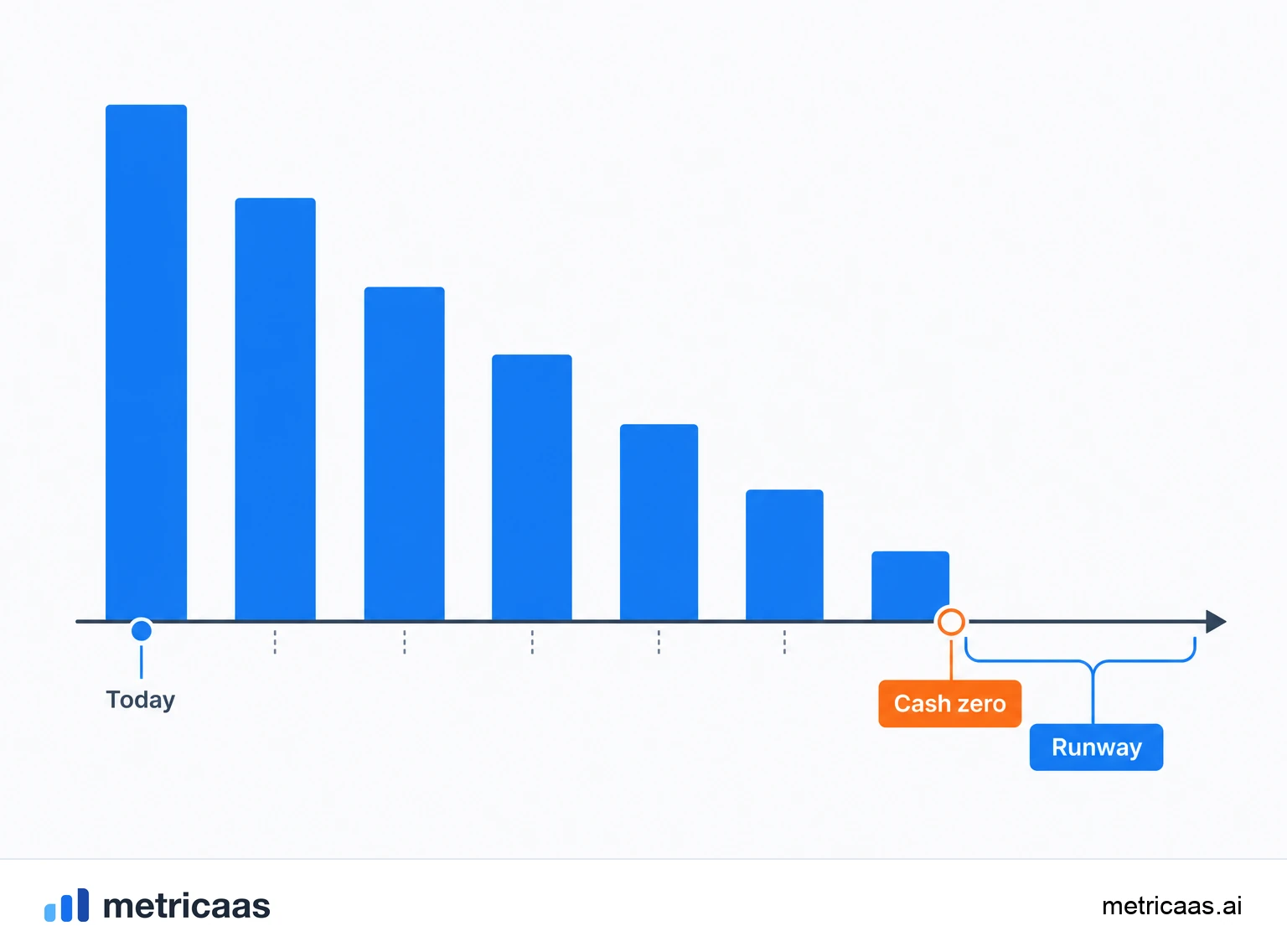
Runway (or cash runway) measures how many months a company can keep operating on the cash it has, at its current rate of cash burn. It is the financial breathing room of the business: how much time is left before the money runs out if nothing changes.
It sums up, in a single number, the relationship between cash in the bank and how fast it leaves. That is why it sits right next to cash flow and burn: cash is the starting point, burn is the speed, and runway is the time that results from that division.
How to calculate runway
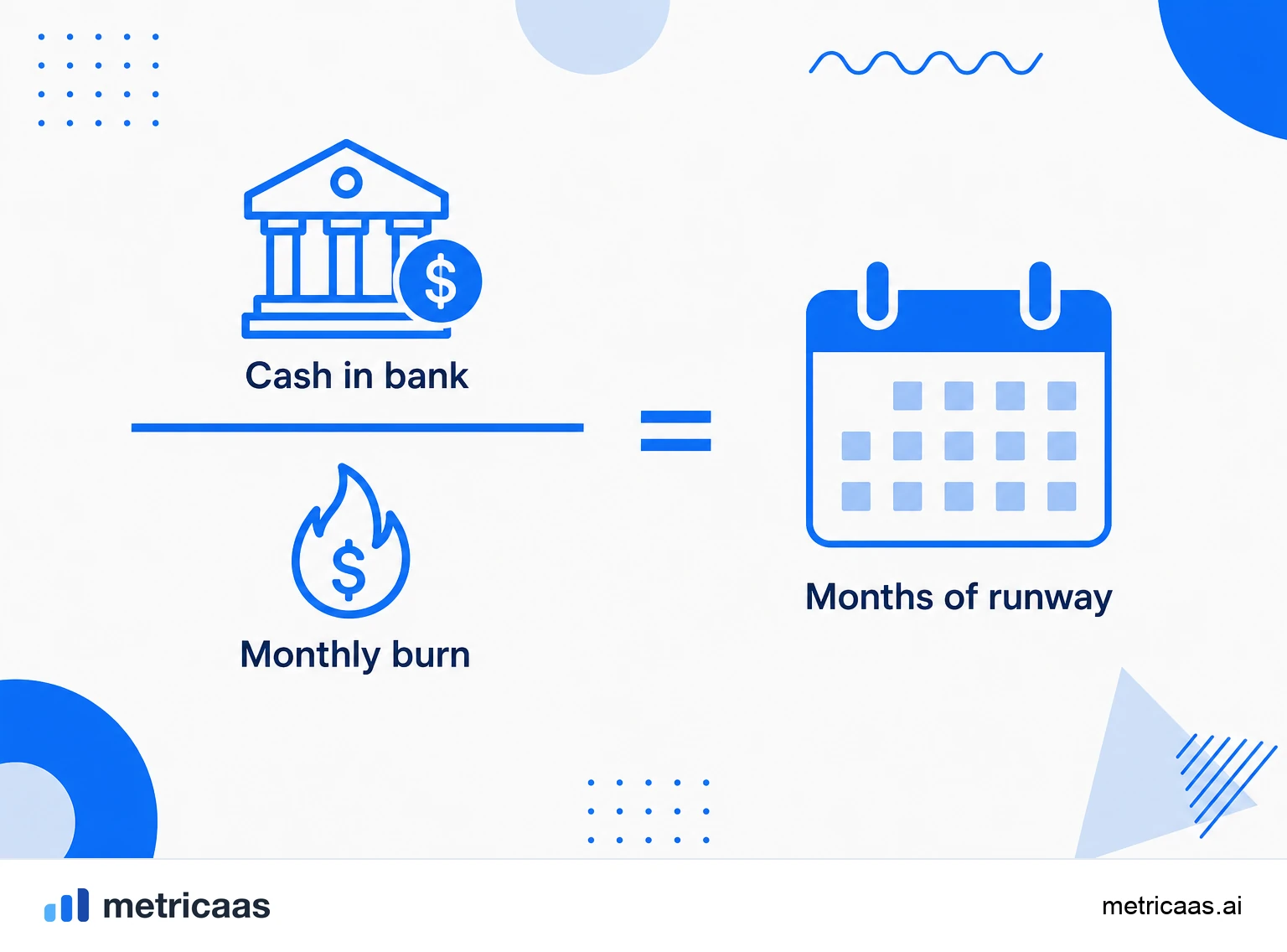
The math is direct: divide available cash by the monthly net burn.
- Runway = available cash / monthly net burn.
- Available cash is the combined balance of accounts and immediately liquid investments.
- Net burn rate is how much more leaves than comes in each month, after subtracting recurring revenue.
Example: with $1.2 million in cash and a net burn of $100k per month, runway is 12 months. If the company spends more than it earns, the result comes out in months; if it is already profitable, net burn is negative and runway stops being a countdown.
Runway and burn rate: the difference
Burn rate and runway are two sides of the same coin. Burn rate measures speed (how much cash disappears per month); runway translates that speed into time (how many months the tank still lasts).
It is worth separating two kinds of burn. Gross burn is all the money that leaves in the month. Net burn subtracts the revenue that comes in, and it is the one that belongs in the runway formula. Confusing the two shortens or stretches runway artificially: using gross burn ignores the revenue that already covers part of the costs.
The 18 to 24 month rule
In the startup world, one rule of thumb has become near consensus: raise enough cash for 18 to 24 months of runway. The logic is to leave plenty of time to hit the milestones that justify the next round, with a margin for surprises and for a fundraising process that usually takes months.
A short runway drains negotiating power: a founder who has to close a round in 60 days accepts worse terms. Investors like Bessemer tend to look not only at how much time the cash buys, but at how efficiently it is converted into growth. A comfortable runway buys a startup the most valuable thing it can have: time to get it right.
How to extend runway
There are only three levers to lengthen runway, and it is worth pulling all three at once:
- Cut the burn: reduce fixed costs, renegotiate contracts and pause hiring that does not move revenue.
- Grow revenue: accelerating MRR and reducing churn lowers net burn without cutting anything.
- Improve unit economics: lowering CAC and raising revenue per customer makes every dollar invested return more cash.
The number that ties this together is the burn multiple: how much cash the company burns to generate each dollar of new recurring revenue. The lower it is, the more efficient the growth and the further the same cash carries.
Why runway guides decisions
Runway is the clock that sets a startup's pace. It defines the urgency to raise money or to reach break-even, and it shapes almost every big decision: when to hire, how much to invest in acquisition, when to hit the gas or the brakes.
Operators watch runway closely because it separates the company that controls its own destiny from the one chasing money. Private SaaS surveys, such as the one by KeyBanc Capital Markets, track burn and capital efficiency precisely because, in the end, cash runway is what decides who has the time to turn a good product into a good business.
Frequently asked questions
Cash runway is the number of months a startup can operate on its current cash at the current burn rate. Runway = cash / monthly net burn.
By dividing available cash by the monthly net burn. With $1.2 million in cash and $100k of burn per month, runway is 12 months.
The common benchmark is to keep 18 to 24 months of cash, enough room to hit the next milestones and negotiate a raise without pressure.
Burn rate measures how fast cash leaves per month; runway translates that speed into time, how many months the cash still lasts.
By cutting burn, accelerating recurring revenue and improving unit economics (CAC and revenue per customer). All three act on the same cash.
Without new cash or enough revenue, the company runs out of money to operate. That is why operators act well before zero, raising or cutting burn months in advance.
Related concepts

Burn rate
Burn rate is the speed at which a company consumes its cash, almost always measured per month. Gross burn adds up all the money going out; net burn subtracts the revenue coming in and shows what actually drains the cash. It is the denominator of runway: the lower the burn, the more time a startup has before it needs new capital.

Cash flow
Cash flow is the difference between the money coming into a company and the money going out over a period. It splits into operating, investing and financing, and it is not profit: cash is what actually moves through the account. In SaaS, billing annual contracts upfront brings cash forward relative to recognized revenue.

MRR
MRR (Monthly Recurring Revenue) is the monthly recurring revenue of a SaaS: the sum of all active subscriptions normalized to a month. It is the core metric of a subscription business because it shows, predictably, how much the company earns on a recurring basis each month, without counting one-off charges.