
Reverse trial: what it is, how it works and when to use it
By Tiago Costa · Updated on July 9, 2026
Definition
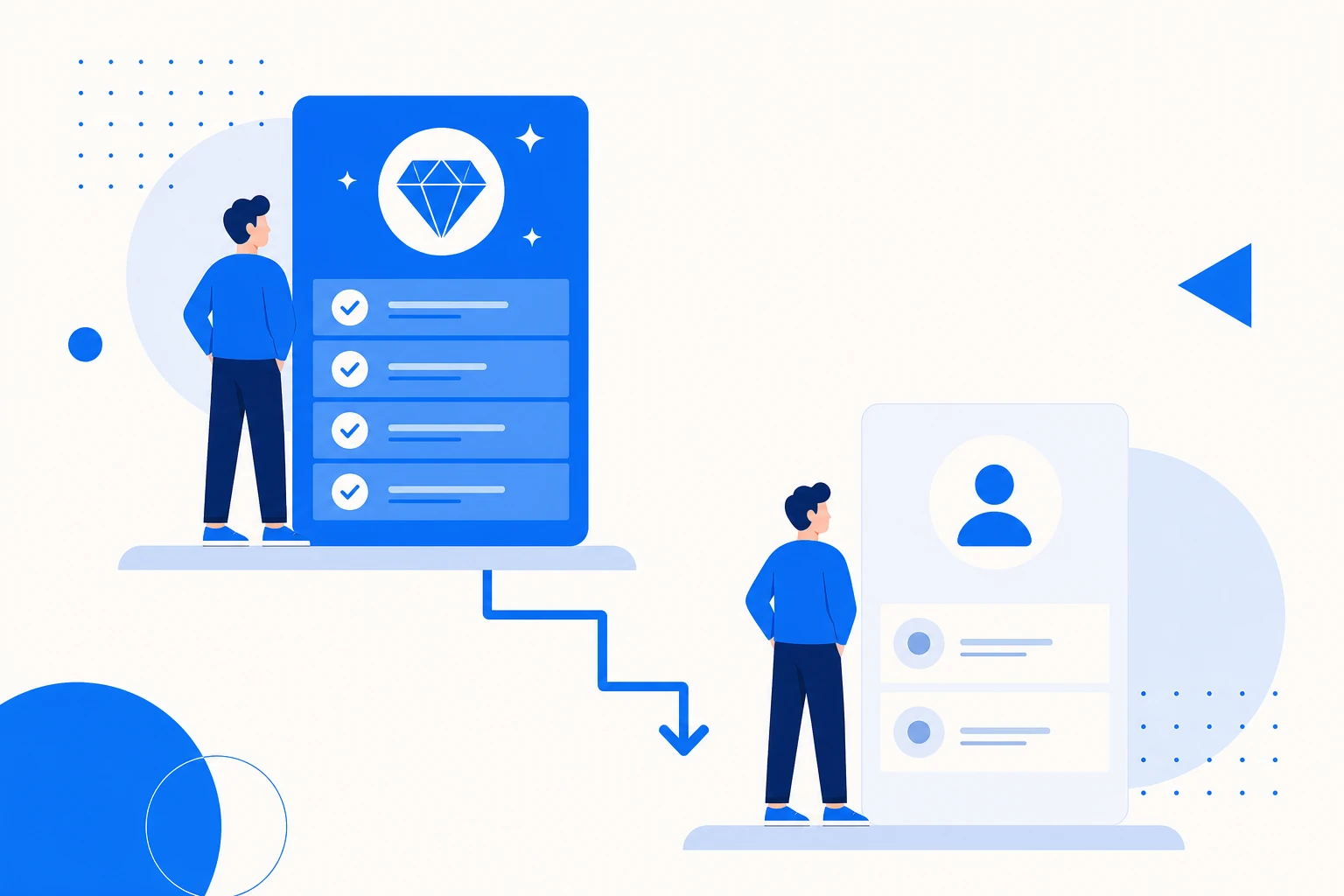
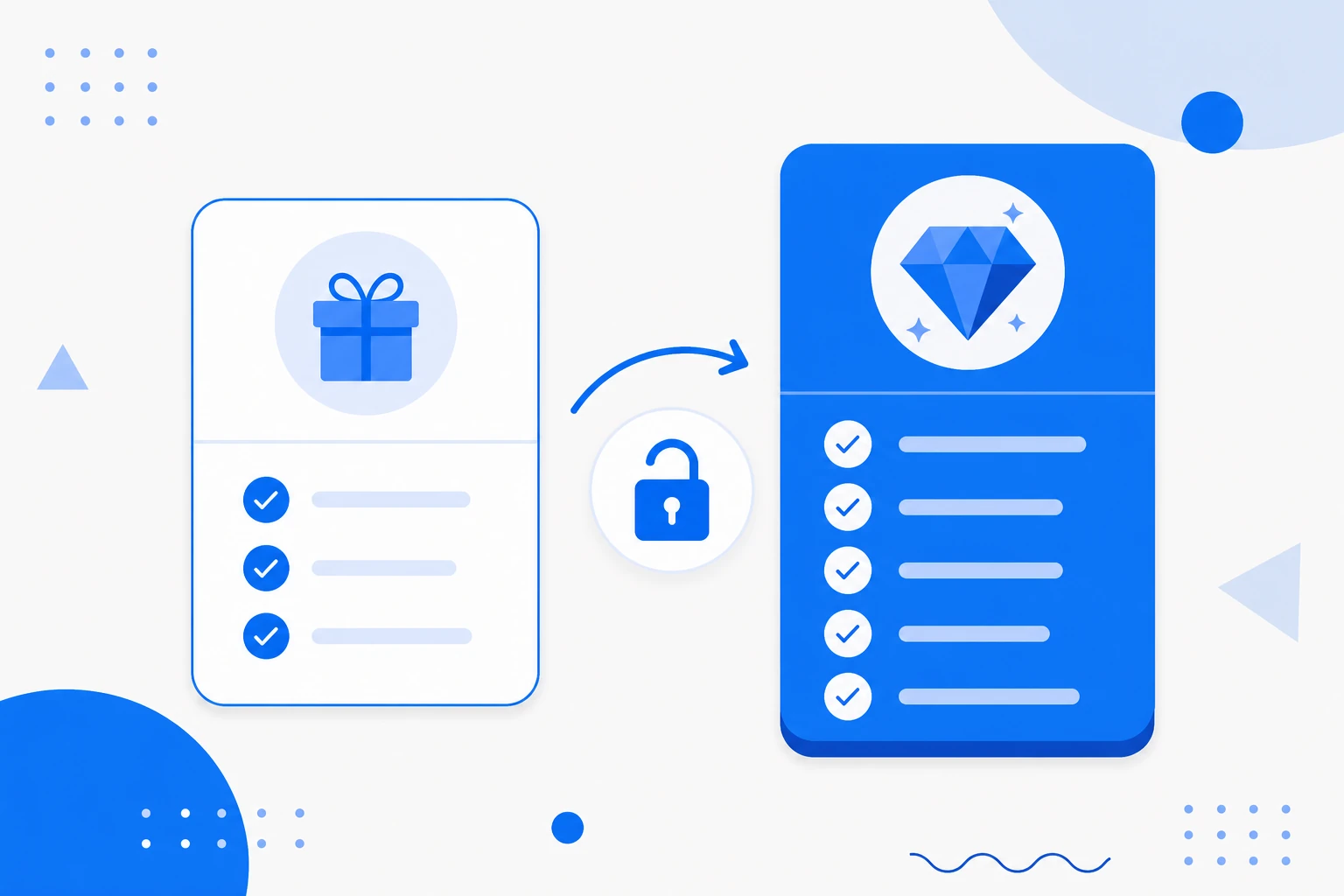
A reverse trial gives the user full access to the paid plan for a period and, if they do not convert, downgrades them to a free plan instead of locking the account.
- Starts on paid and ends on free, the opposite of freemium.
- Joins the hook of a trial with the safety net of freemium.
- Works best for products with a fast aha.
What a reverse trial is
A reverse trial is an acquisition strategy in which a new user starts with full access to the paid plan, with or without a card, for a short period. When that period ends, instead of locking the account or pushing straight to checkout, the product downgrades the user to a permanent free plan. They do not lose everything: they keep using a limited version, but they have already tasted the full one.
It is called "reverse" because it flips the order of the classic model. In traditional freemium, people enter the free tier and only later discover the paid features. In a reverse trial, the journey starts on paid and ends on free. The bet is psychological: it is easier to miss a feature you have already used than to crave one you never tried.
Reverse trial, free trial and freemium: the differences
All three models let users experience the product before paying, but each makes a different bet about what happens when the experience ends.
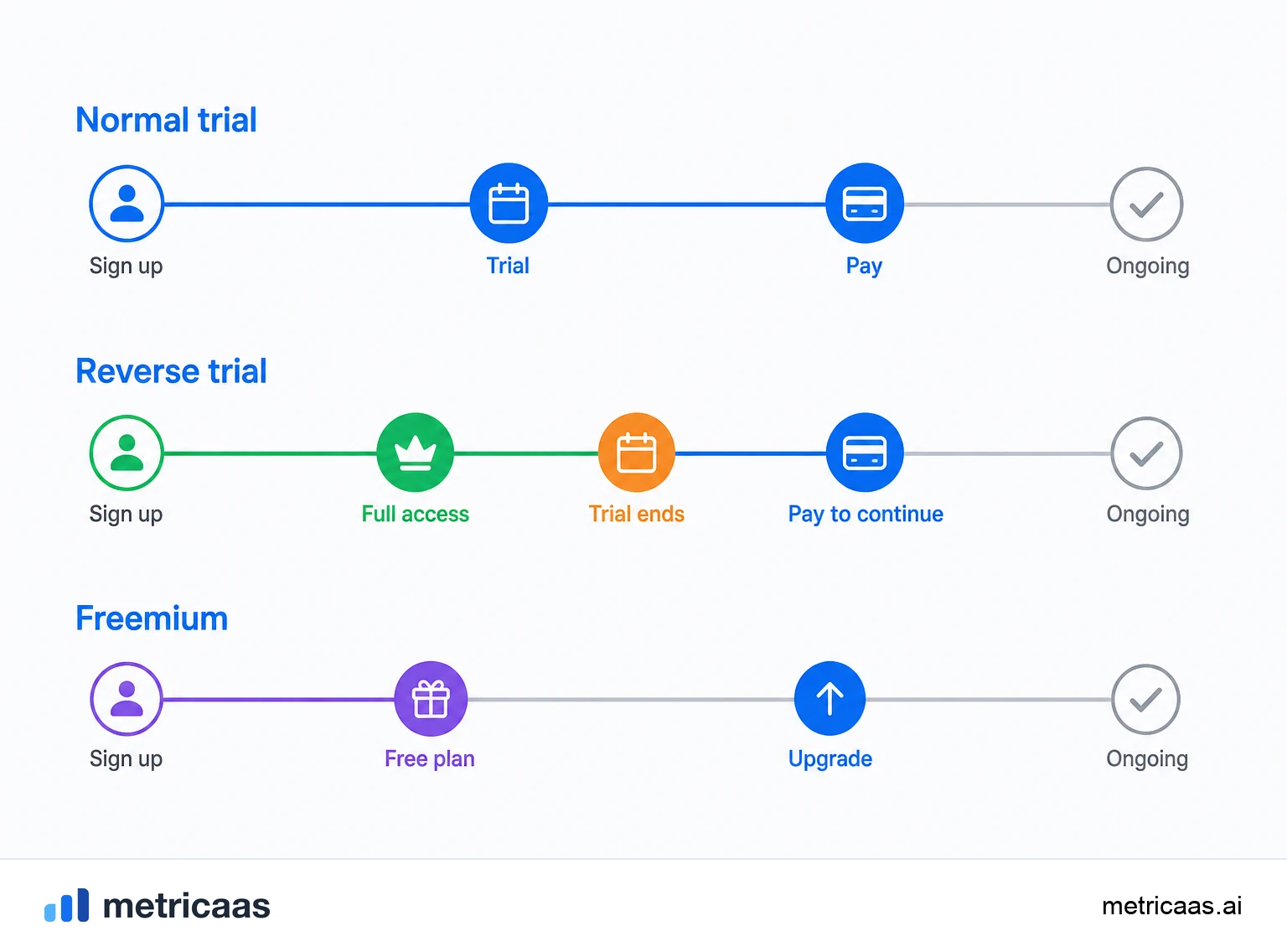
- Free trial: full access for a limited time; at the end, whoever does not pay loses access and the account locks or expires.
- Freemium: a free-forever plan, limited, from which the user upgrades to paid when they need more.
- Reverse trial: starts like the trial (full access) but ends like freemium (drops to free), joining the hook of one with the safety net of the other.
In practice, the reverse trial is the middle ground: it avoids the "all or nothing" of the trial, which loses the lukewarm user on the day it expires, and it avoids the pure freemium problem, where many people never see what makes the paid product valuable. By showing the top of the mountain before returning the person to the base, it creates a concrete desire for the advanced features.
How a reverse trial works in practice
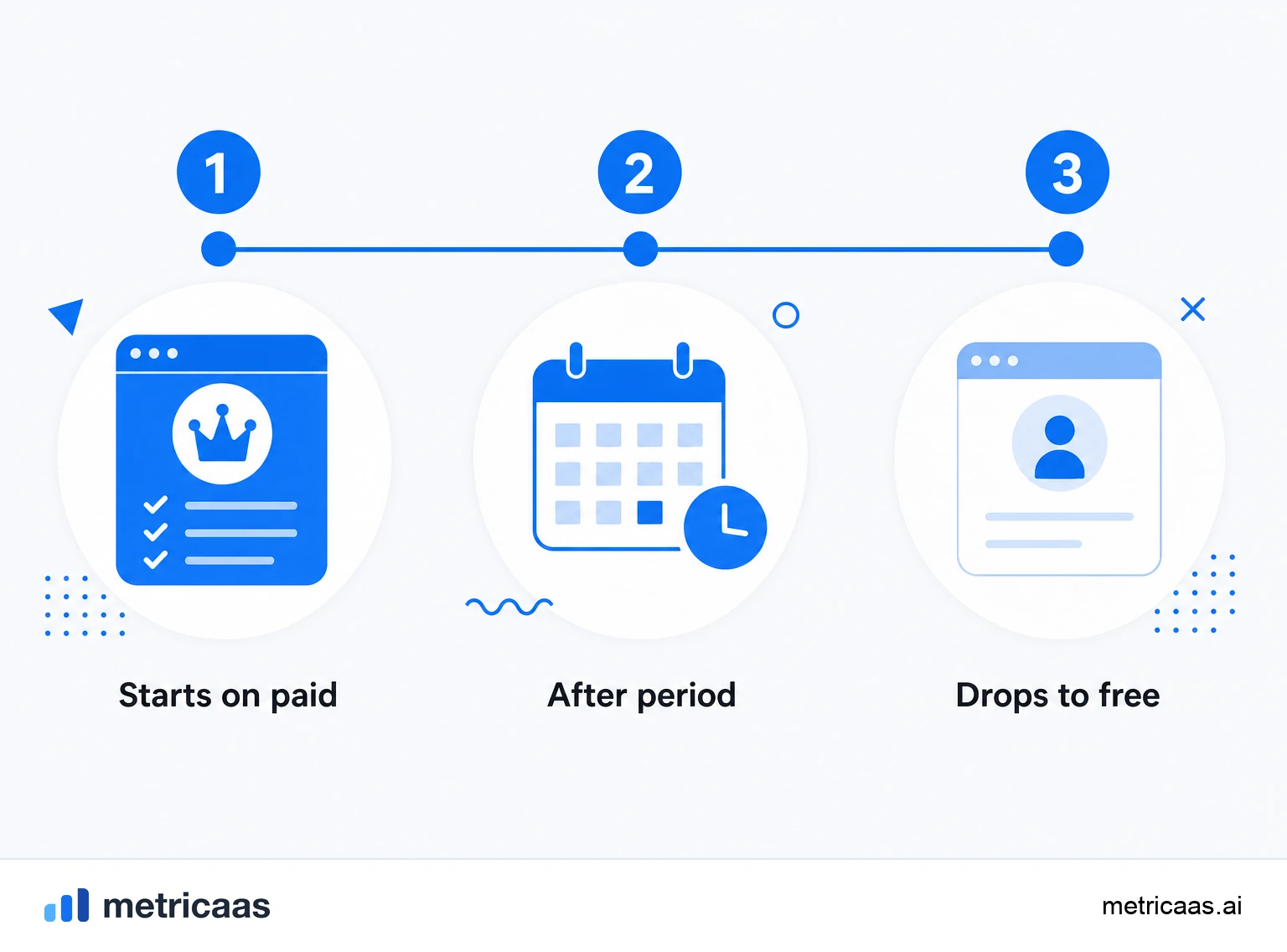
The flow usually has three clear stages. First, sign-up grants full access to the paid plan, with every premium feature unlocked for seven, fourteen or thirty days. Second, during that window the product works to reach the aha as fast as possible, spotlighting exactly the features that will disappear later. Third, at the end of the period, anyone who has not subscribed is downgraded to the free plan, keeping their data and the basics but losing the premium features.
The detail that makes the model work is communication. The user needs to know, without surprise, that they are in a premium period and what will change when it ends. In-product notices, context emails and a clear "what you are about to lose" screen turn the downgrade into an invitation to subscribe, rather than a silent frustration.
When a reverse trial makes sense
The reverse trial shines when the product has a fast aha, meaning users can feel real value in minutes or days. If value only appears after weeks of setup, the premium window ends before the delight, and the model wastes its hook.
It also depends on a sharp difference between the free and paid plans. If freemium already delivers almost everything, the downgraded user misses nothing and has no reason to convert. That is why the model works best in self-serve products, where usage itself drives the purchase, and where you can design limits that sting in just the right way. The venture capital firm OpenView helped popularize the term while mapping product-led growth strategies.
Metrics to track in a reverse trial
Because the reverse trial lives between the trial and freemium, it needs a dashboard that blends metrics from both worlds. The activation rate measures how many users reach the aha inside the premium window; if it is low, the downgrade will catch people who never saw the value. The trial-to-paid conversion measures how many subscribe before dropping to free.
But the number that sets the reverse trial apart is post-downgrade conversion: how many users, already on the free plan, come back to subscribe after missing the premium features. That is the conversion tail that pure freemium does not have and that the traditional trial throws away. Tracking the two conversions separately keeps you from concluding too early that the model does not work.
Common mistakes and best practices
The most common mistake is choosing a reverse trial for a slow-aha product: the premium window ends before the user grasps the value, and the model becomes just a freemium with a confusing start. The second mistake is a free plan that is too weak or too generous; too weak drives away people you could have kept, too generous removes the reason to pay.
- Match the window length to the real time to aha, not to a round number.
- Make it explicit, the whole time, that the user is in a premium period and what changes afterward.
- Design the free plan to be useful, yet to leave longing for the features that convert.
- Measure conversion during the trial and after the downgrade as two distinct moments.
Well calibrated, the reverse trial delivers the best of both worlds: the selling power of showing the whole product and the patience of freemium to let the decision mature.
Frequently asked questions
A reverse trial is when a user starts with full access to the paid plan for a period and, if they do not convert, drops to a free plan instead of losing everything.
In a traditional trial, whoever does not pay loses access at the end. In a reverse trial, the user is downgraded to a permanent free plan and stays in the product.
No. Freemium starts on free; a reverse trial starts on paid and ends on free. The reverse trial uses freemium as a safety net, not as the front door.
When the product has a fast aha, self-serve onboarding and a clear gap between the free and paid plans. If value takes long to appear, the model loses its edge.
Long enough for the user to reach the aha, usually between seven and thirty days. It is best calibrated to the product reality, not to a round number.
Activation rate, trial-to-paid conversion and, above all, post-downgrade conversion, when the user subscribes after missing the paid features.
Related concepts
Free trial
A free trial is time-limited, or usage-limited, access to a product so the user can experience its value before paying. Unlike freemium, which is free forever, a free trial has an expiry date and exists to prove the product and convert the user into a paying customer. It can be opt-in, with no card required, or opt-out, with a card at sign-up.
Freemium
Freemium is a business model with a permanent free plan that never expires and gives access to a subset of features, plus paid plans that unlock the rest. It exists to attract users in bulk at low cost and convert a fraction of them, typically 2% to 5%, into paying customers. The challenge is offering a free tier useful enough to attract, yet limited enough to create a reason to pay.
Trial-to-paid conversion
Trial-to-paid conversion is the share of free trials that become paying customers: paid conversions divided by trials started. It is the central metric of self-serve products and it varies widely depending on whether the trial requires a card (opt-out, roughly 40% to 60%) or not (opt-in, roughly 10% to 25%). Activation during the trial is the strongest predictor of who converts.