
Free trial: what it is and how to use it in SaaS
By Tiago Costa · Updated on July 9, 2026
Definition
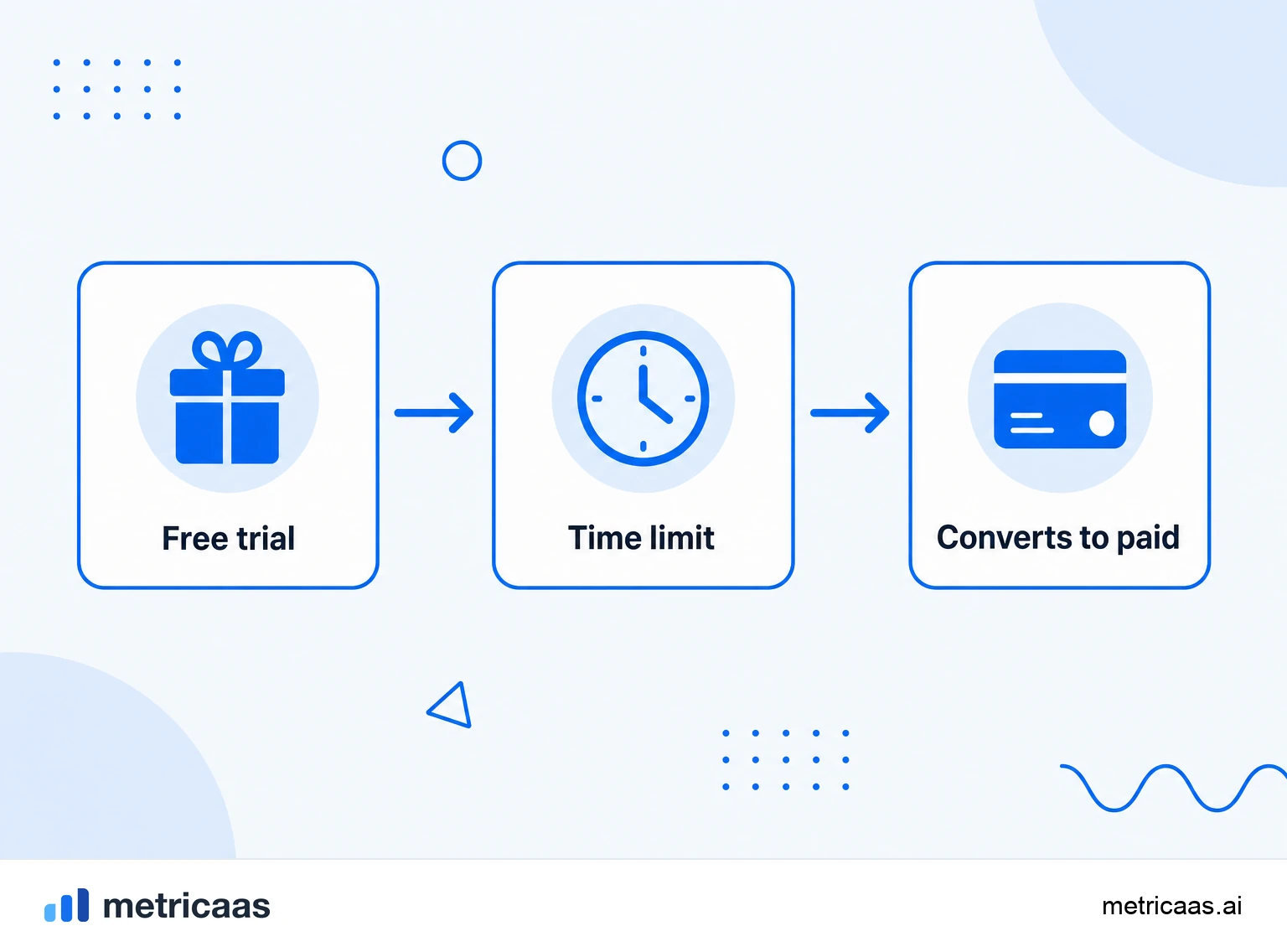
A free trial is time-limited, or usage-limited, access to a product so the user can try it before paying.
- It has an expiry date, unlike freemium, which is free forever.
- It can be no-card (opt-in) or card-required (opt-out).
- What decides conversion is activating the user inside the window.
What a free trial is
A free trial gives the user access to a product for a limited window, either a number of days or a usage cap, so they can experience its value before any payment. The logic is simple: instead of promising the benefit in an ad, you let the person feel the benefit in practice, inside the tool itself.
Access can be full, with every feature unlocked, or partial, with higher tiers still locked. The common thread is the deadline: the trial has a start and an end. When it ends, the user decides between becoming a paying customer or losing access. That makes the free trial both a marketing tool and a qualification filter: whoever reaches the end engaged tends to buy.
Free trial vs freemium
Free trial and freemium get confused, but they follow opposite logics. Freemium offers a free version forever, with no expiry, betting that some users move to a paid plan over time. A free trial offers temporary access, usually broad, with a deadline that forces a decision.
- Freemium: permanently free, no deadline, converts slowly and depends on volume.
- Free trial: temporary access, with a deadline, converts faster and creates urgency.
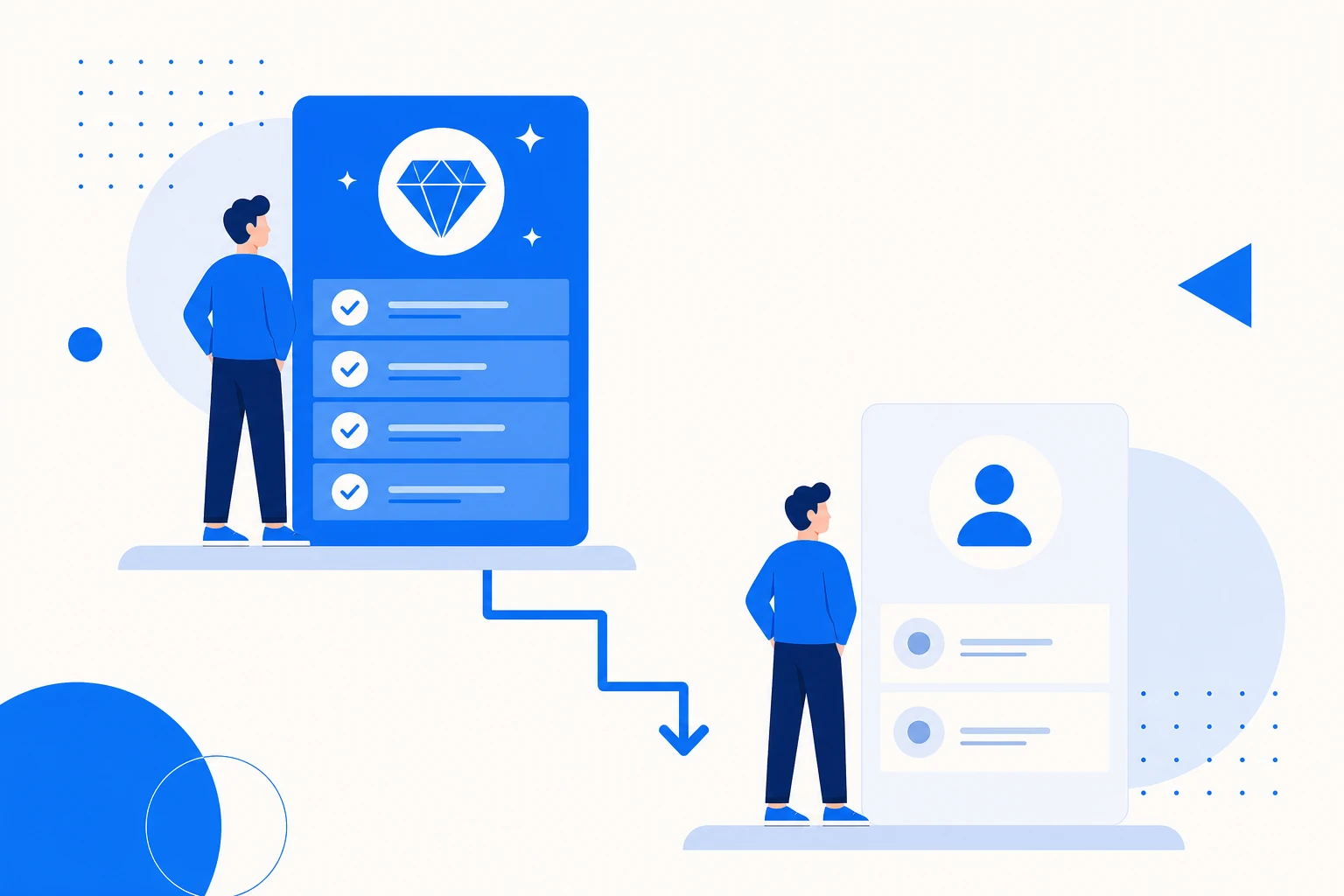
Nothing stops you from combining them. A reverse trial, for instance, starts with premium access for a limited time and, when it expires, downgrades the user to a free plan instead of cutting access entirely, blending the urgency of a trial with the safety net of freemium.
Opt-in or opt-out: card or no card
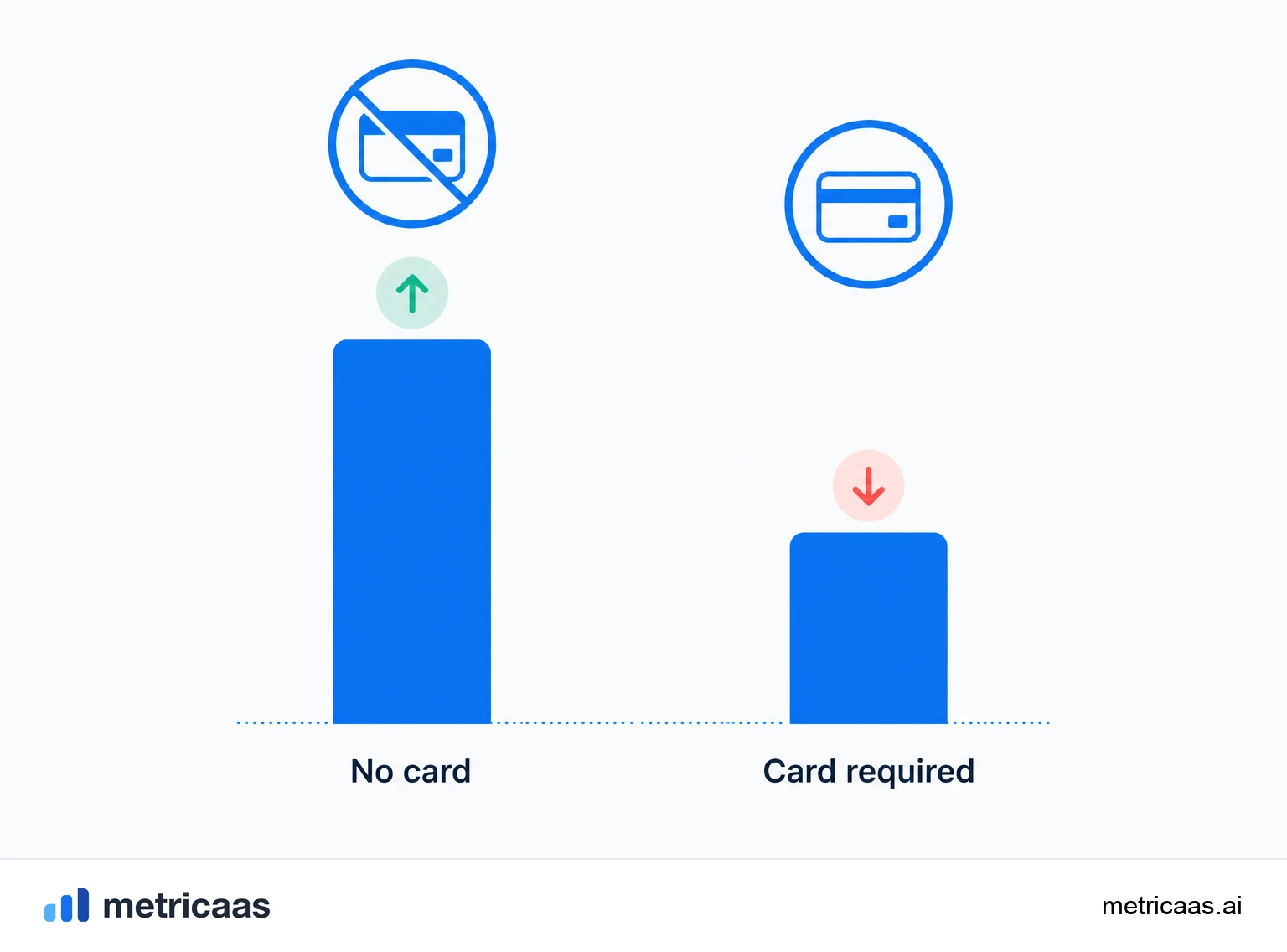
Whether or not you require a credit card at the door shapes the entire funnel. In an opt-in trial, the user enters with no card: sign-up is light, the volume of registrations rises, but many try out of curiosity and would never have paid. In an opt-out trial, the card is required at sign-up and the charge happens automatically at the end of the period unless the person cancels.
- Opt-in (no card): more volume at the top, lower conversion rate, low friction at entry.
- Opt-out (card required): fewer sign-ups, higher conversion rate, stronger purchase intent.
There is no universally right choice. Without a card, you fill the top of the funnel and lean on activation to convert; with a card, you filter at entry and convert a smaller, more qualified base. A reverse trial is a third path that lowers friction without discarding those who do not convert right away.
Time-limited or usage-limited
Beyond the card, the other design axis is how the trial ends. In a time limit, the user gets every feature for a fixed period, say 14 days, and the clock runs regardless of how much they use it. In a usage limit, access lasts until a concrete cap: a number of projects, contacts, messages or exports, with no set date.
- By time: good when value shows up fast and usage is frequent, because the deadline creates urgency.
- By usage: good when the product is used sporadically, so the user does not burn the trial while away.
Products used every day pair well with a time limit. Tools used occasionally, or with a long sales cycle, often perform better with a usage limit, which only advances when the person actually touches the product.
Activation inside the trial drives conversion
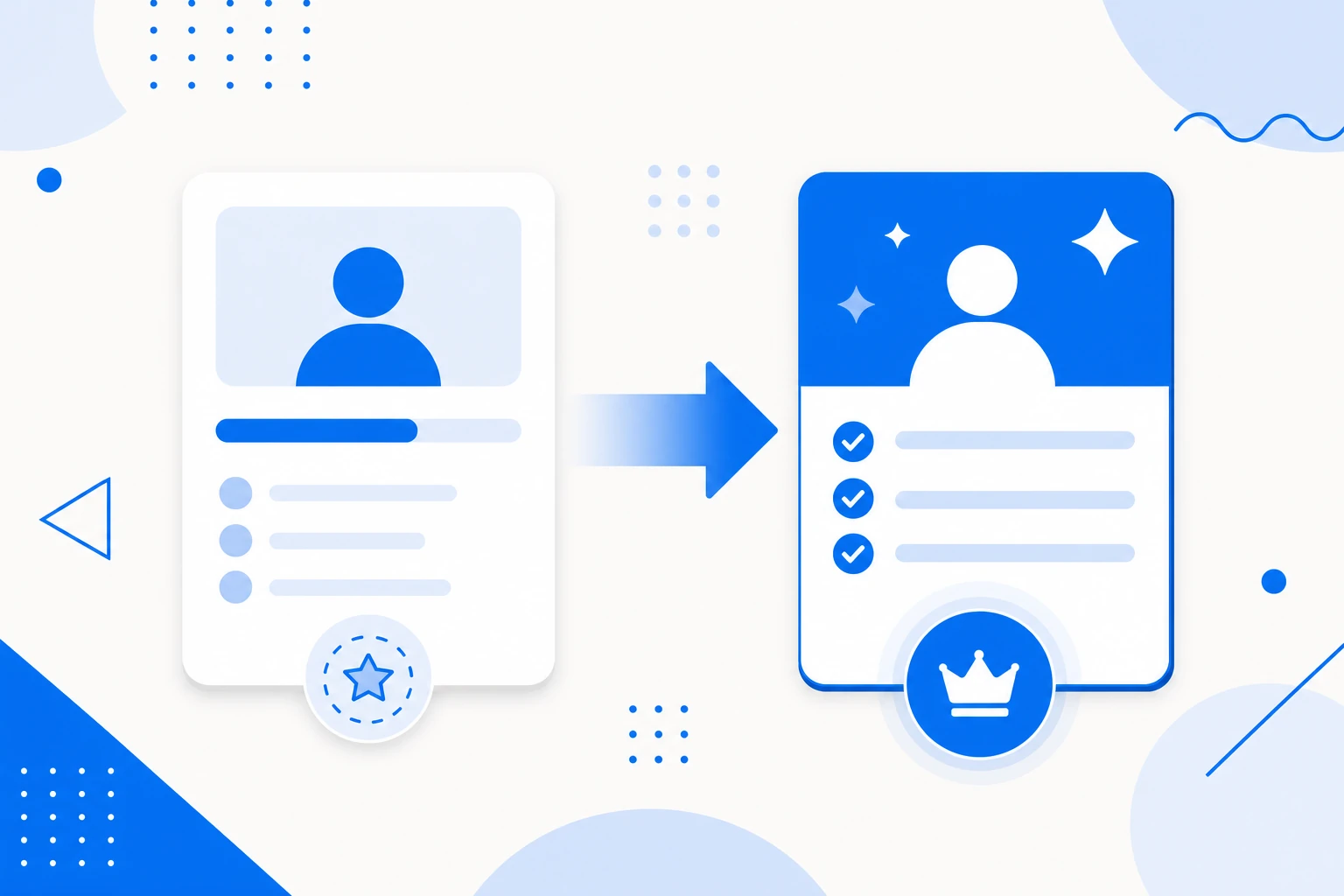
The trial period does not convert on its own. What converts is activation: getting the user to complete, still inside the window, the action that reveals the product value, the so-called aha moment. A 30-day trial where the user only looked at the welcome screen is worth less than a 7-day trial where they already imported their data and saw the first result.
That is why trial-to-paid conversion is, in practice, a consequence of activation. The job is not only to grant access, it is to lead the person to value: guided onboarding, a first-steps checklist, well-timed emails, and the removal of any friction between sign-up and the first success. Every day the user spends without activating is one less day to convert.
What the ideal trial length is
The ideal length is the shortest window in which a typical user can reach value with room to spare. The 14-day default became a reference because it balances urgency and learning time, but it does not fit everyone. What rules is your product time to value and the complexity of setup.
- Shorter (7 days): creates urgency and speeds up the decision in simple products with immediate value.
- Longer (30 days or more): fits complex B2B sales, with implementation and several people involved.
Consultancies and benchmark houses such as Benchmarkit, OpenView and Bessemer track trial conversion rates by product type closely, and the consensus is that stretching the deadline rarely helps: if the user did not activate in the first days, more days tend not to change the outcome. Shortening the path to value beats lengthening the trial.
Frequently asked questions
It is time-limited, or usage-limited, access to a product so the user can experience its value before paying. When the period ends, they decide between becoming a paying customer or losing access.
Freemium is free forever, with no deadline. A free trial is temporary, with an expiry date, and exists to prove the product and force the purchase decision.
It depends. Without a card (opt-in) you attract more volume and convert a smaller share; with a card (opt-out) you attract fewer but more qualified people, and conversion is higher.
The shortest window in which a typical user reaches value with room to spare. Fourteen days is a common default; simple products work in 7 days, and complex B2B sales may need 30 days or more.
Almost always because the user did not activate within the period. Without completing the action that reveals the product value, the aha moment, the deadline arrives with no reason to pay.
Time works well for frequently used products with fast value. Usage works better for sporadic products, so the user does not burn the trial while away.
Related concepts
Trial-to-paid conversion
Trial-to-paid conversion is the share of free trials that become paying customers: paid conversions divided by trials started. It is the central metric of self-serve products and it varies widely depending on whether the trial requires a card (opt-out, roughly 40% to 60%) or not (opt-in, roughly 10% to 25%). Activation during the trial is the strongest predictor of who converts.
Freemium
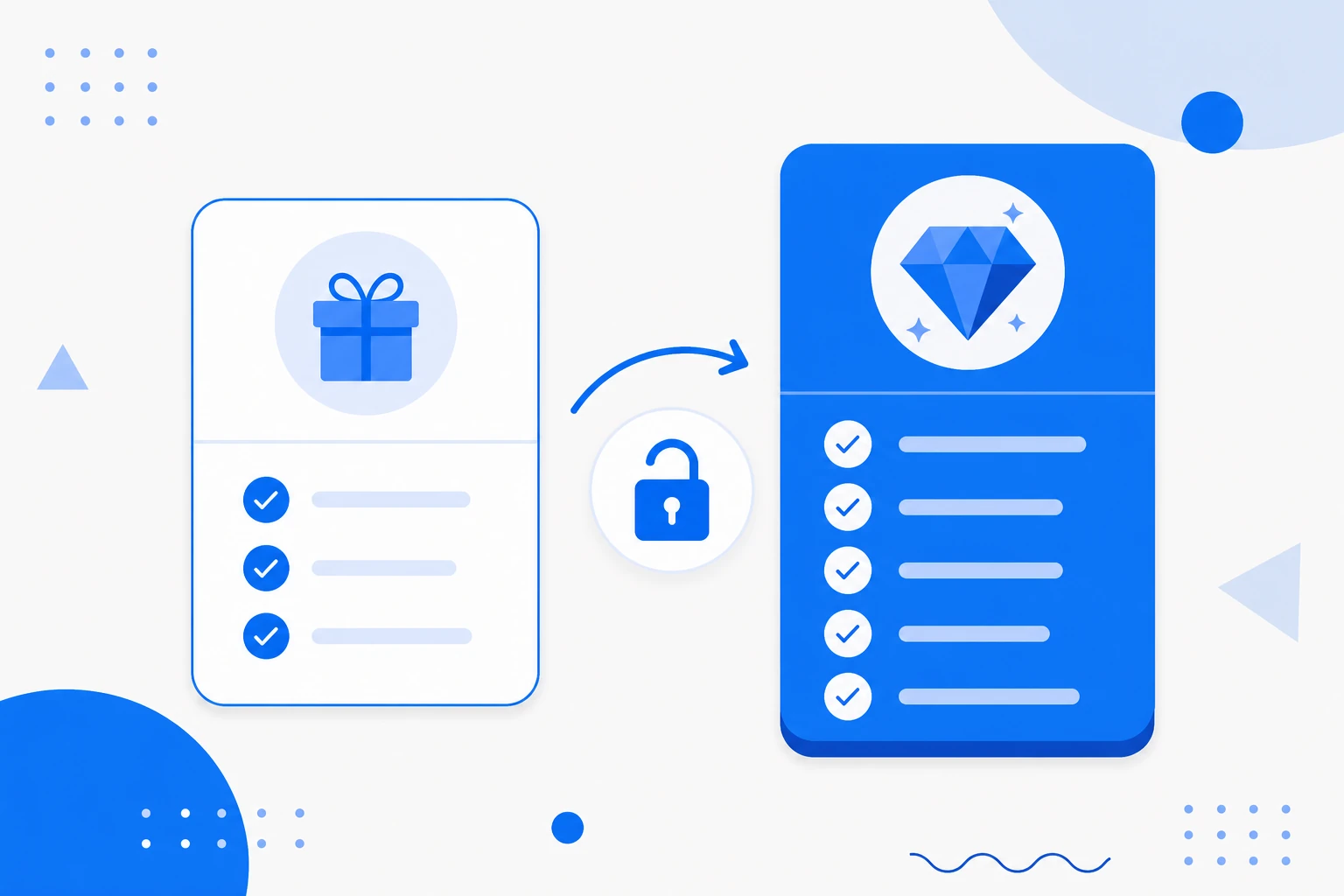
Freemium is a business model with a permanent free plan that never expires and gives access to a subset of features, plus paid plans that unlock the rest. It exists to attract users in bulk at low cost and convert a fraction of them, typically 2% to 5%, into paying customers. The challenge is offering a free tier useful enough to attract, yet limited enough to create a reason to pay.
Reverse trial
A reverse trial is a strategy in which the user starts with full access to the paid plan for a period and, when it ends, drops to a free plan if they do not convert, instead of losing everything. It combines the hook of a premium trial with the safety net of freemium: it shows the full value of the product and then creates longing for the paid features. It works best for products with a fast aha, where the user feels value in the first few days.