
Freemium: what the free-plan model is and how it works
By Tiago Costa · Updated on July 9, 2026
Definition
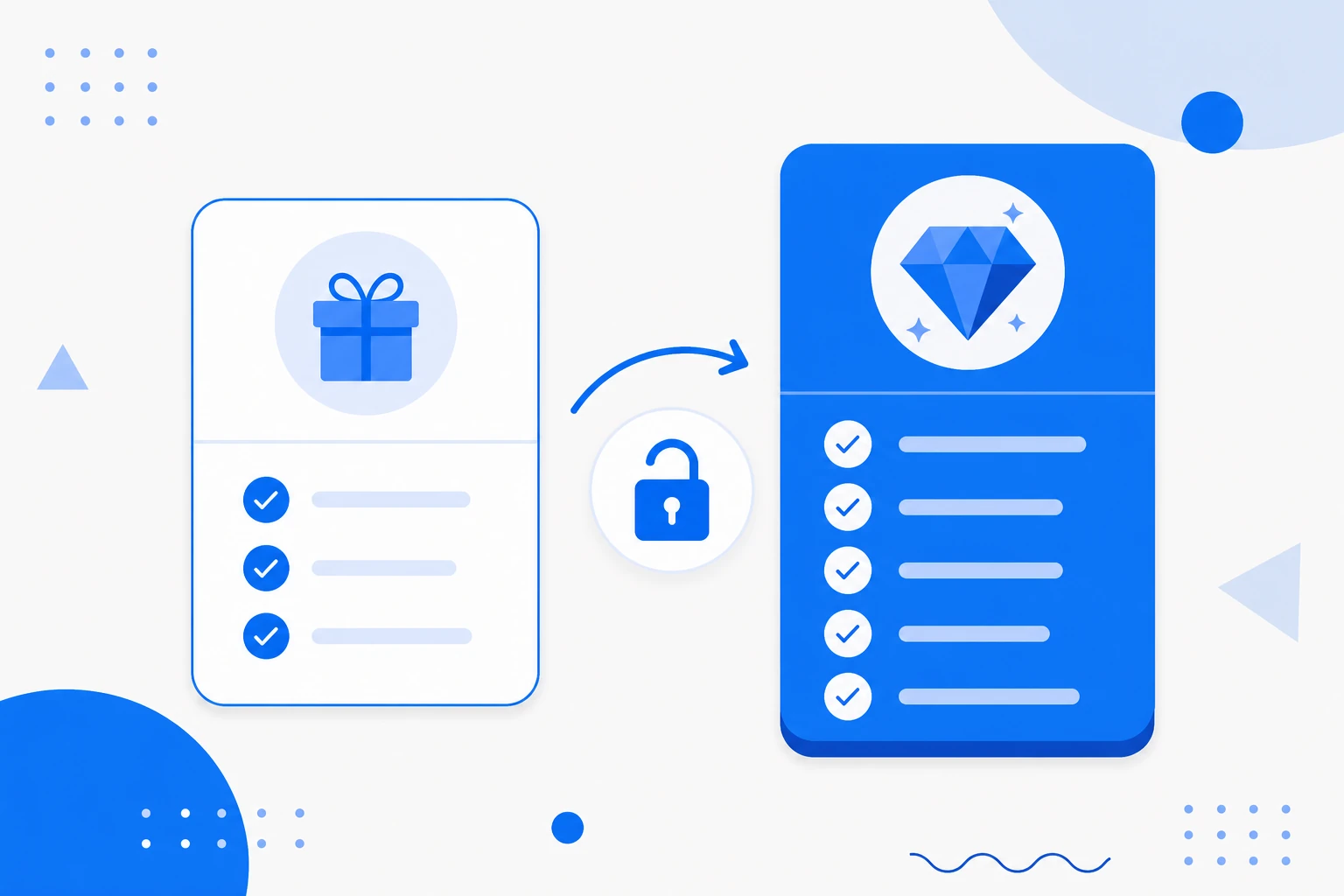
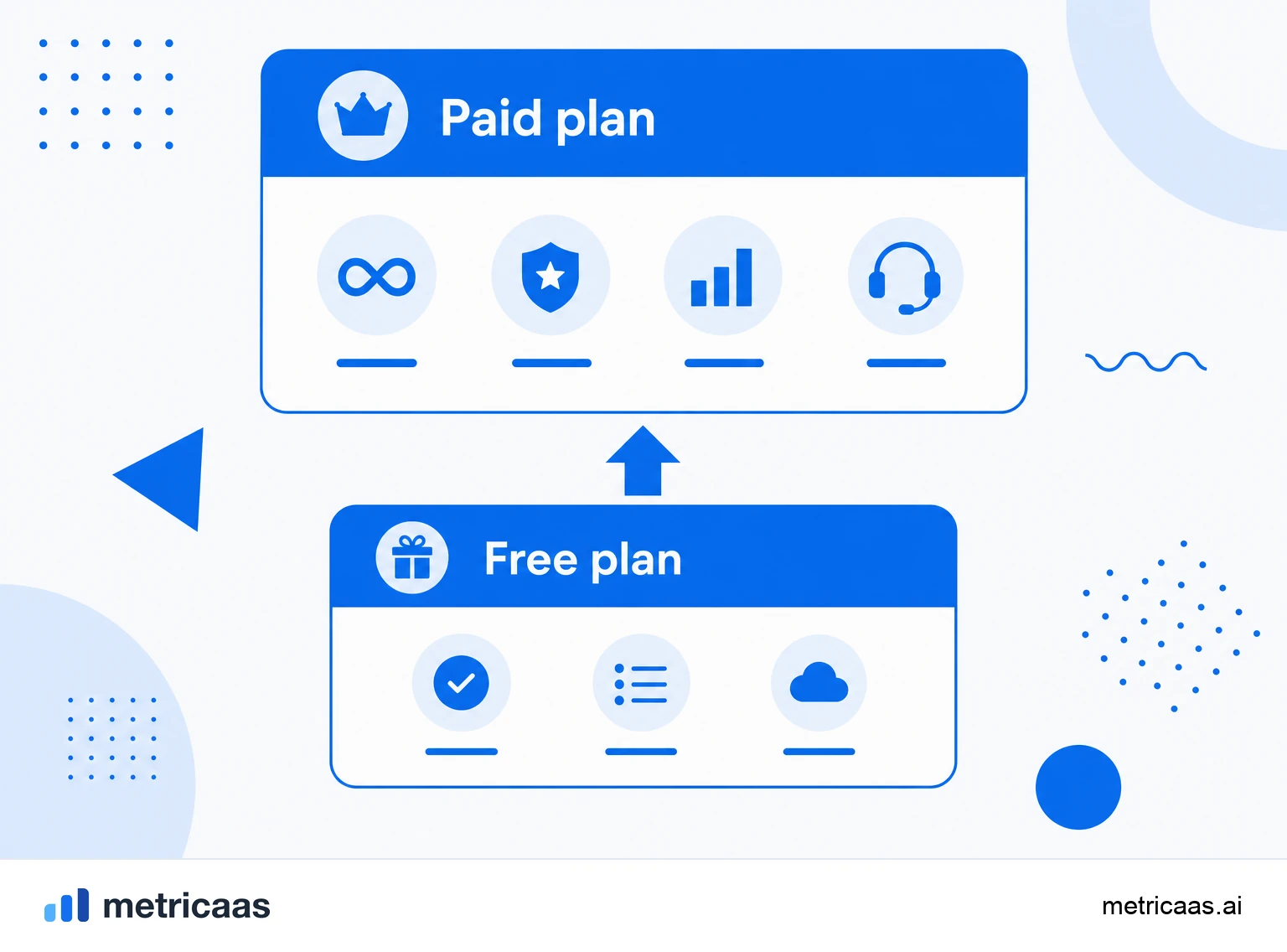
Freemium is the model with a permanent free plan and paid plans that unlock the rest of the features.
- The free tier never expires, unlike a free trial.
- It monetizes on the volume that converts, typically 2% to 5%.
- It needs a free tier useful enough to attract, but limited enough to create a reason to pay.
What freemium is
Freemium is a business model that blends "free" and "premium": there is a permanent free plan that never expires, plus paid plans that unlock the rest. Unlike a promotion or an evaluation period, the free tier in freemium has no deadline. A user can stay on it forever, using a subset of features, and only pays when they want more.
The logic is to turn the product itself into the acquisition channel: the free plan attracts a large audience at low cost, and a fraction of that base converts to paid plans. That is why freemium is one of the classic engines of product-led growth, where the product, not a sales team, does the work of bringing in and engaging the customer.
Freemium and free trial: the difference
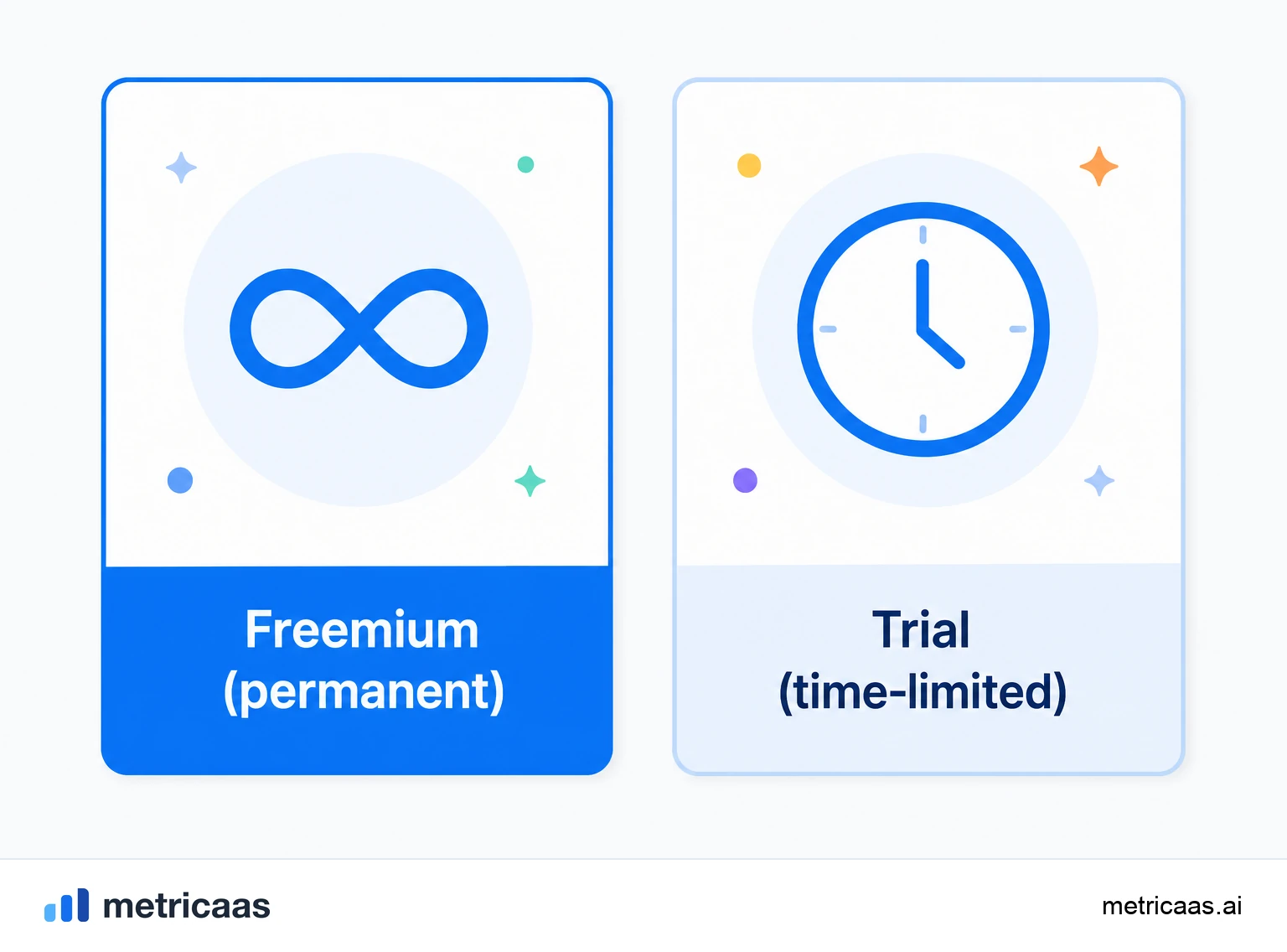
Freemium and the free trial are constantly confused, but they solve different problems. A free trial gives full access to the product for a limited time, and at the end the user decides to pay or lose access. Freemium gives limited access for unlimited time: the user is never forced to decide, but never gets everything either.
- Free trial: full features, short window, urgency to decide.
- Freemium: partial features, infinite window, decision deferred until the need shows up.
In practice, many SaaS combine both: a permanent free plan with a short free trial of the paid features. The choice depends on how fast the product delivers value and how much it costs to keep a user who may never pay.
How freemium makes money
No free plan pays the bills on its own. Freemium monetizes in two ways: converting part of the free base to paid plans and expansion through add-ons and upgrades inside the account. The name of the game is volume: if only a fraction converts, you need many free users to sustain the business.
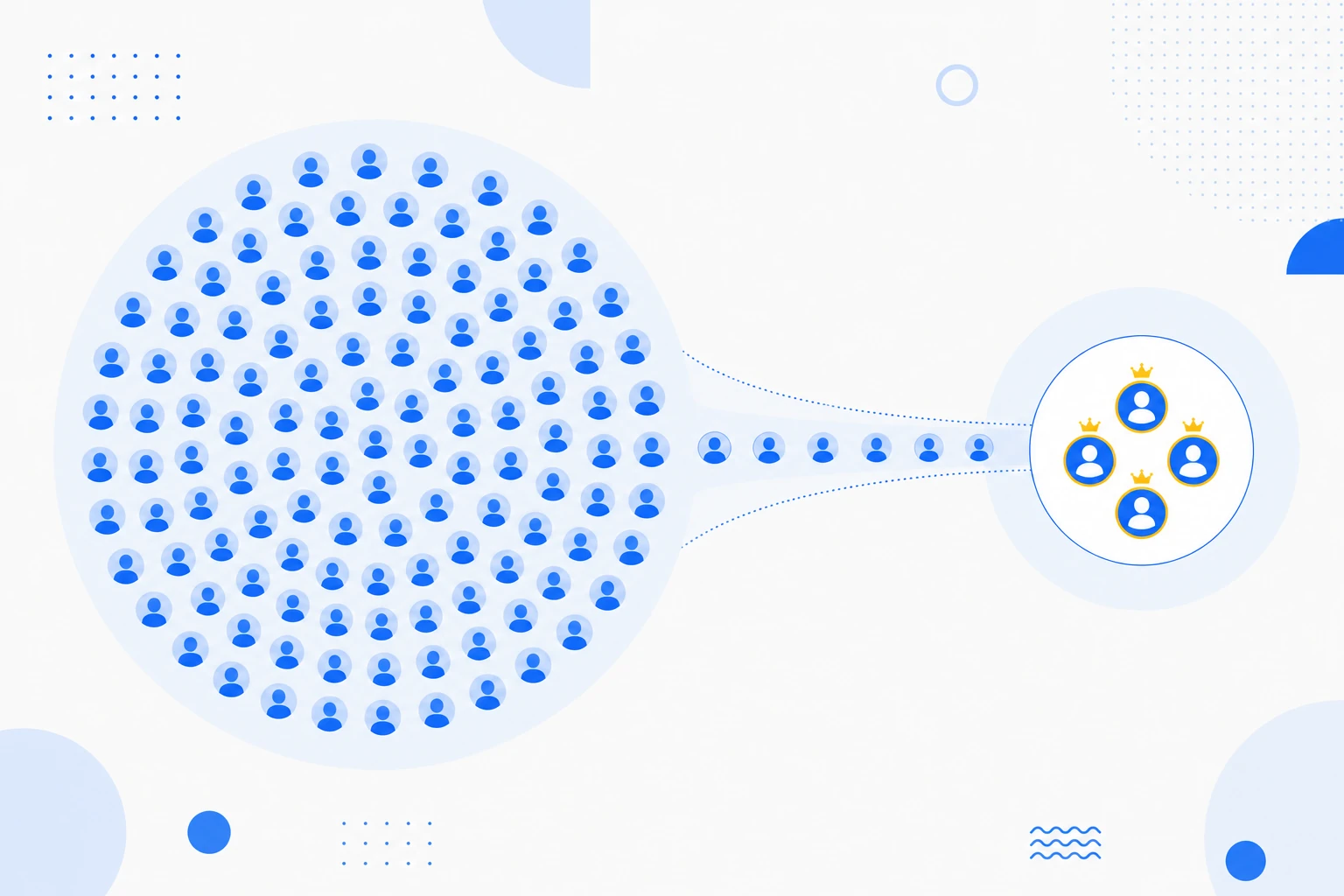
Freemium conversion rates usually land between 2% and 5% of all free users, well below the rates of a free trial, which starts from a much higher-intent audience. That is why freemium only adds up when the cost to serve a free user is low and the base grows fast, often helped by virality.
Where to draw the free line
The heart of freemium is a design tension: the free plan has to be useful enough to attract and retain, yet limited enough to create a real reason to pay. Give away too much and no one upgrades; give away too little and no one stays.
The most common levers for drawing that line are:
- Usage: volume caps, such as projects, contacts, messages or storage.
- Features: advanced functions reserved for paid plans.
- Seats: number of users per account.
- Support: priority and channels reserved for paying customers.
The best line lets the user get a real win on the free tier and hit the limit exactly when the product has become part of how they work.
When freemium makes sense
Freemium is not for every SaaS. It shines when the market is large, the product delivers value fast without sales help, and the cost to serve each free user is close to zero. It is the natural ground of product-led growth and of products with network effects, where each new free user brings in others.
That backdrop widened with the cloud: according to Gartner, worldwide spending on SaaS applications is set to approach $300 billion in 2025, a market large enough that even fractions of a percent in conversion produce meaningful revenue. Firms such as OpenView and Bessemer have studied this model closely and show it works better as a distribution strategy than as an immediate source of cash.
Freemium risks and pitfalls
The biggest risk in freemium is underestimating the cost of "free". Every free user consumes support, infrastructure and the team's attention, and most will never pay. If the free base grows faster than revenue, the model becomes a drag instead of an engine.
- Cost to serve: the free tier has to be cheap to run at scale.
- Low intent: many sign up with no intention of ever paying.
- Cannibalization: an overly generous free tier steals revenue from paid plans.
- Focus: serving the free base can pull the product away from those who pay.
Treating the free plan as an acquisition investment, with clear conversion targets and well-calibrated limits, is what separates freemium that grows from freemium that just burns cash.
Frequently asked questions
It is a model with a permanent free plan that never expires and gives access to part of the features, plus paid plans that unlock the rest. It exists to attract many users and convert a fraction of them.
A free trial gives full access for a limited time and forces a decision at the end. Freemium gives partial access for unlimited time, with no deadline to decide.
It usually sits between 2% and 5% of free users. It is low by design, because the free base is large and much of it never intended to pay.
No. It works best with a large market, value delivered fast without sales, and a cost to serve free users close to zero. Outside that, the free tier is just cost.
By using levers such as usage caps, advanced features, number of seats and support level. The goal is a real win on the free tier while leaving a clear reason to pay.
It is the product's permanent free plan, with a subset of features. It exists to attract users and serve as the entry point to the paid plans.
Related concepts
Freemium conversion
Freemium conversion is the percentage of users on a permanent free plan who become paying customers. It tends to be low, typically between 2% and 5%, because free attracts many people with no intent to pay. The model pays off on volume and expansion, not on a high rate.
Free trial
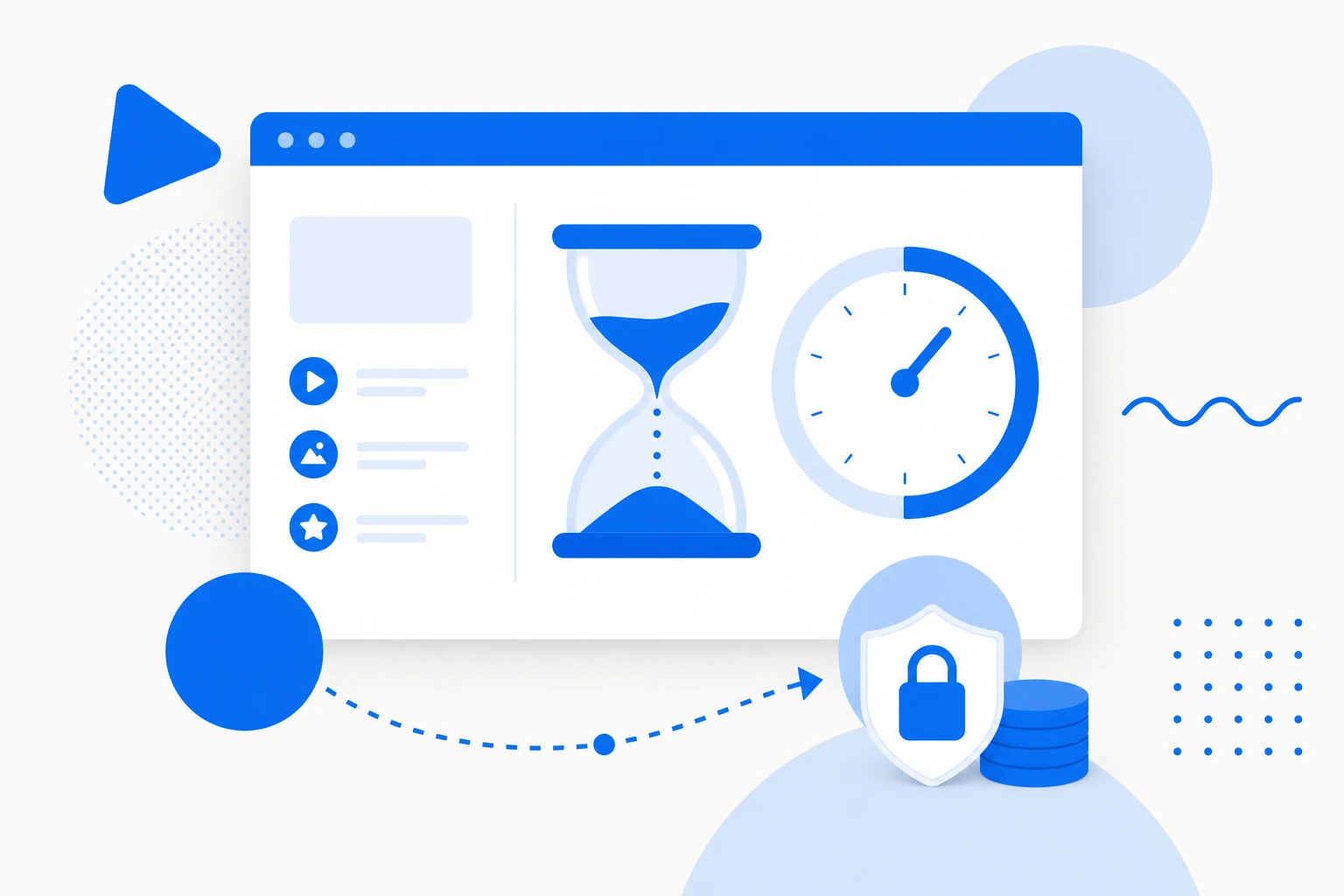
A free trial is time-limited, or usage-limited, access to a product so the user can experience its value before paying. Unlike freemium, which is free forever, a free trial has an expiry date and exists to prove the product and convert the user into a paying customer. It can be opt-in, with no card required, or opt-out, with a card at sign-up.
Product-led growth (PLG)
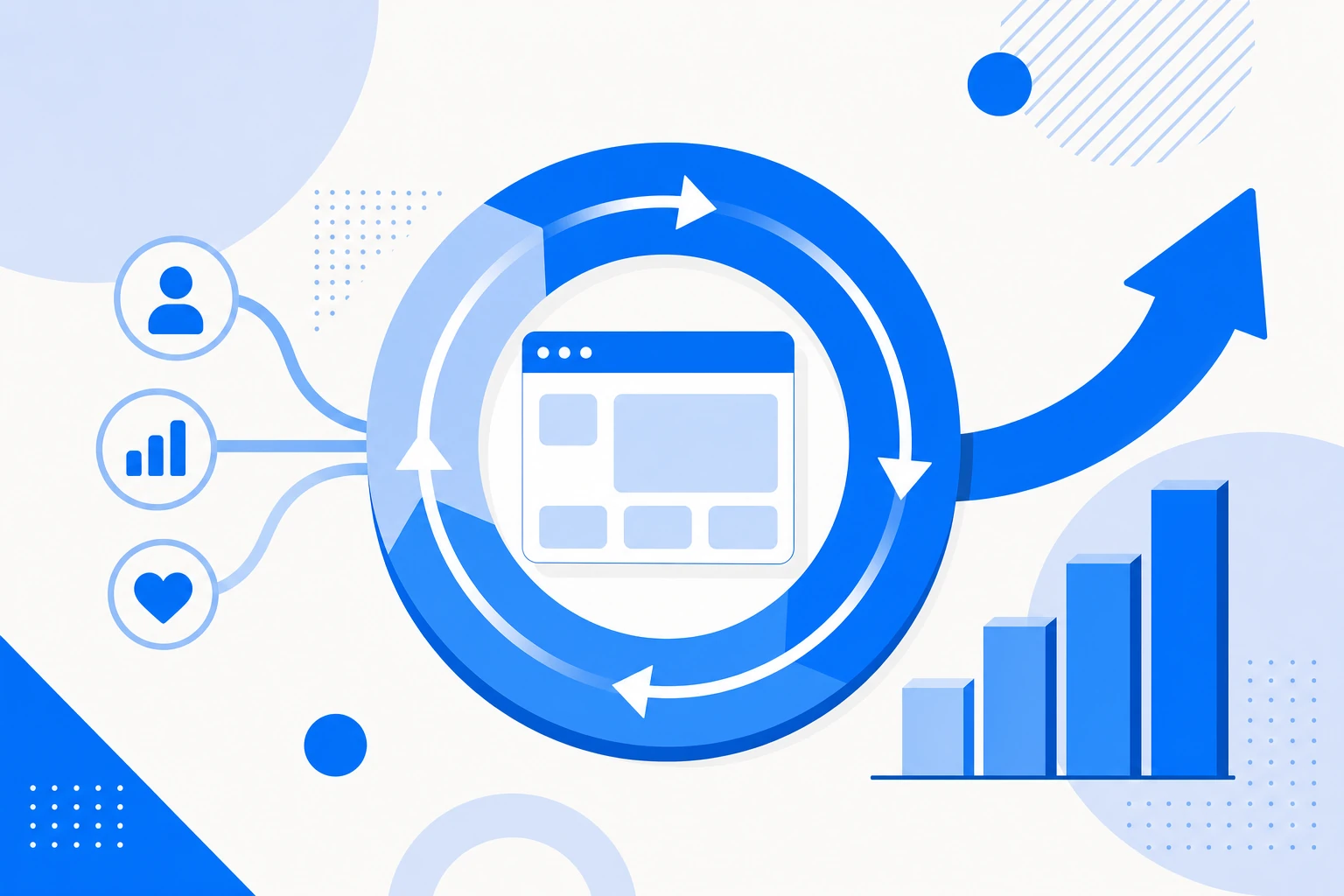
Product-led growth (PLG) is the growth strategy in which the product itself drives acquisition, activation, conversion and expansion, with little or no sales touch. The user enters through a free trial or a freemium plan, feels the value on their own and becomes a paying customer. The buying signal is no longer a filled-in form but usage: the PQL, the lead qualified by the product.