
Retention rate: what it is and how to calculate it
By Tiago Costa · Updated on July 9, 2026

Definition
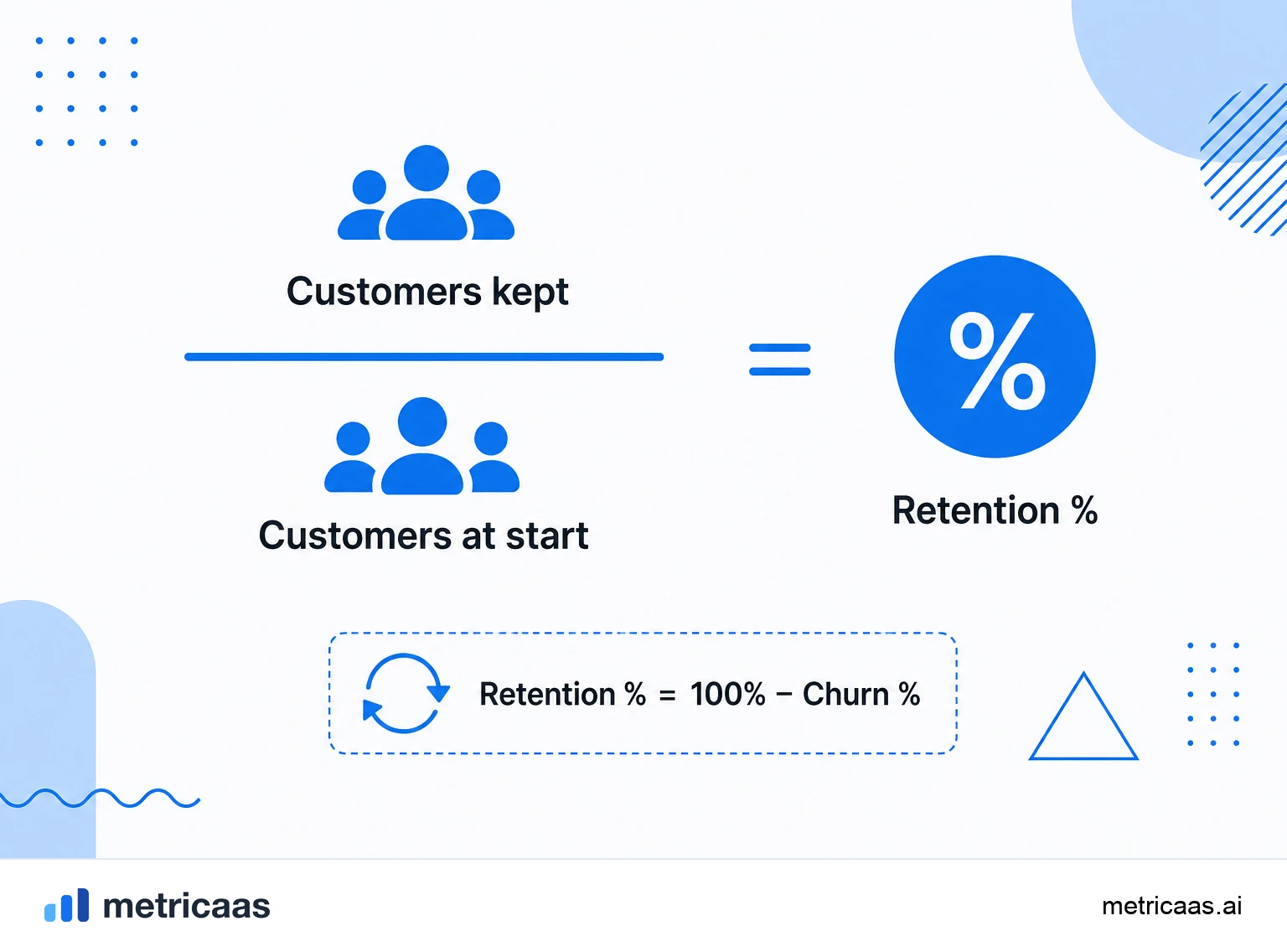
The retention rate is the percentage of customers or revenue that stays active at the end of a period, the direct complement of churn.
- Customer retention = 100% minus the customer churn rate.
- It can be measured by number of customers or by recurring revenue.
- The higher it is, the more predictable and cheaper revenue becomes.
What the retention rate is
The retention rate measures the percentage of customers (or revenue) that stay active at the end of a period. It is the picture of loyalty: the higher it is, the more people keep paying and the less effort the company spends replacing what it lost.
It is the direct complement of churn. If 8% of customers cancel in a year, customer retention is 92%. That is why the two metrics tell the same story from opposite angles: one shows who stayed, the other who left.
How to calculate the retention rate
Customer retention rate compares how many customers you had at the start with how many remained at the end, subtracting the new ones that came in along the way.
- Retention rate = ((Customers at end - New customers) / Customers at start) x 100.
- Pick a clear window (month, quarter or year) and always use the same one to compare.
- Subtracting new customers keeps recent acquisitions from masking who you actually kept.
Example: you started the month with 500 customers, ended with 520 and gained 40 new ones in the period. Retention was ((520 - 40) / 500) x 100 = 96%. The same logic works for revenue, swapping the customer count for recurring value.
Customer retention and revenue retention
Retention is not a single metric. Measured by customers, it counts heads: how many logos stayed. Measured by revenue, it weighs value: how much of the recurring money remained.
The two diverge when customers come in different sizes. You can lose many small customers and keep revenue nearly intact, or lose one big account and sink revenue retention while keeping most logos. In the revenue version, the gap between gross retention (losses only) and net retention (NRR), which adds expansion, is decisive: an NRR above 100% means the base grows on its own, even with no new sales.
What a good retention rate is
There is no magic number, but there are reference ranges. For SaaS selling to businesses, healthy annual revenue retention tends to sit around 90%, and research from SaaS Capital shows that gross revenue retention for private companies clusters around that level.
Once expansion is counted, the bar rises: the private SaaS survey by KeyBanc Capital Markets points to net revenue retention above 100%, meaning the existing base generates more revenue each year. Keep in mind the number shifts a lot with the audience: enterprise accounts tend to retain better than small, self-serve customers.
Retention and churn: two sides of the same coin
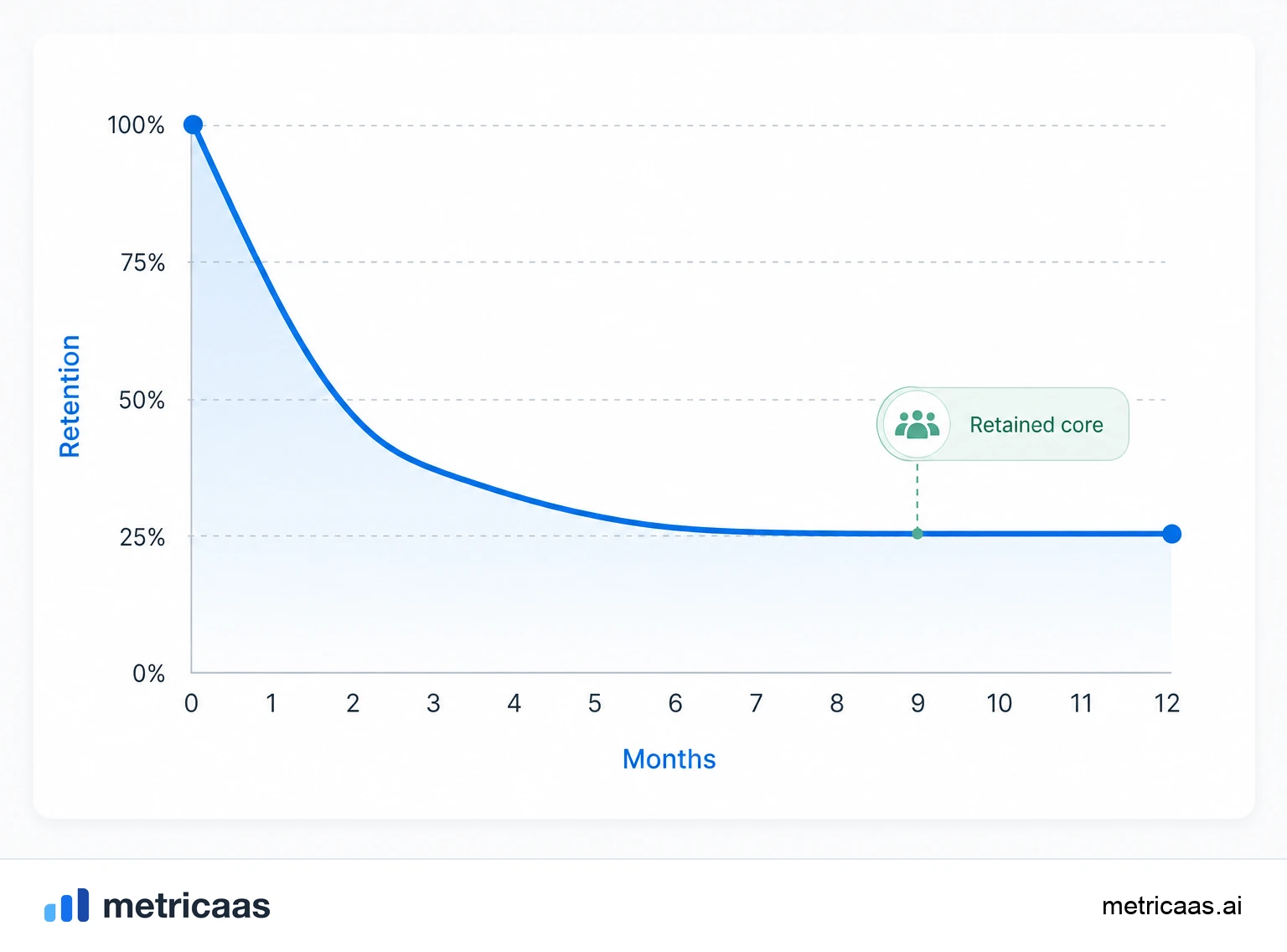
Retention and churn always add up to 100% within the same base and window. If customer churn is 5% in the month, customer retention is 95%. Watching both side by side keeps you honest.
The difference is what each one emphasizes. Churn raises the alarm about the leak; retention celebrates the base that holds. Customer success teams tend to treat retention as a positive goal, while finance monitors churn as a risk. They are the same reality, told with opposite signs.
Why retention drives the business
Retention is the quiet engine of growth. Every extra point retained lengthens customer lifetime and multiplies how much each account returns over time, which makes growth cheaper: retaining is almost always cheaper than acquiring.
That is why retention sits at the top of a SaaS health scorecard. It sustains recurring revenue, improves predictability and, when high, makes acquisition pay off more because less effort is wasted replacing cancellations. Improving retention usually comes down to clear onboarding, value delivered early and attention to risk signals before the cancellation.
Frequently asked questions
It is the percentage of customers or revenue that stays active at the end of a period. It is the direct complement of churn: if churn is 8%, retention is 92%.
Use ((customers at end - new customers) / customers at start) x 100. Starting with 500, ending with 520 and gaining 40 new ones gives 96% retention.
There is no single number, but healthy annual revenue retention for SaaS tends to sit around 90%, and net revenue retention often runs above 100% once expansion is counted.
They are two sides of the same coin and add up to 100%. Retention shows who stayed; churn shows who left. If churn is 5%, retention is 95%.
No. Customer retention counts logos; revenue retention weighs recurring value. They diverge when customers differ in size, and revenue retention also has gross and net variants.
Related concepts

Churn
Churn is the loss of customers or revenue in a period. In a SaaS, it measures how many customers cancel (customer churn) or how much recurring revenue disappears (revenue churn). It is the metric that reveals whether growth is sustainable: the higher the churn, the more new sales you need just to avoid shrinking.

Customer churn
Customer churn (or logo churn) is the percentage of customers or accounts that cancel in a period, counted by number of logos rather than by revenue. It tells you how many companies you lost, regardless of how much each one paid. It differs from revenue churn when those who cancel pay above or below your average deal.

Net Revenue Retention (NRR)
Net Revenue Retention (NRR) measures how much of the recurring revenue from your current base you keep over time, already accounting for upgrades and expansion, minus downgrades and cancellations. Above 100% it means the base grows on its own, even without new customers.