
Customer lifetime: what it is and how to calculate it
By Tiago Costa · Updated on July 9, 2026

Definition
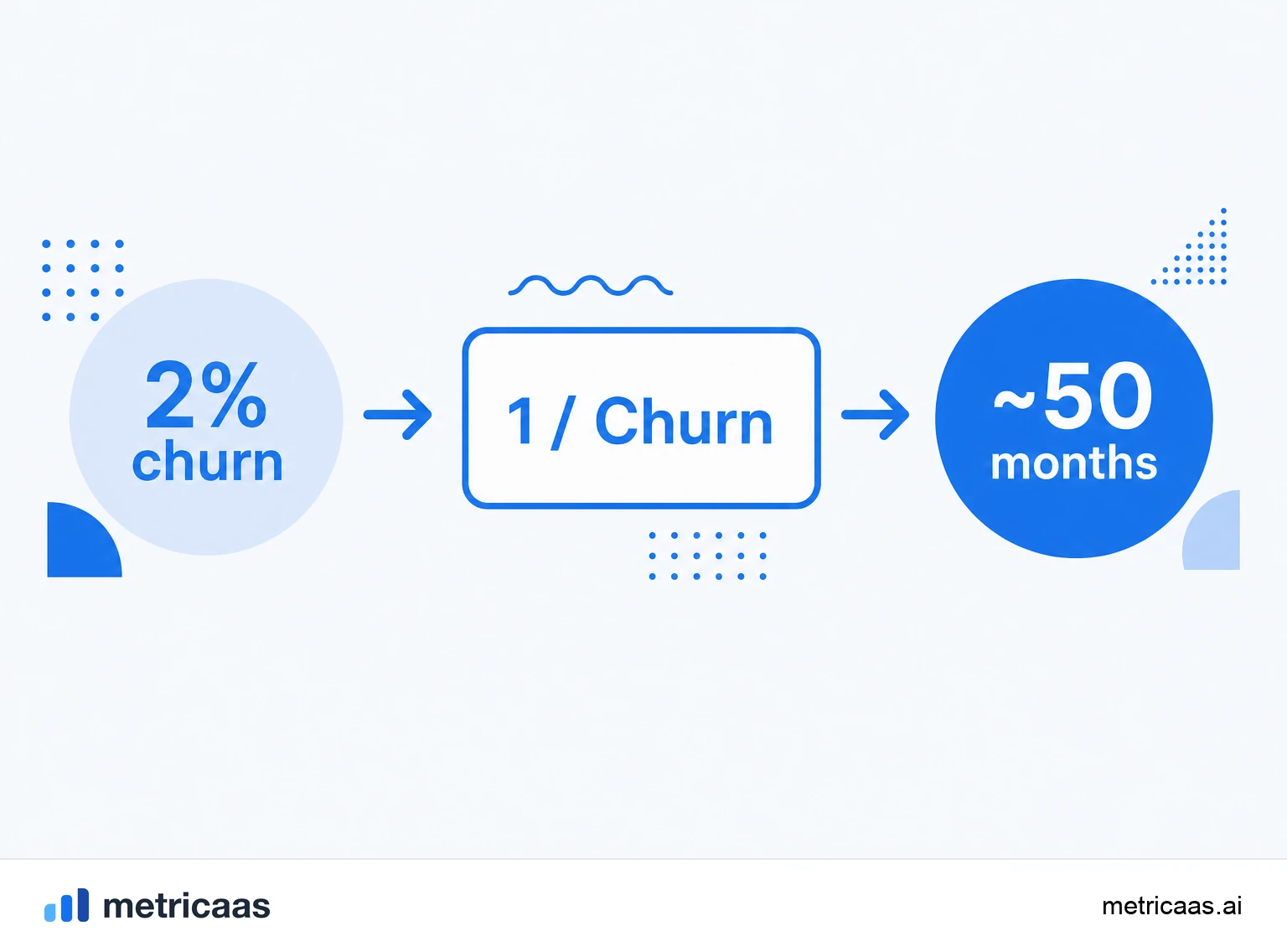
Customer lifetime is the average time a customer stays active in a SaaS, estimated as 1 divided by the Churn rate.
- With 2% monthly churn, the average lifetime lands around 50 months.
- The lower the churn, the longer the lifetime.
- It is the base for calculating LTV.
What customer lifetime is
Customer lifetime measures how long, on average, a customer stays active and paying before canceling. It is not the tenure of one specific account, but the average expectation across the base: if customers stay, on average, three years, that is the lifetime the business can assume when planning revenue and investment.
It comes straight from retention behavior. A base that loses few customers per month has a long lifetime; a base that bleeds subscribers has a short one. That is why customer lifetime is the flip side of Churn: where churn counts the speed of the exit, lifetime translates that speed into time spent as a customer.
How to calculate customer lifetime
The most common approximation is the inverse of the churn rate: divide 1 by the churn rate for the period. This form was popularized by David Skok and became a standard in SaaS models.
- Lifetime = 1 / churn rate.
- 2% monthly churn: 1 / 0.02 = 50 months.
- 5% monthly churn: 1 / 0.05 = 20 months.
Always use customer churn (logo churn) and keep the same time unit across the whole calculation: monthly churn gives a lifetime in months, annual churn gives it in years. Mixing the two cadences is the most common mistake and distorts the result by a factor of twelve.
Customer lifetime and LTV: the bridge
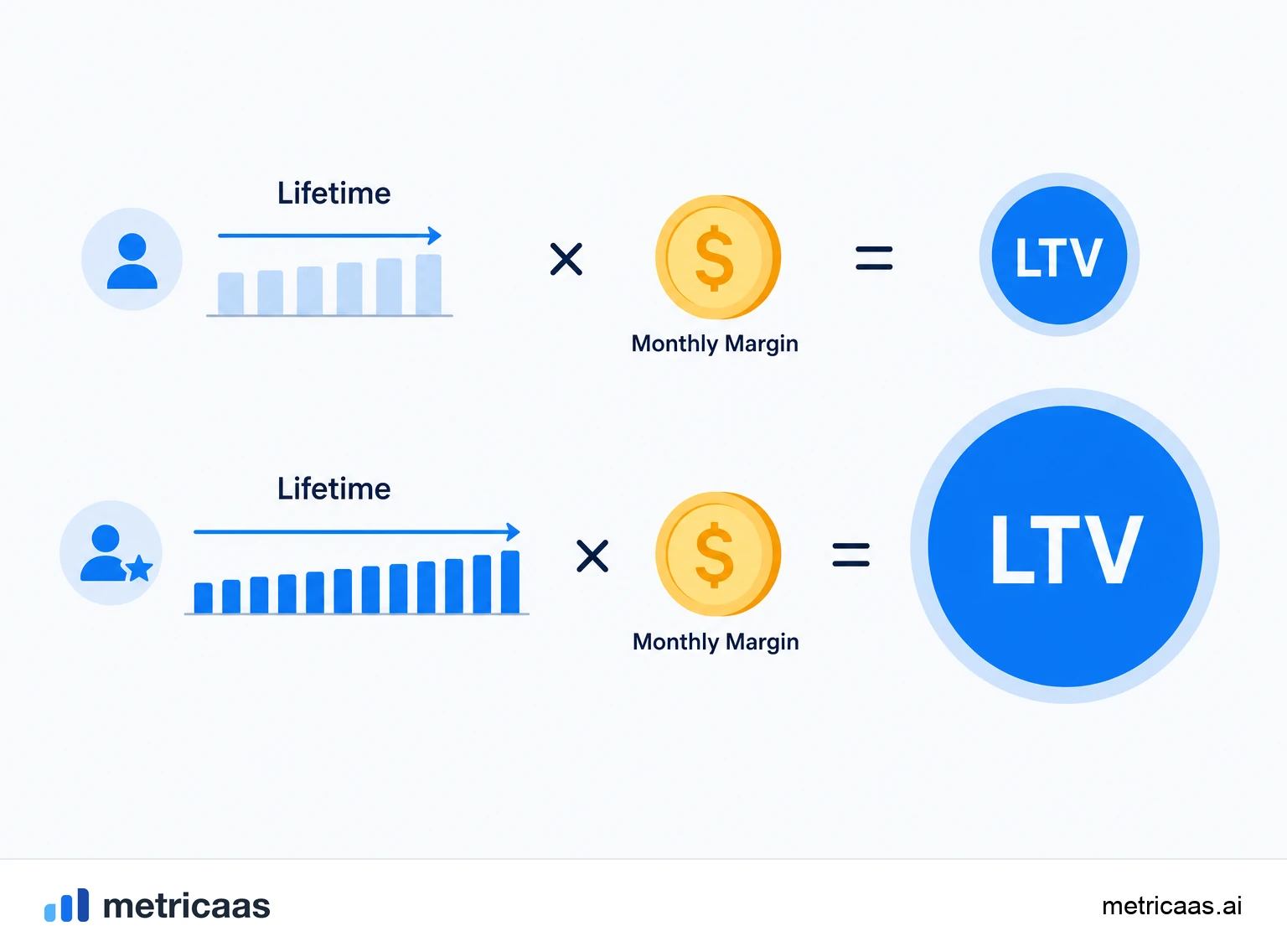
Customer lifetime only gains business meaning when it turns into money. It is what converts average revenue per customer into a return figure: multiply the average monthly recurring revenue per customer by the lifetime in months and you get a first estimate of LTV / CLV.
That is why extending lifetime is one of the most powerful levers in a SaaS. Cutting churn in half does not improve LTV a little: it doubles the lifetime and, with it, the value generated by every customer you win. This is the relationship David Skok popularized by linking retention, LTV and acquisition economics.
The limits of the 1-over-churn formula
The 1 / churn formula is an approximation, not an exact truth. It assumes the churn rate stays constant over time, which rarely happens: new customers cancel more in their first months, and those who survive that period tend to stay much longer. With churn falling by cohort, the formula understates the real lifetime of loyal customers.
- Very low churn makes the result explode (1% per month already gives 100 months), which calls for caution with very long lifetimes.
- Small or young bases do not yet have the history for a reliable average.
- Cohort analysis and survival curves correct what the average hides.
The practical advice is to treat 1 / churn as a quick ceiling and check against cohort data when the decision is a big one.
What shortens or lengthens the lifetime
Customer lifetime is not fate: it responds to product, onboarding and delivered value. A confusing start pushes cancellation into the first months; a customer who reaches the moment of value early tends to renew for years.
- Onboarding and activation: the sooner a customer sees a result, the lower the early churn.
- Expansion: accounts that grow in usage rarely leave, and a Net Revenue Retention (NRR) above 100% signals a long lifetime.
- Pricing and segment fit: well-chosen customers stay longer.
The private SaaS retention benchmarks published by SaaS Capital show that companies with the best retention hold customers for much longer, and it is that staying power that sustains lifetime.
Why customer lifetime guides the business
Customer lifetime connects retention to money decisions. It sets how much a company can spend to win a customer without losing money: if the lifetime is short, CAC payback has to be fast; if it is long, you can invest more in acquisition and wait for the return.
That is why lifetime sits at the center of any SaaS unit economics model. It ties together three fronts that are often handled in silos, retention, revenue and acquisition, in a single time horizon. Improving lifetime, in practice, means improving almost everything at once.
Frequently asked questions
Divide 1 by the churn rate for the same period. With 2% monthly churn, the average lifetime is about 50 months (1 / 0.02).
Lifetime is time (how many months the customer stays); LTV is money (how much they generate over that time). LTV uses lifetime as one of its inputs.
Generally yes, but be wary of numbers that look too high: with very low churn the 1 / churn formula inflates, and multi-year lifetimes should be confirmed with cohort data.
Lower churn. Fast onboarding, delivered value and account expansion extend how long customers stay and, with it, the lifetime.
No. Lifetime is a metric for average time as a customer; lifecycle describes the stages a customer moves through. Here we cover the metric.
Related concepts

LTV / CLV
LTV (Lifetime Value), also called CLV or CLTV, is the total value a customer generates while they stay in your base. In a simple form, it is the recurring average revenue times margin times the customer lifetime. It is the metric that shows how much it is worth investing to win and keep each customer.
Churn
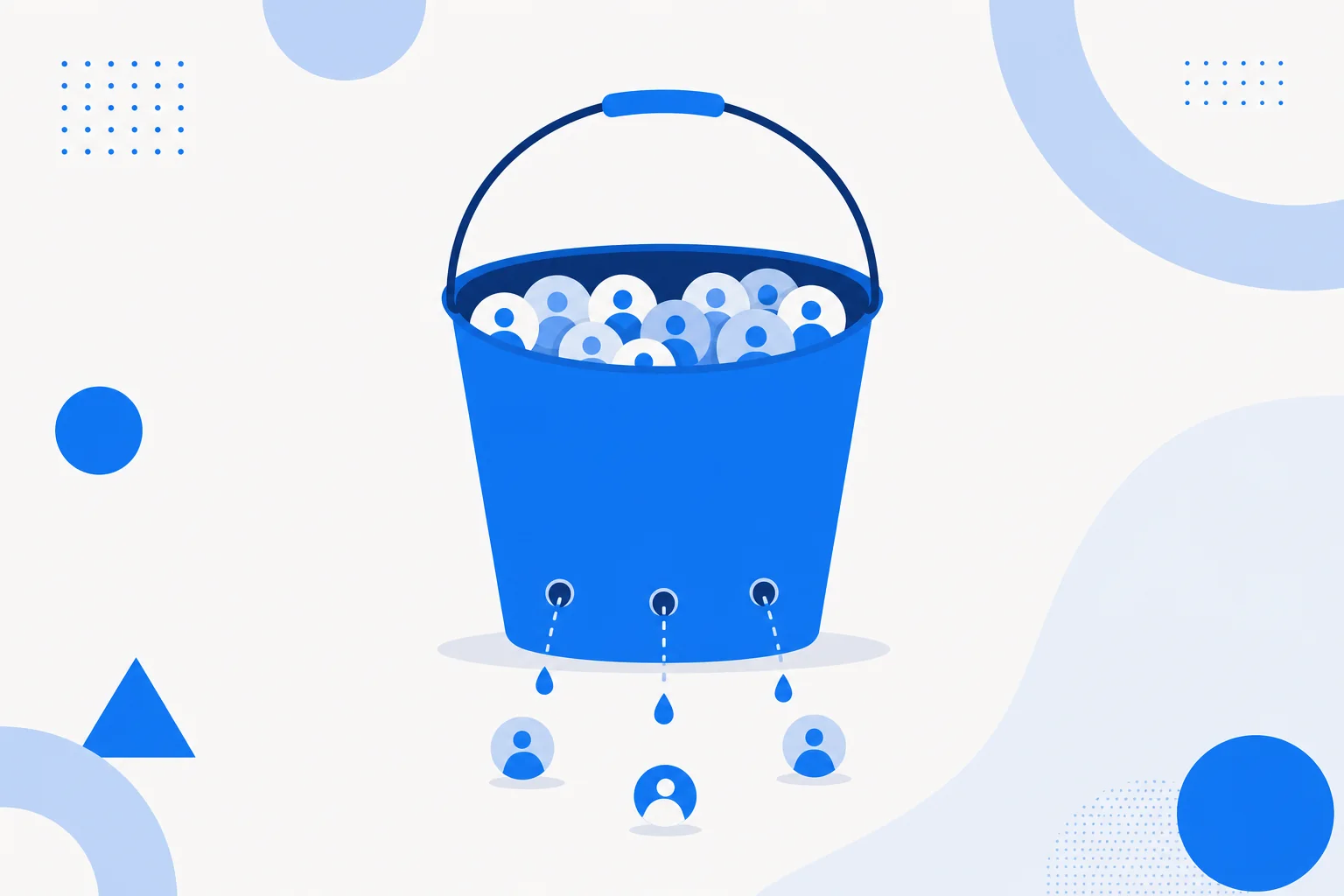
Churn is the loss of customers or revenue in a period. In a SaaS, it measures how many customers cancel (customer churn) or how much recurring revenue disappears (revenue churn). It is the metric that reveals whether growth is sustainable: the higher the churn, the more new sales you need just to avoid shrinking.
CAC payback
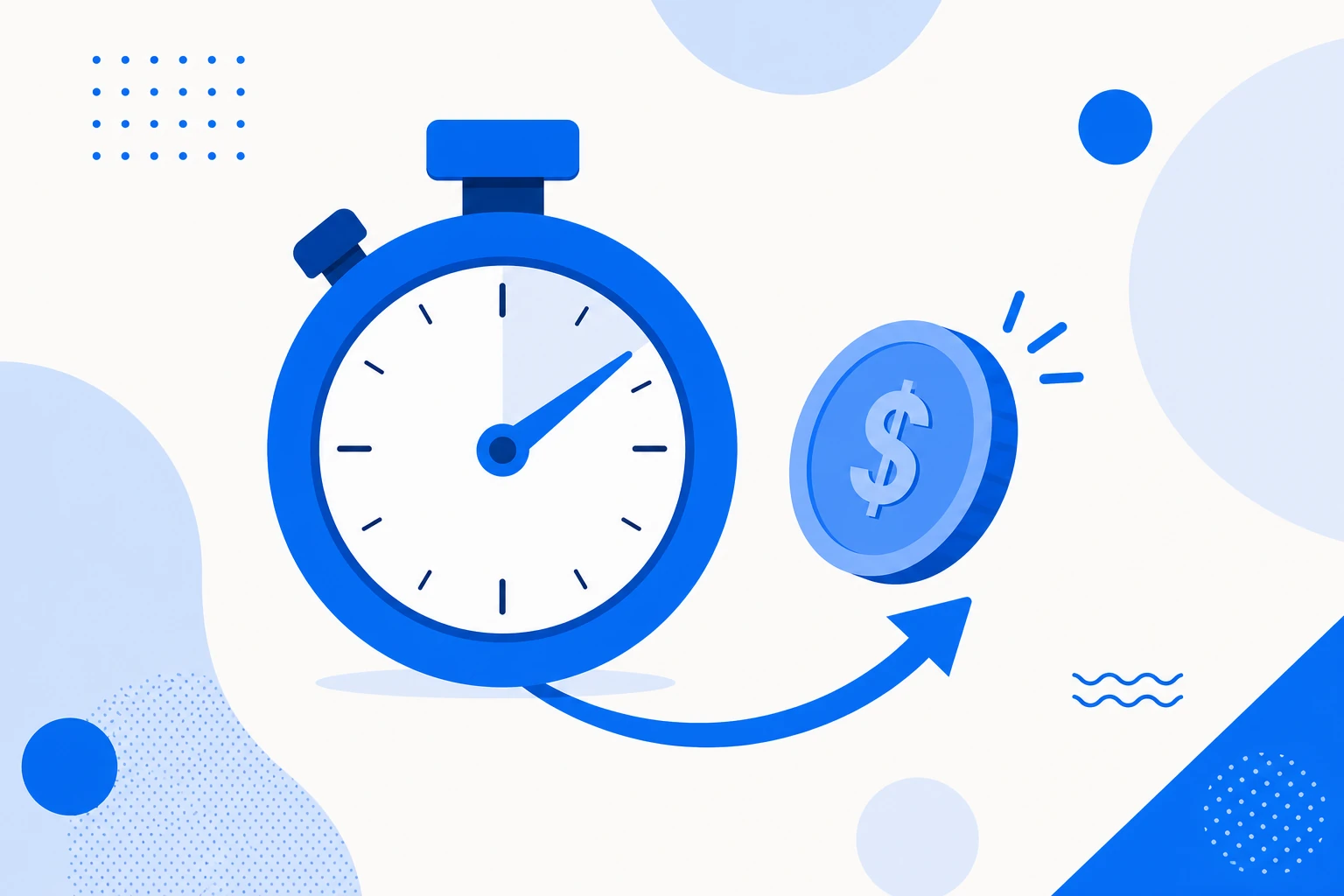
CAC payback is the time, in months, a customer takes to return the CAC in recurring margin. Divide the CAC by the monthly gross margin each customer generates (recurring revenue per customer times gross margin). It is the metric that shows how fast the acquisition investment comes back to cash.