
CAC payback: what it is and how to calculate it
By Tiago Costa · Updated on July 9, 2026
Definition
What CAC payback is
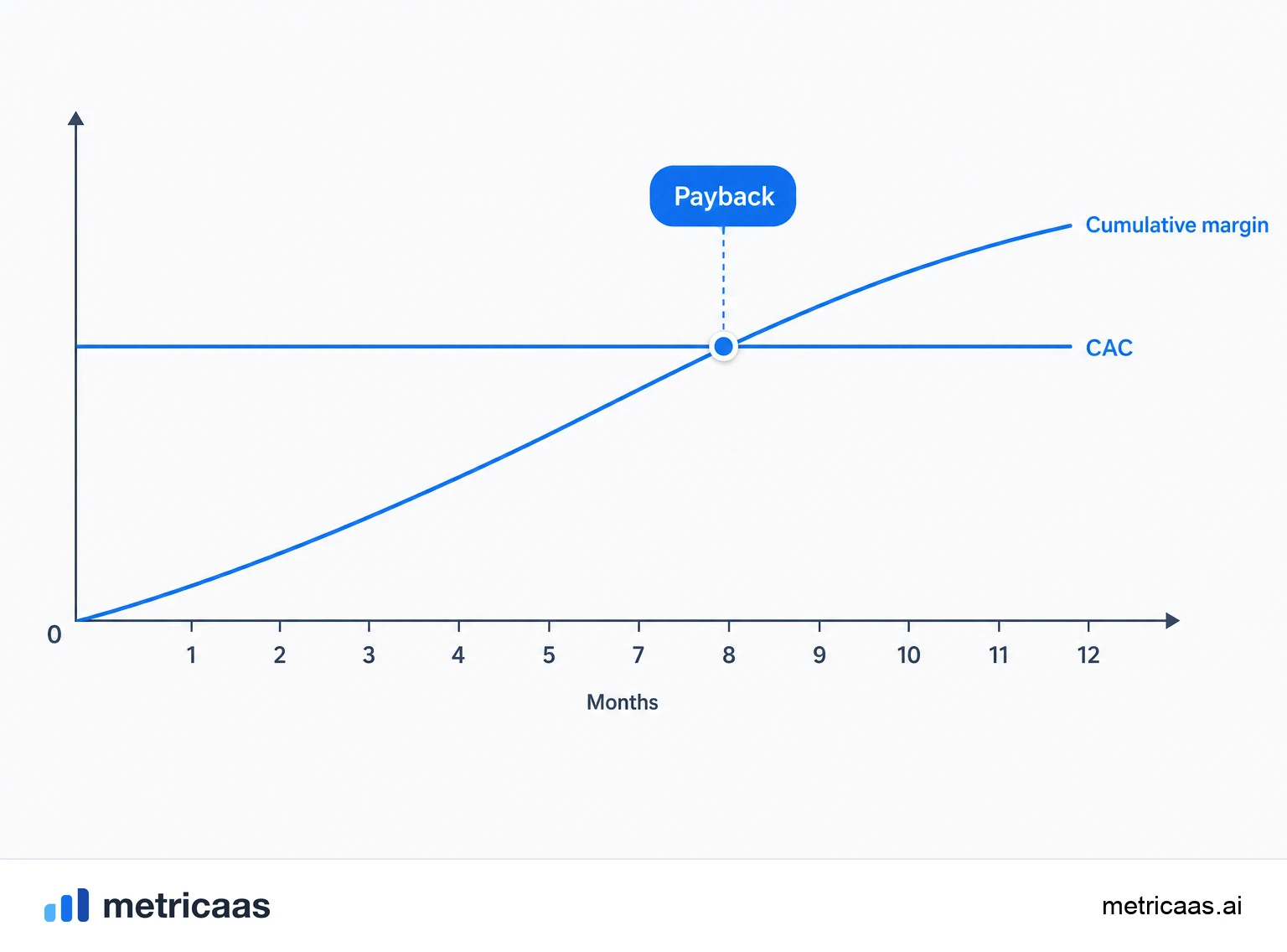
CAC payback measures how long a customer takes to return what it cost. The CAC is not an expense that vanishes in the month it happens: it is an investment the customer pays back little by little, month after month, with the margin the subscription generates.
That is why payback is measured in time, not money. It answers a cash question: from when does this customer stop being a cost and start being profit. The shorter the payback, the sooner the money invested in acquisition comes back to fund the next customer.
How to calculate CAC payback
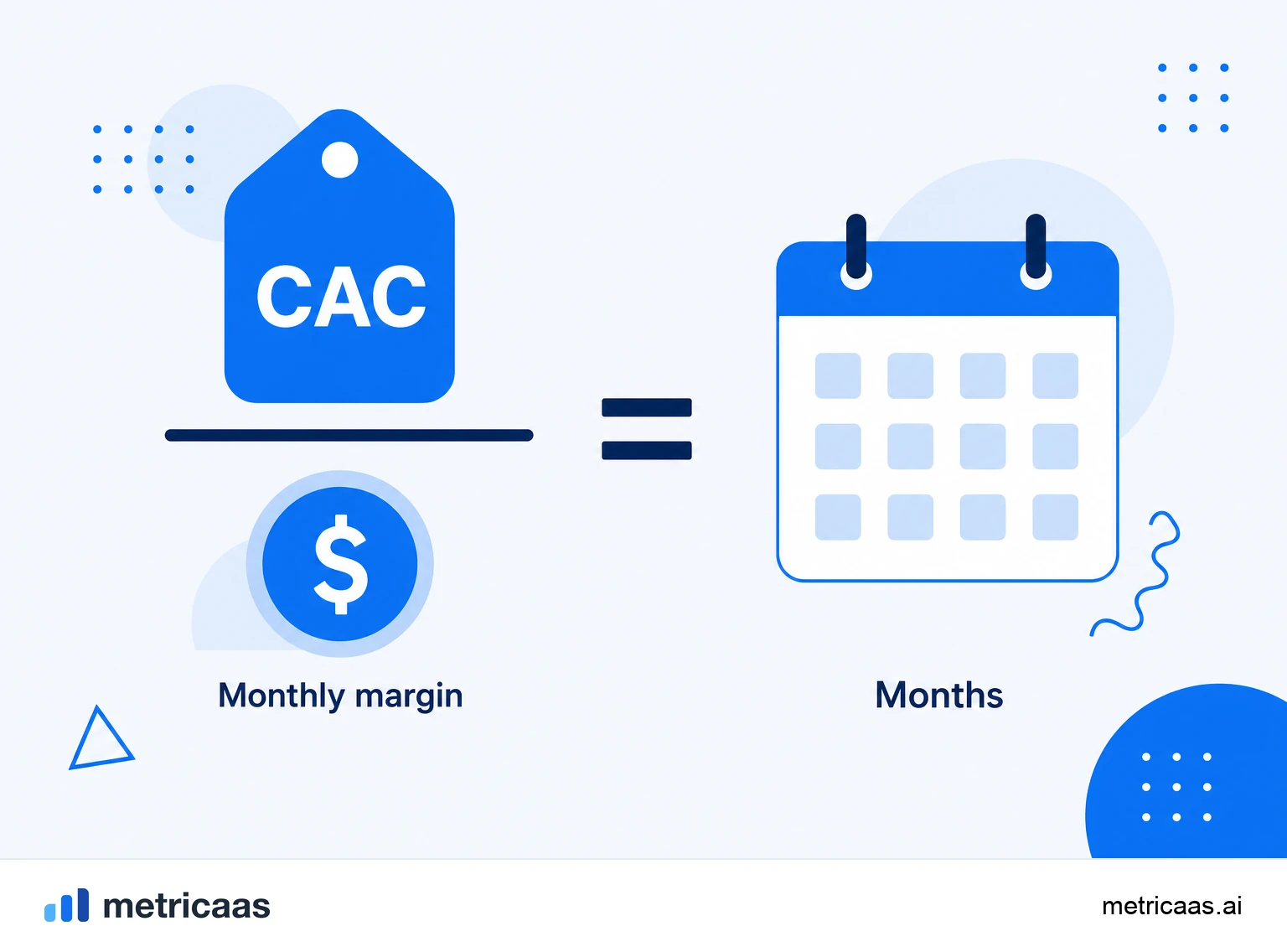
The formula divides CAC by the recurring gross margin each customer generates per month. Full revenue is not enough: what pays the CAC is margin, what is left after the cost of serving that customer.
- CAC payback = CAC / (recurring revenue per customer x gross margin).
- Use the monthly recurring revenue per customer (the MRR per customer), not total revenue.
- Multiply by gross margin to reach the margin that actually reaches cash.
Example: a customer paying $250 a month at 80% gross margin generates $200 of monthly margin. If CAC was $2,000, payback is 2,000 divided by 200, that is, 10 months. It is the time that customer margin takes to cover the cost of having won them.
What a good CAC payback looks like
There is no single number, but there are benchmarks. The classic rule, popularized by David Skok, said CAC payback should stay under 12 months for a healthy SaaS. It is a good compass for self-serve products and smaller tickets.
In practice, the number varies a lot with contract size. According to Benchmarkit, the industry median payback was around 18 months in 2024, ranging from about 9 months in low-ticket products (ACV up to $5k a year) to about 24 months in contracts above $100k. A larger deal justifies a longer payback, as long as the customer stays long enough to pay it back.
CAC payback and the LTV:CAC ratio
Payback and the LTV to CAC ratio answer different questions, and you need both. Payback measures speed: how fast the money comes back. The LTV:CAC ratio measures magnitude: how much total value the customer generates relative to what it cost.
The David Skok benchmark combines the two: a payback under 12 months and an LTV to CAC ratio above 3 to 1 usually signal healthy acquisition. One can mislead without the other: a customer with a huge LTV but a 30-month payback can break your cash before it turns a profit; a short payback with a low LTV means you recover fast but earn little. Look at both together.
Why payback matters for cash and runway
Payback is, at heart, a cash metric. Every new customer is a hole in cash on the day it joins: you have already spent the CAC, and the margin only trickles back. The longer the payback, the longer each acquisition stays in the red, and the more cash you need on hand to grow.
A short payback has a valuable property: it funds itself. When the customer returns the CAC in a few months, that margin can already pay to acquire the next customer, and growth consumes less outside capital. A long payback does the opposite: it forces you to burn cash up front and shortens the runway, even if the business is profitable on paper.
How to reduce CAC payback
Because payback is CAC divided by monthly margin, there are two paths: lower the numerator (the CAC) or raise the denominator (the margin per customer). In practice:
- Raise revenue per customer (ARPA): larger plans, upsell and expansion lift monthly margin and shorten payback.
- Improve gross margin: serving the customer for less makes each month worth more.
- Improve funnel conversion: the same budget bringing more customers lowers CAC, and with it payback.
- Reduce churn: a payback only counts if the customer stays longer than it; those who cancel earlier never return the CAC.
The most overlooked point is the last: price and margin shorten payback, but retention is what makes it happen. A customer who leaves in month 6 with a 10-month payback was a loss, no matter how cheap they were to win.
Frequently asked questions
It is the number of months of recurring margin a customer takes to return the CAC. It measures how fast the acquisition investment comes back to cash.
By dividing CAC by the monthly gross margin per customer (recurring revenue per customer times gross margin). A $2,000 CAC over $200 of monthly margin is 10 months.
The classic benchmark is under 12 months, but it varies with deal size: the industry median was around 18 months in 2024, from about 9 months at low tickets to 24 months on large contracts.
By raising revenue and margin per customer, improving funnel conversion to lower CAC, and reducing churn so the customer stays long enough to pay itself back.
Payback measures speed (how fast the money comes back) and the LTV:CAC ratio measures magnitude (how much value the customer generates versus the cost). A payback under 12 months with LTV:CAC above 3 to 1 signals healthy acquisition.
Related concepts

CAC
CAC (Customer Acquisition Cost) is how much, on average, you spend to win a new customer. Add up everything invested in marketing and sales over a period and divide by the number of new customers who came in during that period. It is the metric that tells you whether your growth is economically healthy.
LTV / CLV
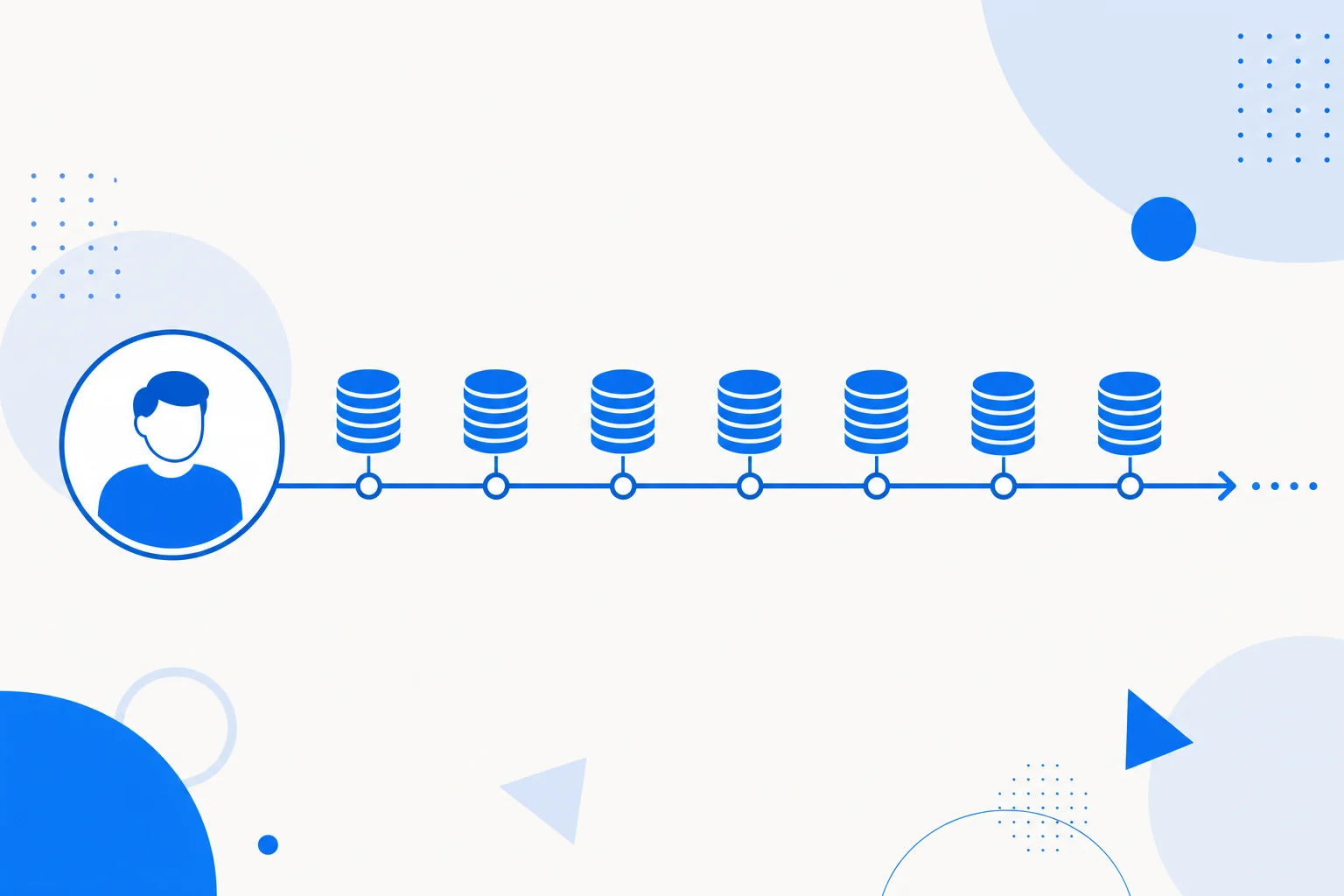
LTV (Lifetime Value), also called CLV or CLTV, is the total value a customer generates while they stay in your base. In a simple form, it is the recurring average revenue times margin times the customer lifetime. It is the metric that shows how much it is worth investing to win and keep each customer.

MRR
MRR (Monthly Recurring Revenue) is the monthly recurring revenue of a SaaS: the sum of all active subscriptions normalized to a month. It is the core metric of a subscription business because it shows, predictably, how much the company earns on a recurring basis each month, without counting one-off charges.