
Contraction: the revenue lost from customers who stay and pay less
By Tiago Costa · Updated on July 9, 2026

Definition
Contraction is the recurring revenue lost from customers who stay on your base but start paying less.
- It comes from downgrades, fewer seats and removed add-ons.
- It is not churn: the customer did not leave, only pays less.
- It is a negative component of MRR movements and it drags NRR down.
What revenue contraction is
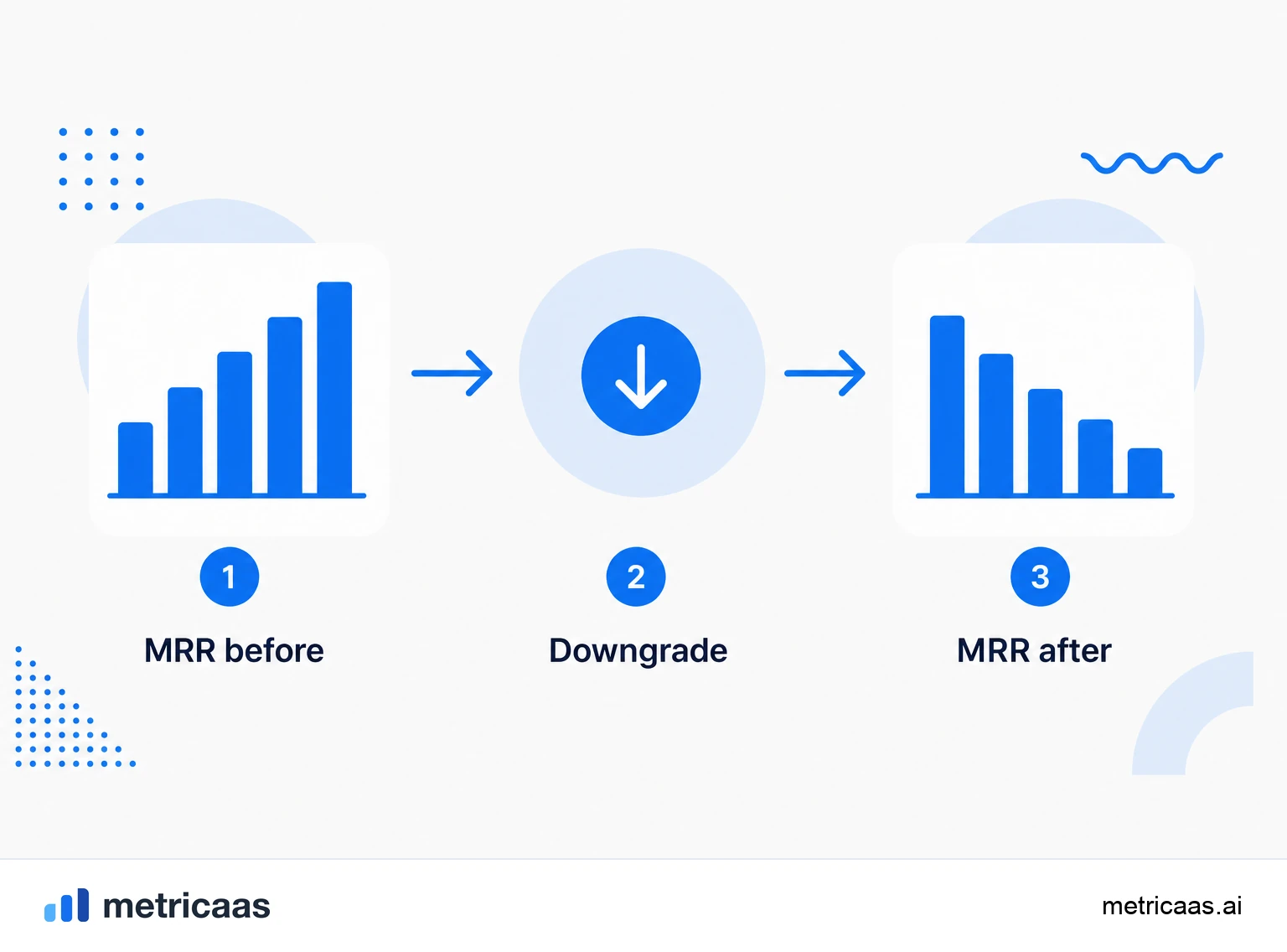
Contraction is the recurring revenue you lose when a customer stays on your base but reduces how much they pay. They did not cancel the subscription: they moved from an expensive plan to a cheaper one, cut seats or removed an add-on. The result is a smaller MRR from the same active customer.
That is why contraction often goes unnoticed. The customer count does not change, the logo is still on the list, but recurring revenue shrank. Anyone watching only the number of active accounts misses that loss; anyone tracking MRR per account catches it.
Contraction, churn and the difference that matters
The most common mix-up is treating contraction as churn. It is not. In churn, the customer leaves and you lose 100% of their revenue. In contraction, the customer stays and you lose only part of it. One becomes zero; the other becomes less.
The distinction matters because the responses differ. Against churn you fight not to lose the whole account; against contraction you fight to preserve value inside an account that wants to stay. Lumping both into a single bucket of lost revenue hides which problem you actually have.
- Churn: the customer cancels, their revenue goes to zero.
- Contraction: the customer stays, but pays less than before.
What causes contraction
Contraction almost always comes from one of these. Each tells a different story about the value the customer sees in the product.
- Plan downgrade: the customer swaps a pricier plan for a cheaper one, usually over cost or because they use less than expected.
- Fewer seats or licenses: the customer team shrank, or they realized they were paying for users who did not log in.
- Removed add-on or module: an optional feature stopped being worth the price for that customer.
- Lower usage on usage-based pricing: when part of the bill is volume-based, using less means paying less.
Reading the cause is the first step. A downgrade over price calls for a commercial conversation; a downgrade over low usage calls for adoption and customer success work.
Contraction in MRR movements
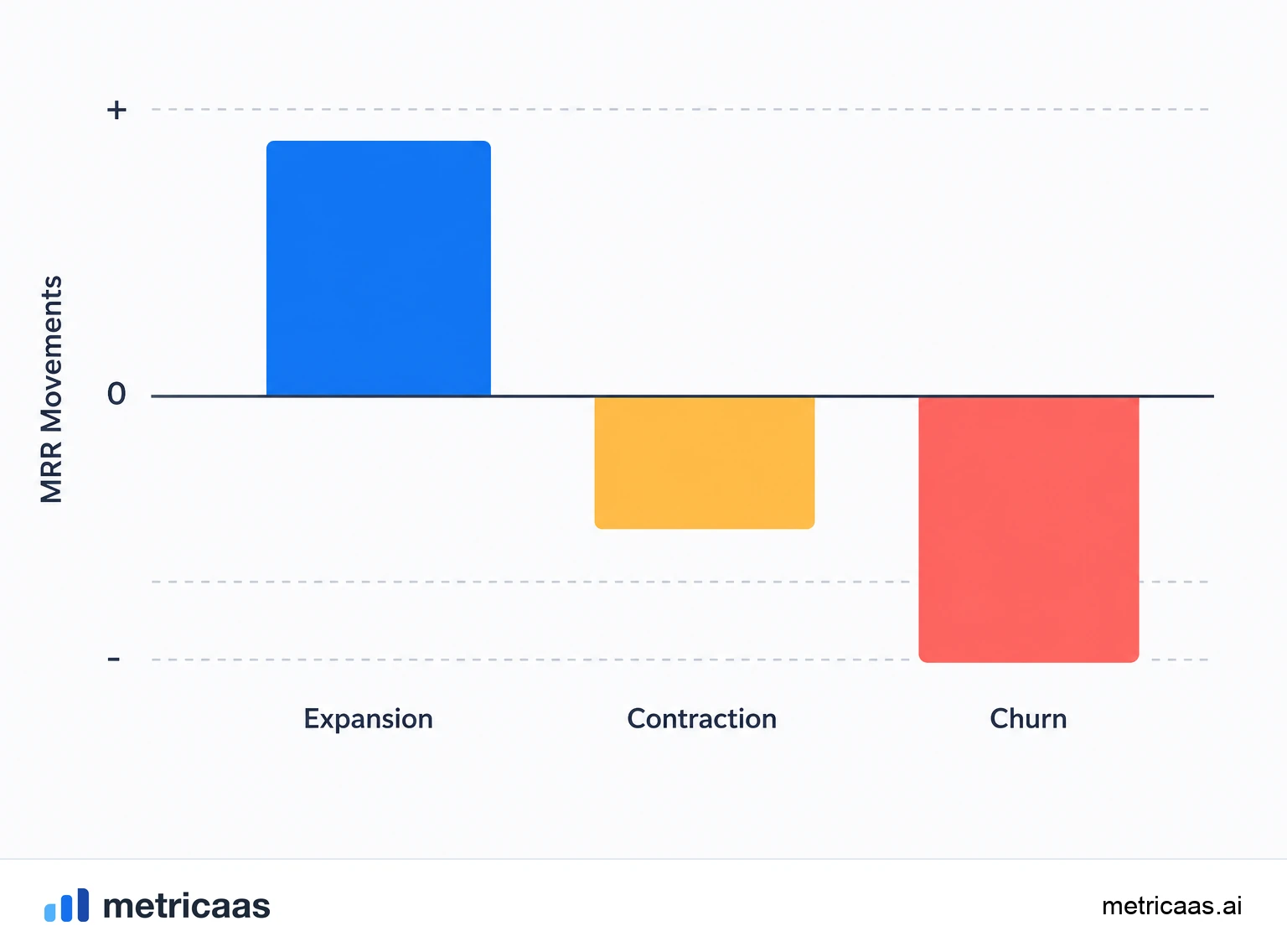
Every month, MRR moves in blocks. MRR movements add what came in (new customers and expansion) and subtract what went out (churn and contraction). Contraction is one of the two negative forces in that math, alongside churn.
Separating contraction inside that waterfall is what lets you diagnose the month. A flat MRR can hide strong expansion cancelled out by equally strong contraction. Without the contraction block isolated, you cheer or panic over the net number without understanding what made it up.
How contraction drags NRR down
Net Revenue Retention (NRR) measures how much of a cohort revenue you keep after adding expansion and subtracting churn and contraction. Contraction enters as a direct subtraction: every dollar of downgrade lowers NRR even if no customer left.
That is why two companies with the same churn can have very different NRR: the one with more contraction retains less revenue. The private SaaS survey by KeyBanc Capital Markets shows median net revenue retention near 100%, and keeping contraction in check is part of what separates those above that mark from those below it.
How to spot and reduce contraction
To reduce contraction, you first have to see it. Isolate the contraction block in your MRR, tag every event with a reason (price, usage, team size) and look at where it concentrates, by plan, by segment and by customer tier.
- Act before the downgrade: usage drops often precede a request for a smaller plan; a usage alert buys time to act.
- Package value in the right plan: contraction over price is sometimes a sign of a plan poorly designed for that profile.
- Treat idle seats with adoption: cutting unused licenses becomes contraction; helping the customer use them prevents the loss.
- Offer alternatives to a full cancel: a guided downgrade beats a churn, but the goal is to preserve as much revenue as possible, not to push customers down.
Contraction never reaches zero, and forcing it to can make churn worse. The goal is to keep it small and explained, so that expansion outpaces it with room to spare.
Frequently asked questions
It is the recurring revenue lost from customers who stay on your base but start paying less, through a plan downgrade, fewer seats or a removed add-on. The customer did not leave, but their MRR dropped.
No. In churn the customer cancels and you lose all of their revenue; in contraction the customer stays and you lose only part of it. One becomes zero, the other becomes less.
Plan downgrades, cuts in seats or licenses, removed add-ons and lower usage on usage-based pricing. Each cause points to a different action.
It enters as a direct subtraction in Net Revenue Retention: every dollar of downgrade lowers NRR even with no customer leaving. More contraction means retaining less revenue.
It is a negative component of MRR movements, alongside churn. It subtracts recurring revenue, unlike expansion, which adds to it.
Isolate and tag every event with a reason, act before the downgrade when usage drops, package value in the right plan and offer alternatives to a full cancel. The goal is to keep it small, not zero.
Related concepts

Expansion
Expansion (expansion revenue or expansion MRR) is the additional recurring revenue that comes from customers you already have, without relying on new sales. It comes from upsell (higher plan), cross-sell (more products), add-ons and usage growth. It is the force that pushes net revenue retention above 100% and makes the base grow on its own.

MRR Movements
MRR movements are the breakdown of the monthly change in MRR into its causes: new, expansion, contraction, churn and reactivation MRR. Instead of watching only the final number, you separate every dollar that came in and every dollar that left, and see why recurring revenue grew, stalled or fell. The sum of all movements is the net new MRR for the period.

Churn
Churn is the loss of customers or revenue in a period. In a SaaS, it measures how many customers cancel (customer churn) or how much recurring revenue disappears (revenue churn). It is the metric that reveals whether growth is sustainable: the higher the churn, the more new sales you need just to avoid shrinking.