
Grandfathering: mantener a los clientes antiguos en el precio antiguo
Por Tiago Costa · Actualizado el 9 de julio de 2026

Definición
El grandfathering mantiene a los clientes actuales en el precio o plan antiguo tras una subida, mientras los nuevos pagan las condiciones nuevas.
- Reduce la fricción y el churn justo después de la subida.
- A cambio, limita los ingresos y complica la base con el tiempo.
- La alternativa es migrar a todos con aviso e incentivos.
Qué es el grandfathering
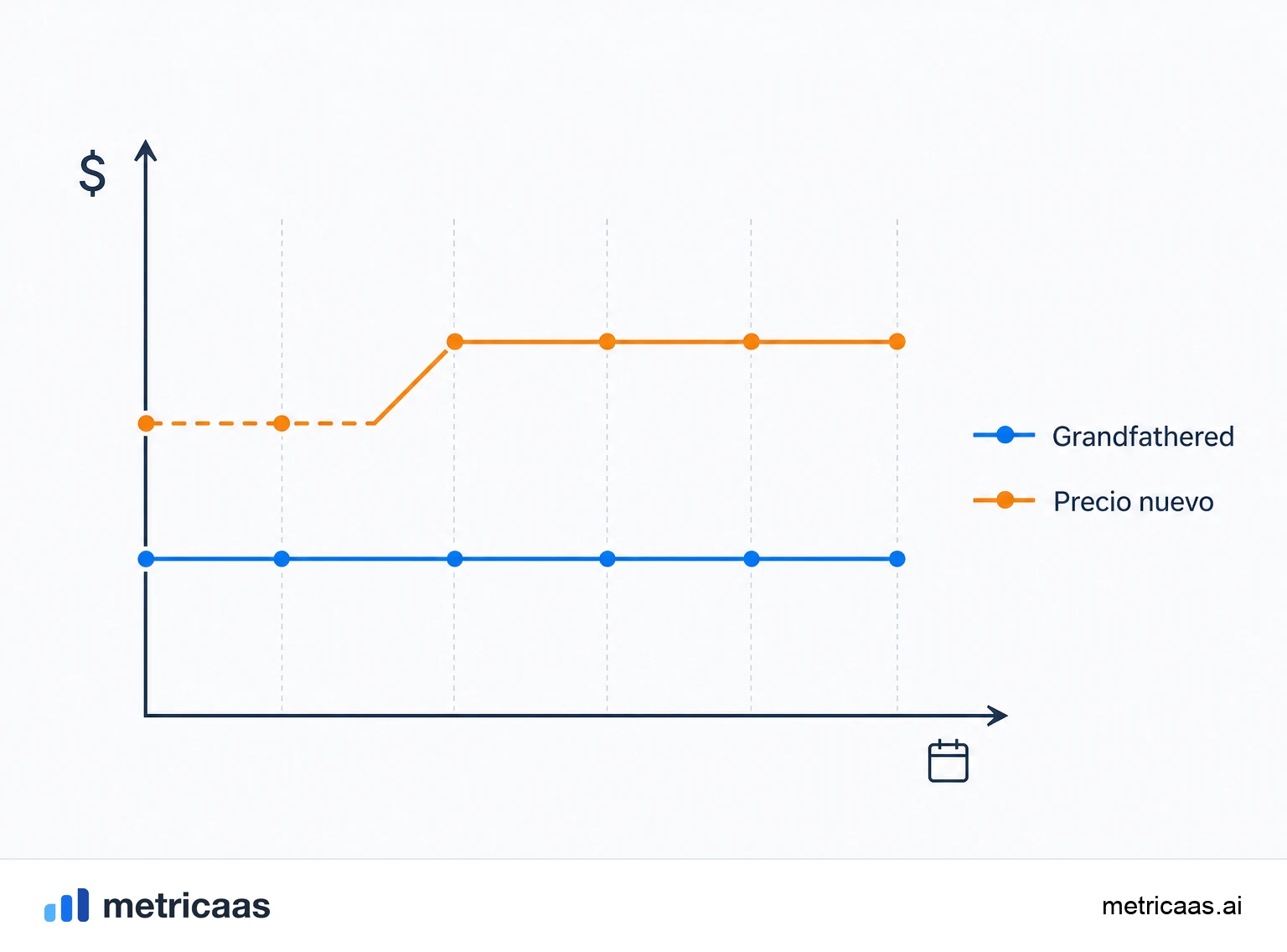
El grandfathering, a veces planteado como cláusula de derechos adquiridos, consiste en mantener a los clientes actuales en el precio o el plan antiguo después de una subida o un cambio de empaquetado. Los nuevos clientes contratan las condiciones nuevas y los antiguos siguen exactamente donde estaban, como si la subida no hubiera ocurrido para ellos.
El término describe una decisión de transición, no una métrica. La empresa deja, de forma deliberada, una parte de la base congelada en un precio heredado. Eso crea dos mundos que conviven un tiempo: el precio de tarifa actual, que sostiene los ingresos futuros, y los contratos antiguos, que preservan la relación con quien entró temprano.
Por qué las empresas usan grandfathering
La lógica es proteger la relación con quien ya confió en el producto. Una subida comunicada sin cuidado puede disparar cancelaciones, y el grandfathering actúa como amortiguador: los clientes antiguos no sienten el aumento, el equipo comercial evita conversaciones difíciles y el churn no se dispara en el mes siguiente al cambio.
También hay un componente de percepción de justicia. Quien entró temprano, muchas veces cuando el producto era más inmaduro y más arriesgado, siente que merece el precio con el que se comprometió. Mantener ese precio transmite lealtad, reduce las quejas públicas y evita una oleada de solicitudes de reembolso justo después del anuncio.

El costo oculto: ingresos limitados y una base fragmentada
El alivio a corto plazo tiene contrapartida. Cada cliente mantenido en el precio antiguo es ingreso que no acompaña el valor que el producto ya entrega, y eso funciona como un techo silencioso sobre la expansión. La distancia entre el precio antiguo y el nuevo se convierte en un costo de oportunidad que crece con cada renovación.
Existe además un costo operativo. Una base con varios precios y paquetes heredados es más difícil de soportar, de reprecificar y de migrar después: código, facturación y soporte cargan excepciones durante años. Como la retención es uno de los factores que más pesan en el valor de un SaaS, según estudios de SaaS Capital, tiene sentido proteger al cliente, pero no hasta el punto de congelar del todo la capacidad de crecer ingresos dentro de la propia base.
Grandfathering o migrar a todos: la alternativa
La alternativa al grandfathering es migrar toda la base al precio nuevo, con aviso previo y una transición diseñada. En lugar de congelar condiciones, la empresa da tiempo (avisa, por ejemplo, con sesenta o noventa días), explica por qué cambia el precio y ofrece incentivos para suavizar el cambio: un periodo con el precio antiguo garantizado, un descuento de fidelidad por unos meses o un upsell que entrega más valor por el precio nuevo.
Migrar a todos preserva la simplicidad de la base y el potencial de ingresos, a costa de una conversación más delicada. El grandfathering hace lo contrario: evita la conversación ahora y empuja la complejidad hacia adelante. Muchos equipos combinan las dos cosas, manteniendo a los antiguos por un plazo definido y migrándolos por etapas, en vez de elegir un extremo.
Cómo decidir cuándo usar grandfathering
La decisión depende de cuánto se aleja el precio antiguo del valor actual y de cuán sensible es la base. Si el producto evolucionó mucho y adoptó una precios basados en valor, mantener contratos antiguos por tiempo indefinido puede salir caro. Si la subida es pequeña y la base es grande y sensible, un grandfathering temporal protege la relación sin sacrificar demasiados ingresos.
Una regla práctica es tratar el grandfathering como transición, no como estado permanente. Define por cuánto tiempo quedan protegidos los clientes antiguos, qué planes se descontinuarán y cuál es el camino de migración. OpenView, una firma reconocida en investigación de pricing, suele recordar que el precio es la palanca más desaprovechada del SaaS: revisar precios con regularidad y planificar la transición evita acumular una base imposible de reprecificar.
Cómo comunicar una subida con grandfathering
La comunicación decide el resultado. El anuncio tiene que ser claro sobre qué cambia, para quién, cuándo y por qué, y debe llegar antes de cualquier cobro nuevo. Di de forma explícita quién queda protegido por el precio antiguo y por cuánto tiempo, para que el cliente antiguo se sienta reconocido y el nuevo entienda las reglas.
Conecta la subida con el valor entregado, no con costos internos. Enumera lo que el producto ganó desde el último precio, ofrece un camino claro a quien quiera cambiar de plan y deja un canal abierto para dudas. Hecho así, el grandfathering se vuelve parte de una historia de crecimiento y confianza, en lugar de un parche para posponer una decisión difícil.
Preguntas frecuentes
Es mantener a los clientes actuales en el precio o plan antiguo después de una subida o un cambio de empaquetado, mientras los nuevos clientes pagan las condiciones nuevas.
Es el precio antiguo que un cliente sigue pagando tras una subida general. Queda protegido de la nueva tarifa, al menos durante un periodo que la empresa define.
Sí, a medio plazo. Cada cliente en el precio antiguo es ingreso que no acompaña el valor entregado, lo que actúa como techo sobre la expansión y el crecimiento dentro de la base.
Con grandfathering los antiguos siguen en el precio antiguo; en una migración toda la base pasa al precio nuevo, con aviso e incentivos. Uno evita fricción ahora, el otro preserva ingresos y simplicidad.
Conviene tratarlo como transición con un plazo definido (por ejemplo, seis o doce meses) y no como estado permanente, para no terminar con una base imposible de reprecificar.
Reduce el churn a corto plazo, porque los clientes antiguos no sienten la subida. El costo aparece después, en ingresos limitados y en una base más difícil de gestionar.
Conceptos relacionados

Precios basados en valor
Los precios basados en valor (value-based pricing) fijan el precio a partir del valor percibido y entregado al cliente, no del coste de producción ni solo de lo que cobra la competencia. Anclan el precio a la disposición a pagar de cada segmento, lo que suele capturar más ingresos. Dependen de entender el valor por persona y de elegir una buena métrica de valor.

Churn
El churn es la pérdida de clientes o de ingresos en un período. En un SaaS mide cuántos clientes cancelan (churn de clientes) o cuánto ingreso recurrente desaparece (churn de ingresos). Es la métrica que revela si el crecimiento es sostenible: cuanto más alto el churn, más ventas nuevas necesitas solo para no encoger.

Expansión
La expansión (expansion revenue o expansion MRR) son los ingresos recurrentes adicionales que vienen de los clientes que ya tienes, sin depender de ventas nuevas. Nace de upsell (plan mayor), cross-sell (más productos), add-ons y crecimiento de uso. Es la fuerza que empuja la retención neta por encima del 100% y hace que la base crezca sola.