
Value-based pricing: what it is and how to set price by value
By Tiago Costa · Updated on July 9, 2026

Definition
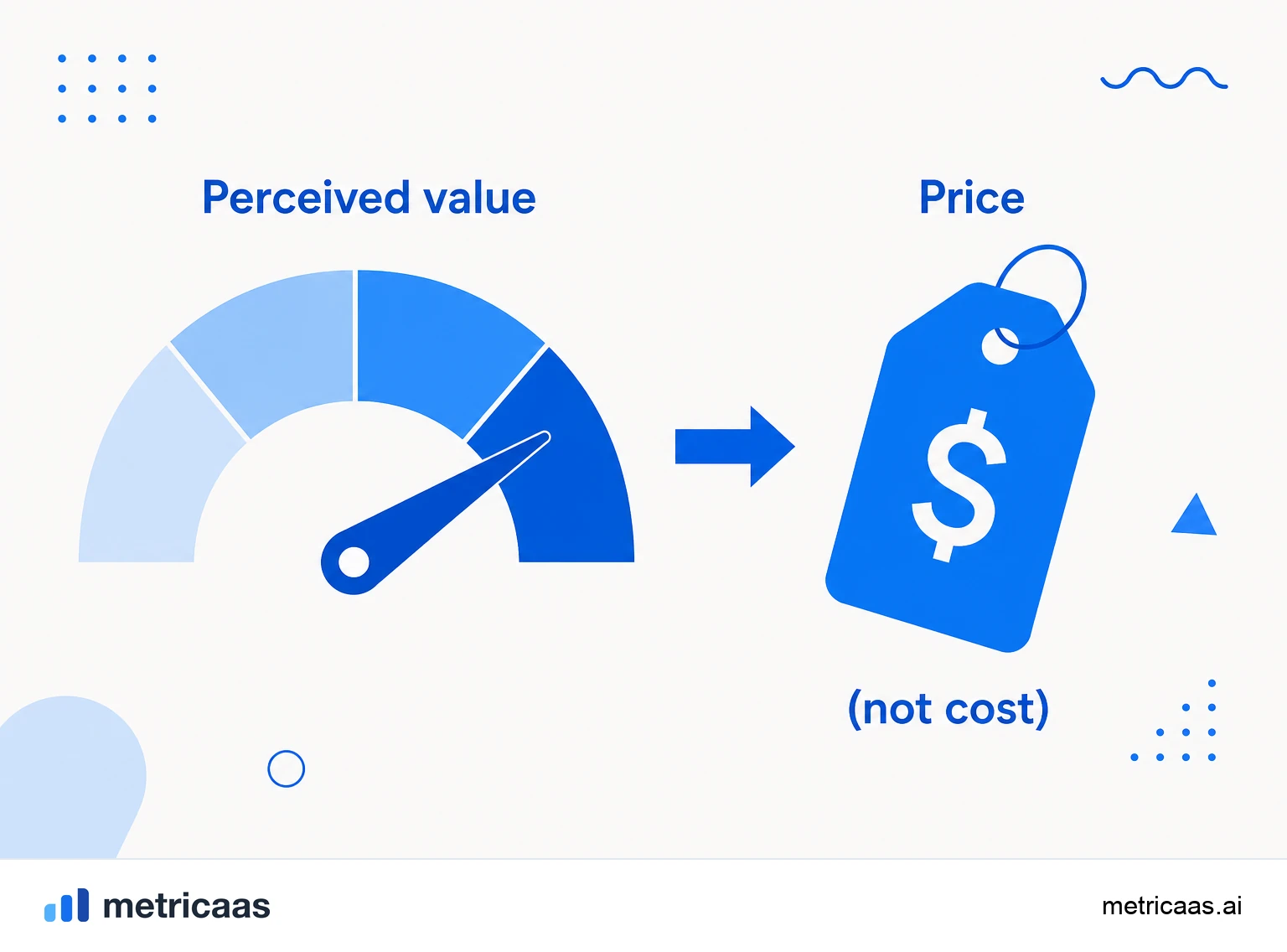
Value-based pricing sets the price by the value perceived and delivered to the customer, not by cost or only by competitors.
- Anchors price to each segment willingness to pay.
- Depends on a well-chosen value metric.
- Usually captures more revenue than cost-plus.
What value-based pricing is
Value-based pricing sets the price from the value the customer perceives and receives, not from production cost nor only from what a competitor charges. The question that guides the method is not how much it costs to deliver, but how much it is worth to the buyer.
In a SaaS, the marginal cost of serving one more customer is low, so pricing by cost leaves money on the table. Value-based pricing tries to capture the right slice of the benefit the product generates, anchoring price to each segment willingness to pay rather than to a fixed margin.
Value-based, cost-plus and competitor-based pricing
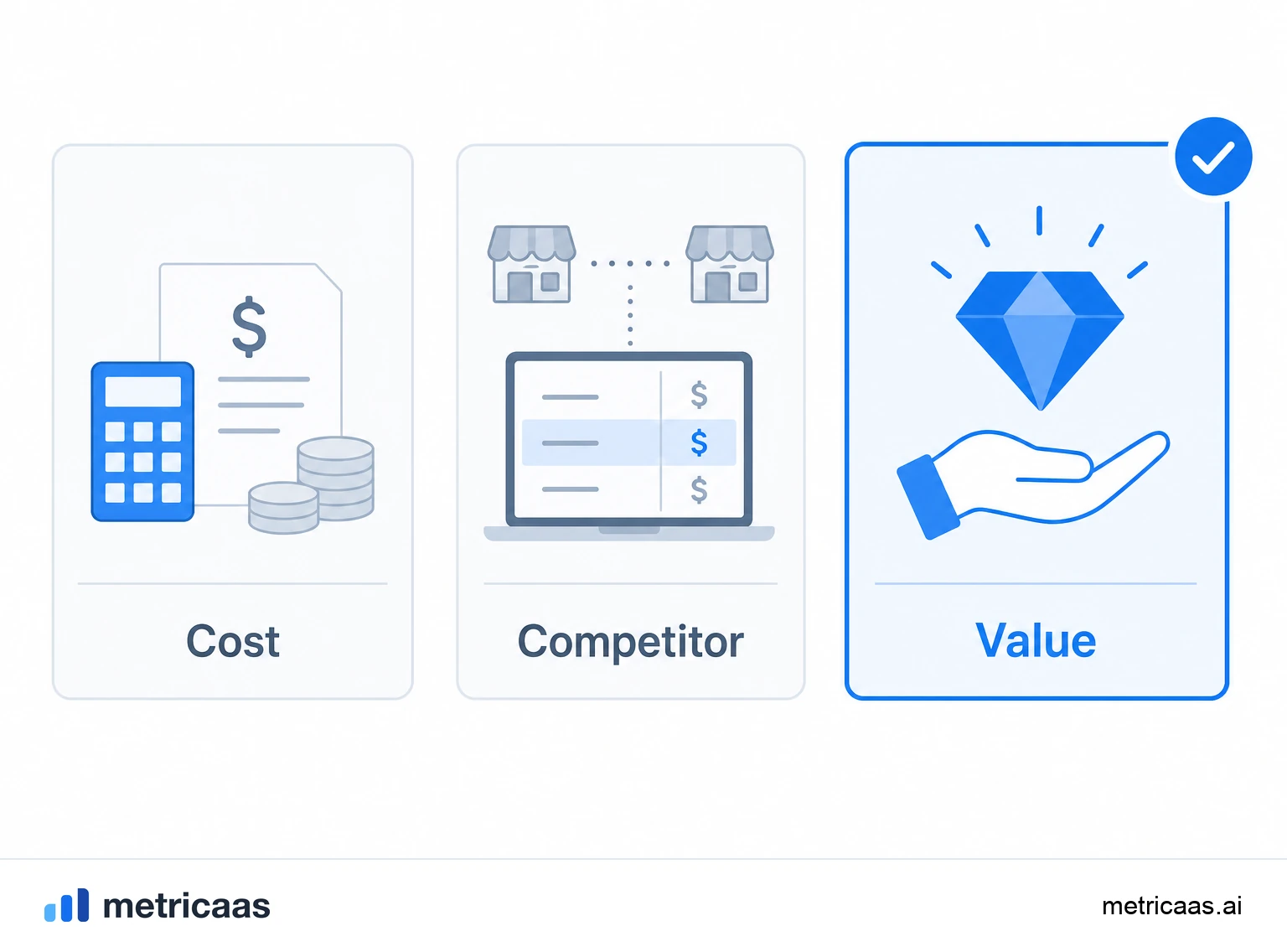
There are three classic ways to arrive at a price, and it is worth understanding the differences before you choose.
- Cost-plus: you add a margin to production cost. Simple, but it ignores perceived value and tends to underprice software.
- Competitor-based: you mirror the price set by the market. It protects against price wars, but turns the product into a commodity and erases differentiation.
- Value-based: you start from the benefit delivered to the customer and their willingness to pay. It takes more research, but usually captures more revenue.
The three are not mutually exclusive: cost acts as a floor, competition as a market reference and value as a ceiling. Value-based pricing pushes the price toward the ceiling, without going past what the customer will accept.
The value metric: the heart of the model
The heart of a value model is the value metric: the unit you charge for that grows together with the benefit the customer receives. Seats, managed contacts, gigabytes, transactions processed or API calls are examples of value metrics.
A good value metric is easy to understand, tracks the customer success and scales with usage. When it is well chosen, the price rises naturally as the customer extracts more value, which brings the model close to Usage-based pricing and makes ARPA grow without friction.
How to uncover willingness to pay per persona
There is no single value: the same product is worth different things to different personas. Uncovering each segment willingness to pay is the central work of value-based pricing.
The tools for this range from interviews and price sensitivity surveys to analyzing the concrete gains the product creates, such as time saved, added revenue and cost avoided. The goal is to map each persona value drivers and design plans that capture value where it lives.
- Segment by persona and use case, not just by company size.
- Quantify the benefit in money whenever possible.
- Test price ranges and watch conversion and retention, not just the stated answer.
Advantages and risks of value-based pricing
Value-based pricing usually captures more revenue because it aligns price to willingness to pay, instead of tying it to a margin over cost. It also opens room for Expansion, since the customer pays more as they extract more value.
The risks are in the effort. You need to understand value per persona, choose a solid value metric and review it often. Misreading value can produce a price that is too high, which stalls conversion, or too low, which leaves money on the table. It is a more powerful and also more demanding method than cost-plus.
Value-based pricing in recurring SaaS
In the recurring model, value-based pricing pays off over time. Because the customer who reaps more value tends to grow in the account, a good model turns that growth into revenue through Upsell and expansion, without relying only on new customers.
The context helps explain why pricing became a strategic discipline: according to Gartner, worldwide public cloud spending is set to top US$700 billion in 2025, a market where a few percentage points of price move a lot of results. Funds such as OpenView, a reference in SaaS pricing research, have argued for years that anchoring price to value, rather than to cost, is the most direct path to grow revenue without inflating acquisition.
Frequently asked questions
It is setting the price by the value perceived and delivered to the customer, not by production cost nor only by competitors. The price is anchored to each segment willingness to pay.
A tool that saves a team ten hours a month and charges based on that gain, not on its server cost. The price reflects the benefit generated, which varies by persona and use case.
There is no single formula. You estimate the economic value delivered to the customer, such as added revenue or cost avoided, measure willingness to pay per segment and set the price at a slice of that value, above cost and within what the customer accepts.
Cost-plus adds a margin to production cost and ignores perceived value. Value-based starts from the benefit delivered and the customer willingness to pay, and usually captures more revenue in software.
The three most cited are cost-plus (cost plus margin), competitor-based (mirror the market) and value-based (anchor to perceived value). In SaaS, value-based pricing tends to be the most profitable.
The advantage is capturing more revenue and sustaining expansion. The risk is the effort: it requires understanding value per persona, choosing a good value metric and reviewing often, or you price too high or too low.
Related concepts

Usage-based pricing
Usage-based pricing is the billing model where the bill grows as the customer consumes the product, measured by a usage metric such as API calls, gigabytes or events. It aligns cost with the value delivered and lowers the barrier to entry, but makes revenue less predictable. It can be pure, with no subscription, or hybrid, a base subscription plus usage overage.

Upsell
Upsell means moving a customer who already uses your product to a higher plan or more of the same product: more seats, a higher tier, a larger limit. It is one of the main drivers of expansion and of the revenue that pushes NRR above 100%. Unlike cross-sell, which sells a complementary product, upsell deepens the use of what the customer already bought.

ARPA
ARPA (Average Revenue Per Account) is a SaaS recurring revenue divided by the number of active accounts. It shows how much each account generates, on average, per month or year. It is the metric that reveals the typical value of a customer and one of the main levers for growing revenue without relying only on new sales.