
Term sheet: what it is, its clauses and how to negotiate the round
By Tiago Costa · Updated on July 9, 2026

Definition
A term sheet is the mostly non-binding document that summarizes the key terms of an investment round and serves as the basis for the definitive contracts.
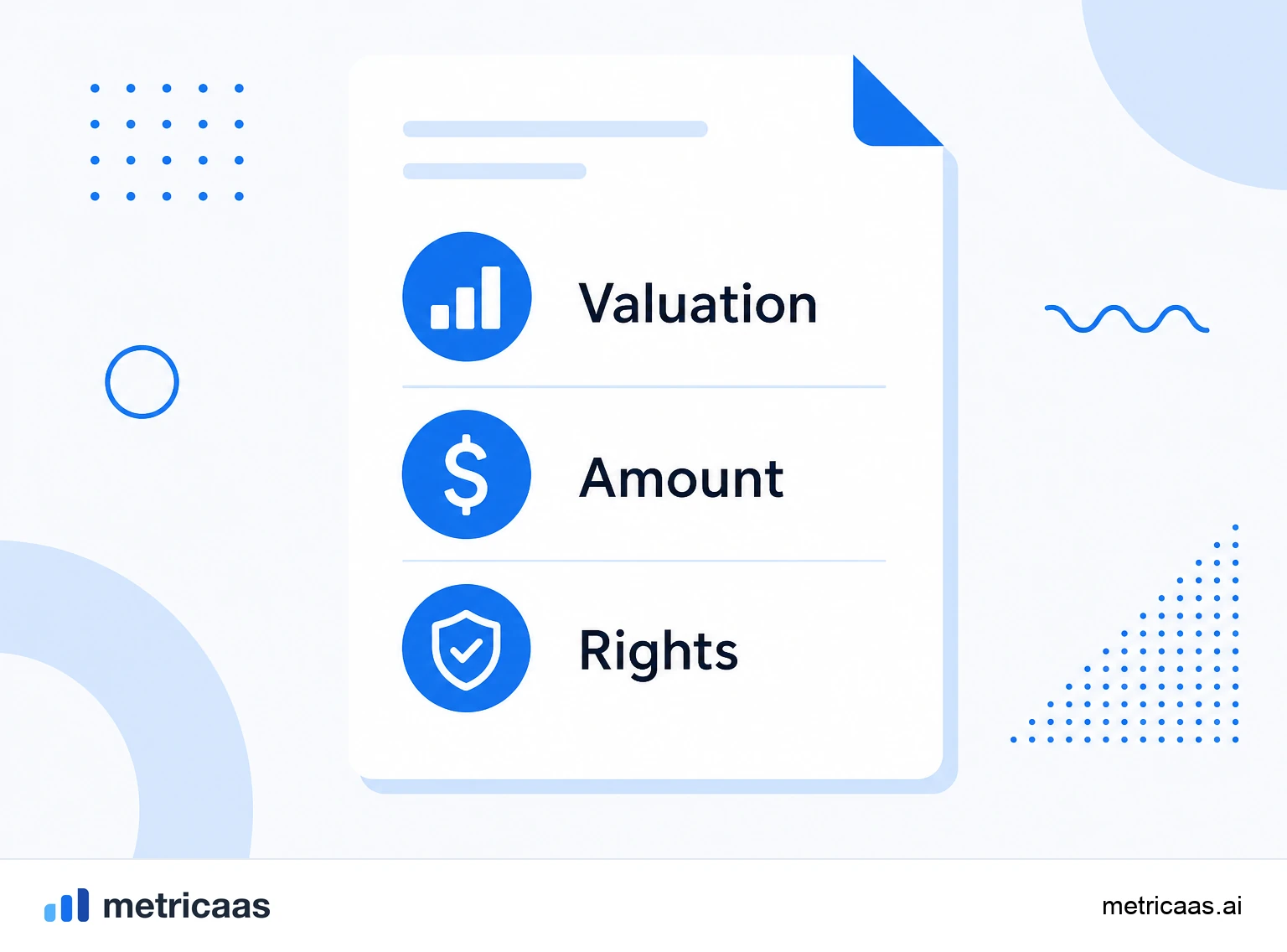
- Covers valuation, investment amount, ownership and liquidation preference.
- Also spells out voting rights, board seats and the option pool.
- Reading beyond the valuation is essential: the clauses weigh as much as the number.
What a term sheet is
The term sheet is the document that summarizes, in a few pages, the key terms of an investment proposal before the long contracts are drafted. It turns a conversation between founders and investors into concrete clauses: how much capital comes in, at what valuation, what ownership the investor receives and which rights take effect after the round.
In practice, the term sheet works as a map of the negotiation. It does not close the deal by itself, but it fixes the skeleton of the agreement and guides the drafting of the definitive contracts. In early rounds, a convertible instrument like the SAFE can replace a priced round, yet even then a term sheet usually records the valuation cap, the discount and the other conditions.
The economic clauses: valuation, investment and liquidation
The economic block is what most people read first. It sets the investment amount, the pre and post-money valuation and, from there, the slice the investor takes in the cap table. The gap between pre and post-money directly changes founder dilution, so it pays to check which base the percentage was calculated on.
- Valuation and investment: how much the company is worth and how much new money comes in.
- Liquidation preference: who gets paid first in a sale or liquidation, and how much. A "1x non-participating" returns the invested amount before the split; higher multiples or participating preference favor the investor.
- Anti-dilution: protects the investor if a future round prices lower (a down round).
- Dividends: whether they accrue on the preferred shares or not.
Two companies with the same valuation can offer very different economics depending on the liquidation preference. That is why the headline number rarely tells the whole story.
The control and governance clauses
Just as important as the money is who decides. The control clauses set voting power, the makeup of the board and the matters that need investor approval. A board seat and a list of protected matters (protective provisions) are common, such as approving new rounds, selling the company or amending the charter.
- Board: how many seats each side appoints and who controls decisions.
- Voting rights and protected matters: topics the investor can veto even as a minority holder.
- Option pool: shares reserved for the team, almost always created before the round, which increases the dilution of everyone already at the table.
- Information rights, tag-along and drag-along: access to reports and rules to sell alongside or to force a sale.
A minority investor with strong protected matters can hold more sway over key decisions than their stake suggests. Reading the control block is reading the real map of power in the company.
What is binding and what is not
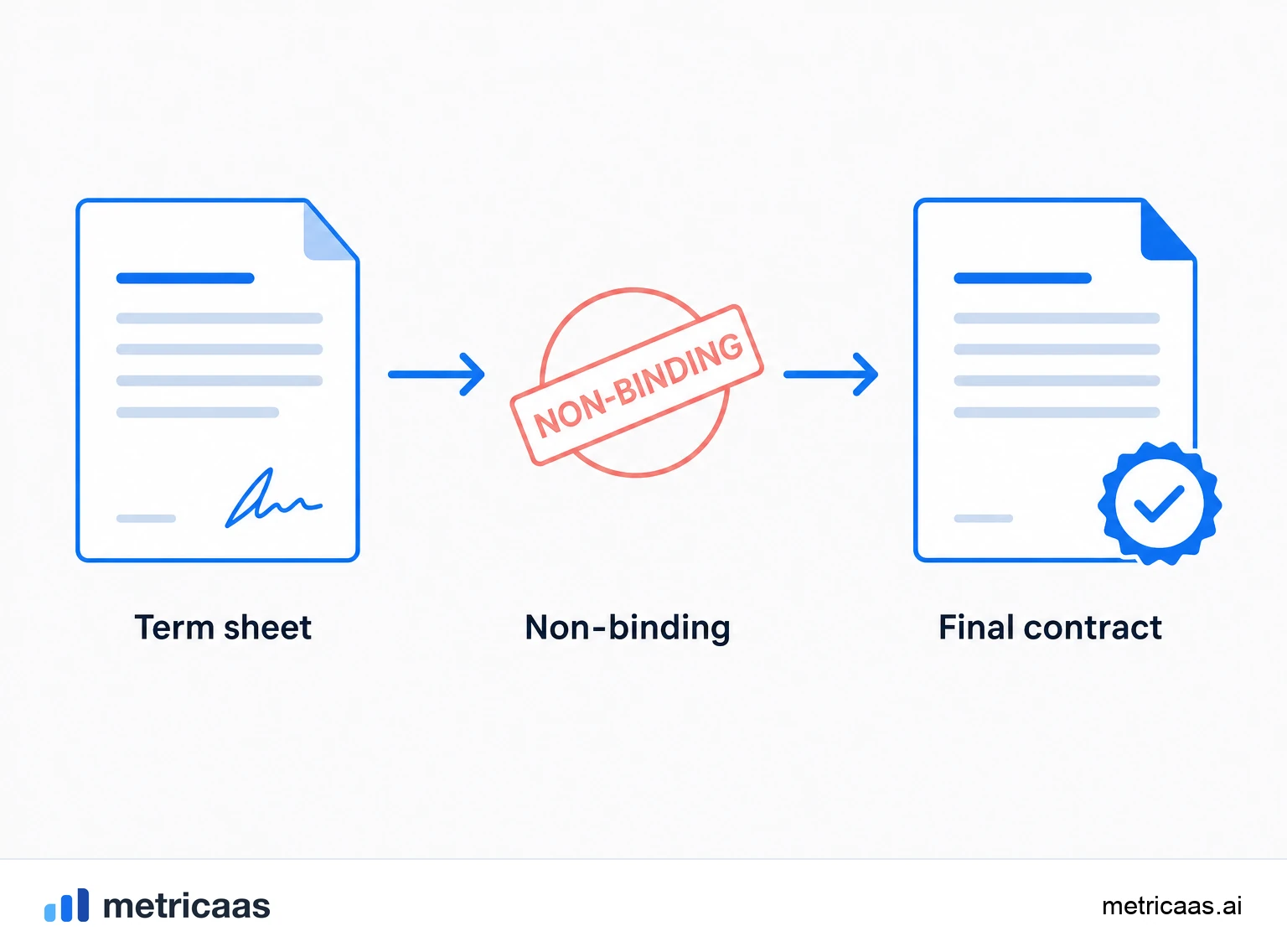
The term sheet is usually non-binding as to the investment itself: signing does not oblige anyone to complete the round. What tends to bind are the ancillary clauses, typically the exclusivity (no-shop), which stops the founder from talking to other investors for a period, and confidentiality.
That distinction matters. A signed term sheet signals serious intent and kicks off due diligence, but the deal only becomes binding with the definitive contracts. Even so, walking back terms already agreed carries a reputational cost, so treat every line as if it will hold, even the ones that technically do not bind.
From term sheet to definitive documents
Once the term sheet is signed, the due diligence and drafting phase begins, spelling out in legal language everything the summary only sketched. This includes the share purchase agreement, the shareholders agreement and the updated charter.
- Due diligence: the investor reviews finances, contracts, intellectual property and the cap table before releasing the capital.
- Definitive contracts: turn the term sheet clauses into full legal obligations.
- Closing: when the money comes in and the shares are issued.
The clearer the term sheet, the fewer surprises at this stage. Ambiguities left to "sort out later" become friction exactly when the capital is closest to landing.
Why you read beyond the valuation
It is tempting to judge a proposal by the valuation, but seasoned founders read the whole term sheet. A high valuation with an aggressive liquidation preference, a large option pool and broad protected matters can be worth less, in the end, than a lower valuation with clean terms.
Leading funds such as a16z and accelerators such as Y Combinator publish term sheet templates considered "clean" precisely to give founders a point of comparison. The lesson is the same: the valuation opens the conversation, but it is the economic and control clauses that decide how much you actually take home and how much power you keep. Negotiate the whole package, not just the number.
Frequently asked questions
It is the document that summarizes the key terms of an investment round, such as valuation, investment amount, ownership, liquidation preference and governance. It serves as the basis for the definitive contracts.
Usually not, as to the investment itself. Only ancillary clauses tend to bind, such as exclusivity (no-shop) and confidentiality. The deal becomes binding only with the definitive contracts.
Both are preliminary, mostly non-binding documents, but a term sheet is more specific and details the economic and control clauses of the round, while a letter of intent records more general intentions.
Valuation and investment amount, the resulting ownership, liquidation preference, voting rights, board composition, the option pool and clauses such as exclusivity and confidentiality.
Focusing only on the valuation and ignoring clauses like an aggressive liquidation preference, a large option pool and broad protected matters, which cut what founders actually take home and the control they keep.
The term sheet summarizes the terms and is almost entirely non-binding; the definitive contracts turn them into full legal obligations, signed after due diligence.
Related concepts

Valuation
Valuation is the estimate of what a company is worth at a given moment. In SaaS, the most common shortcut is a multiple on ARR, and that multiple rises or falls with growth, retention and efficiency, synthesized by the Rule of 40. Valuation also sets how much equity an investor gets for their check, separating pre-money (before the check) from post-money (after).

Cap table
A cap table, or capitalization table, is the record of who owns what in a company: founders, investors and the employee option pool, always adding up to 100%. It lists shares, percentages and share classes, and it is rewritten at every funding round, when new investment dilutes the existing holders. It is the basis for negotiating valuation and the term sheet.

SAFE
A SAFE (Simple Agreement for Future Equity) is the investment contract created by Y Combinator where an investor puts capital in now and converts that amount into equity at a future priced round, without setting a valuation up front. It uses a valuation cap and/or a discount to reward the risk of coming in early. It is not debt: there is no interest and no maturity date.