
Cap table: what a capitalization table is and how it works
By Tiago Costa · Updated on July 9, 2026

Definition
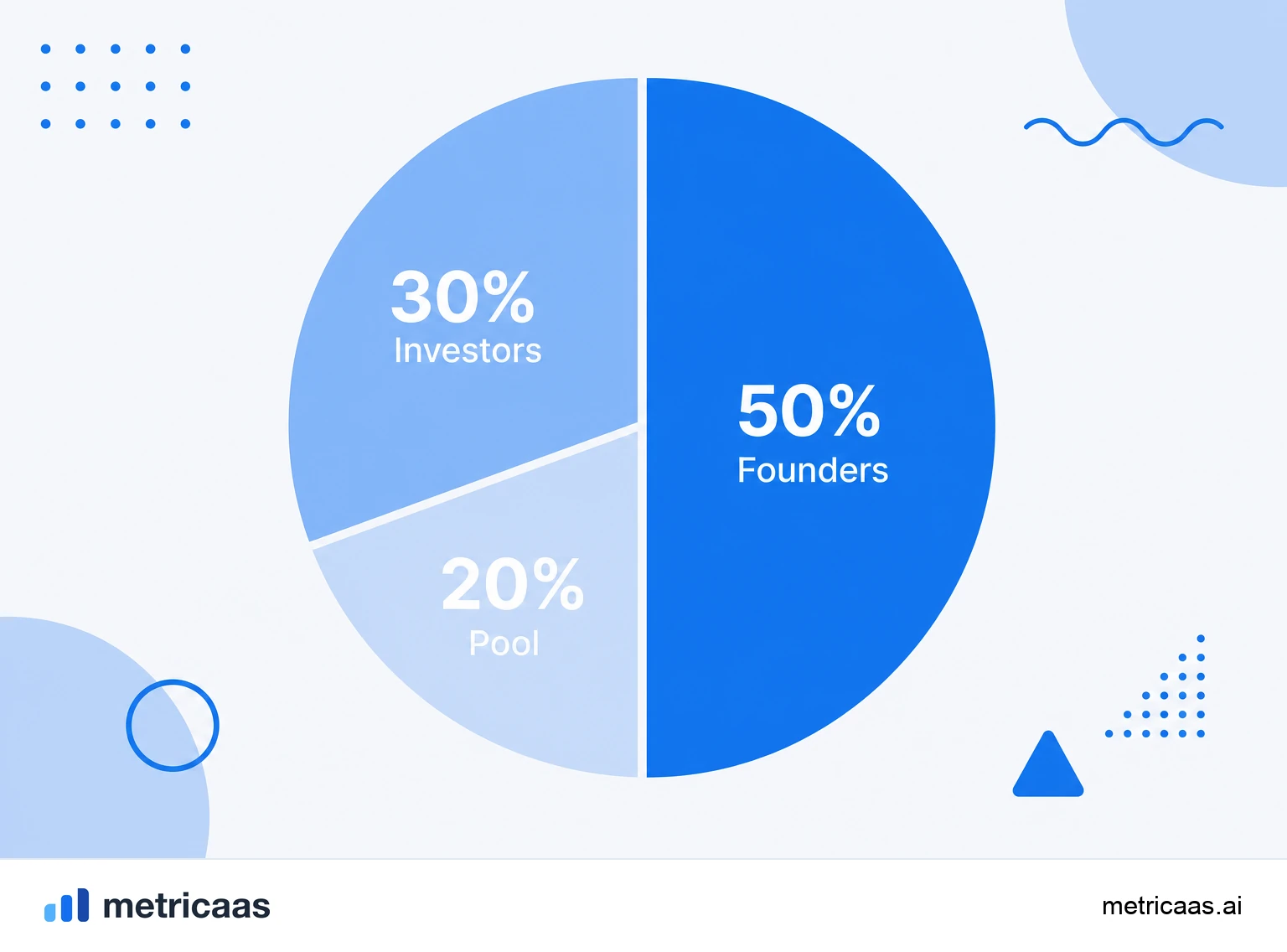
A cap table (capitalization table) is the record of who owns what in a company: founders, investors and the option pool, adding up to 100%.
- It records shares, percentages and share classes.
- Every round rewrites it and dilutes existing holders.
- It is the basis for negotiating valuation and the term sheet.
What a cap table is
A cap table, short for capitalization table, answers one simple and decisive question: who owns what in the company. It lists every holder of equity, the founders, the investors and the option pool reserved for employees, and shows how much each one holds in shares and in percentage. All the slices always add up to 100%.
Early on, the cap table of a startup fits in a spreadsheet: two or three founders splitting the shares between them. With every equity hire, every investor who comes in and every round, the table gains rows and becomes the official map of who owns the company.
What a cap table records
Beyond names and percentages, a cap table records the legal structure of ownership. Each row carries the holder, the number of shares, the matching percentage and the class of those shares.
- Common shares: usually held by founders and employees, with voting rights and no special preferences.
- Preferred shares: usually held by investors, with extra rights such as liquidation preference and protections in a sale.
- Option pool: a reserve of shares set aside to attract and keep talent, commonly between 10% and 20% of the company.
That granularity turns the cap table from a plain list into a decision tool: it shows not only who holds how much, but with which rights.
How each round rewrites the cap table
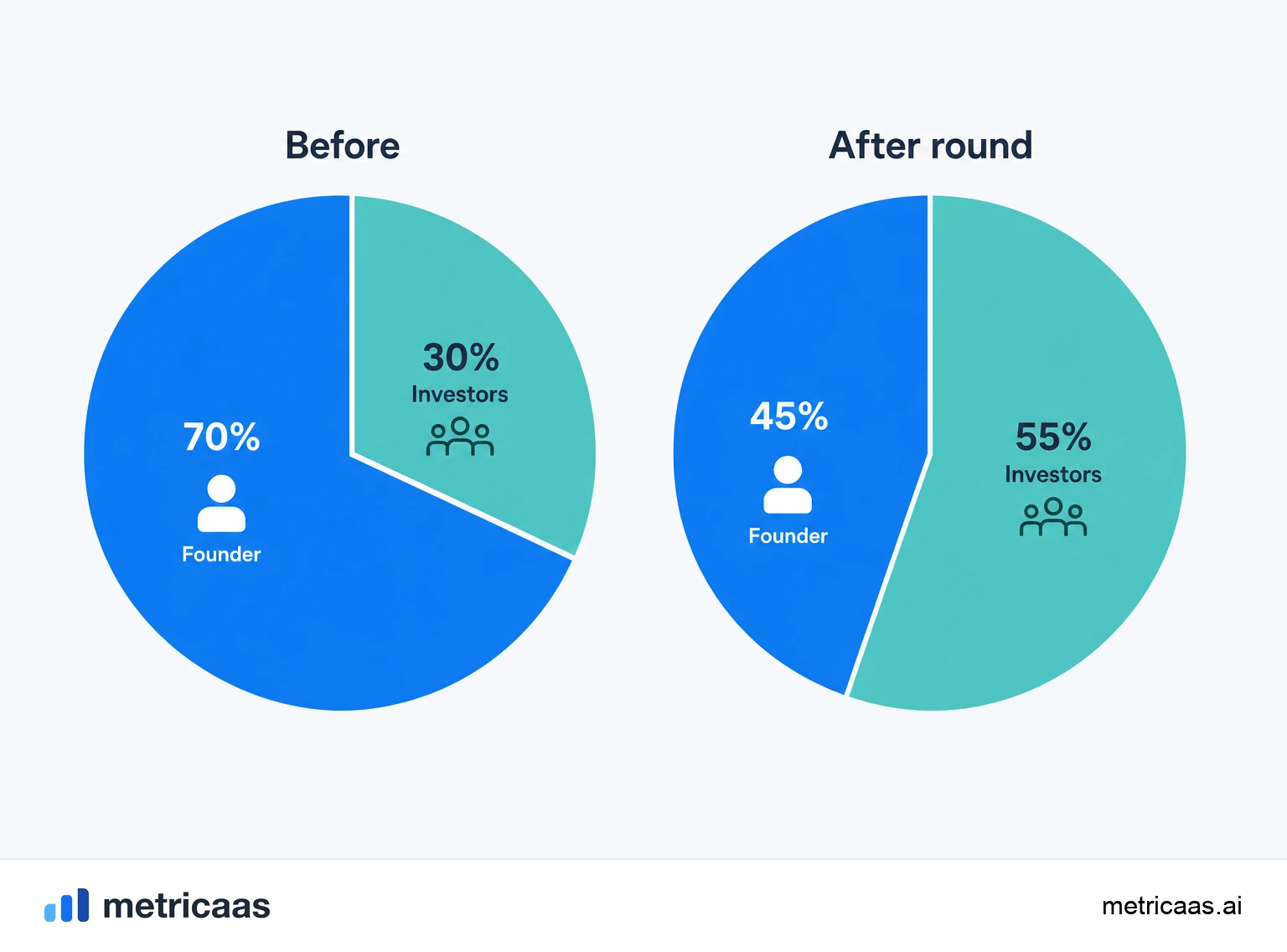
Every funding round rewrites the cap table. When an investor puts in capital, the company issues new shares to them, and the total share count grows. Because the pie gets bigger, the slice of everyone already inside shrinks in percentage, even if the number of shares each person holds does not change. That effect is dilution.
How big a slice the new investor receives depends on the valuation that gets negotiated: the higher the pre-money valuation, the less the company has to hand over for the same check. These terms, how much comes in, at what valuation and with which rights, are set in the term sheet and then reflected in the cap table. Instruments like the SAFE defer that math: the investor comes in now, but the shares only appear on the table when the SAFE converts, in a later round.
Issued versus fully diluted
There are two ways to read a cap table, and confusing them starts fights. Issued capital counts only the shares that already exist. Fully diluted capital also adds everything that could still become a share: the options already granted and those reserved in the pool, and the SAFEs and convertible notes that have not converted yet.
The difference matters because your percentage changes with the base used. A founder can hold 40% of issued capital today and much less on a fully diluted basis, once the whole pool and every convertible enter the count. Investors almost always think in fully diluted terms, because that is what shows real ownership after everything materializes.
Why a clean cap table matters
A clean cap table is one that is easy to understand: few classes, few scattered holders and a clear trail of how each slice got there. It matters most when raising money. Before investing, a fund runs the cap table through due diligence, and a messy table, with informal stakes, verbal promises or former partners holding large inactive slices, raises flags and can stall the deal.
A messy cap table also limits future options. If too much equity was handed out early, little is left for new rounds and for the team, and the company is more exposed to a down round if it has to raise in a weak position. Funds like a16z and accelerators like Y Combinator keep pressing the point: a clean cap table from the start avoids costly pain down the road.
Common mistakes and best practices
The most common stumbles repeat themselves. Handing out too much equity too early, piling up dead equity (large slices in the hands of people who left and no longer contribute), filling the table with dozens of small investors with no structure, and letting the cap table drift out of date, diverging from the legal documents.
- Keep a single source of truth, always reconciled with the contracts and the share ledger.
- Use vesting so equity is earned over time, not handed over all at once.
- Model the dilution before accepting a round, so you know where you land on the other side.
- Update the cap table at every event: an equity hire, a SAFE conversion, a new round.
Treating the cap table as a living document, and not as a forgotten spreadsheet, is what keeps ownership clear for founders, team and investors.
Frequently asked questions
It is the record of who owns what in a company: founders, investors and the option pool, adding up to 100%. It records shares, percentages and share classes.
Every equity holder, the number of shares, the percentage and the share class (common, preferred and options). It is the official map of who owns the company.
The company issues new shares to the investor, the total share count grows and the slice of existing holders shrinks in percentage. That effect is dilution.
Issued counts only the shares that already exist. Fully diluted also adds options and convertibles that could still become shares. Investors think in fully diluted terms.
Because investors run the cap table through due diligence before investing. A messy table, with dead equity or informal stakes, raises flags and can stall the round.
It is a reserve of shares set aside to attract and keep employees, commonly between 10% and 20% of the company. It appears on the cap table even before it is handed out.
Related concepts
Dilution
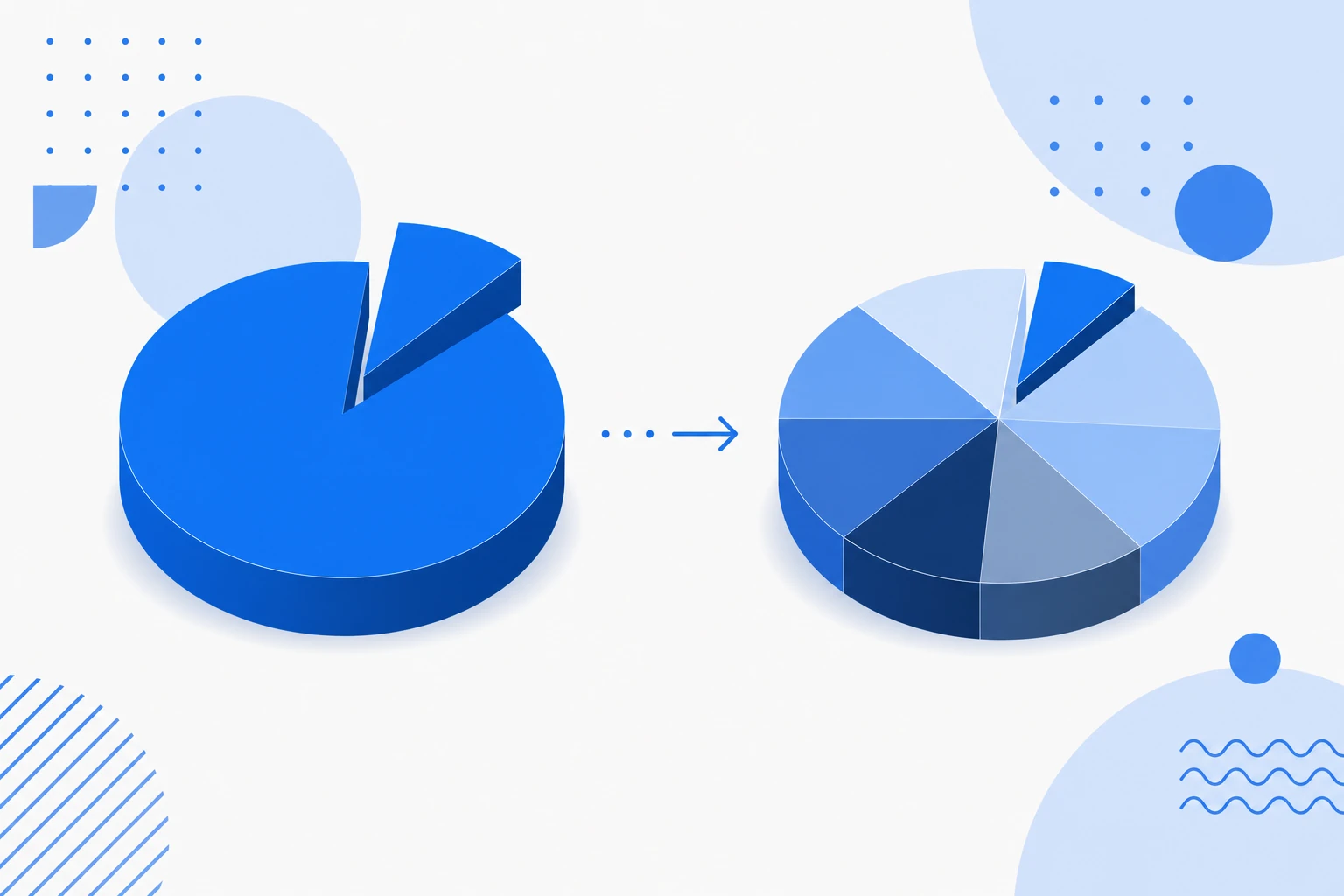
Dilution is the drop in existing owners' percentage when the company issues new shares, typically in a funding round or when creating the option pool. You end up with a smaller slice of a hopefully bigger pie. Added up across rounds, dilution defines how much founders still hold at the end.

Valuation
Valuation is the estimate of what a company is worth at a given moment. In SaaS, the most common shortcut is a multiple on ARR, and that multiple rises or falls with growth, retention and efficiency, synthesized by the Rule of 40. Valuation also sets how much equity an investor gets for their check, separating pre-money (before the check) from post-money (after).

SAFE
A SAFE (Simple Agreement for Future Equity) is the investment contract created by Y Combinator where an investor puts capital in now and converts that amount into equity at a future priced round, without setting a valuation up front. It uses a valuation cap and/or a discount to reward the risk of coming in early. It is not debt: there is no interest and no maturity date.