
Sales-led growth (SLG): what it is and when to use it in SaaS
By Tiago Costa · Updated on July 9, 2026
Definition
Sales-led growth (SLG) is the model where a sales team drives acquisition and expansion, guiding the buyer with demos, proposals and negotiation.
- Salespeople close the deal, not the product on its own.
- It is the default for high-ticket, complex (enterprise) sales.
- It contrasts with product-led growth; many companies combine both.
What sales-led growth is
Sales-led growth (SLG) is the model in which a commercial team drives customer acquisition and expansion. Salespeople qualify accounts, run demos, build proposals and negotiate terms, guiding the buyer step by step to signing the contract.
It is the classic model of enterprise software. Instead of letting the user discover and buy on their own, the company relies on people to explain the value, handle objections and close high-ticket deals. The product still matters, but what turns interest into revenue is the sales force.
How the sales engine works
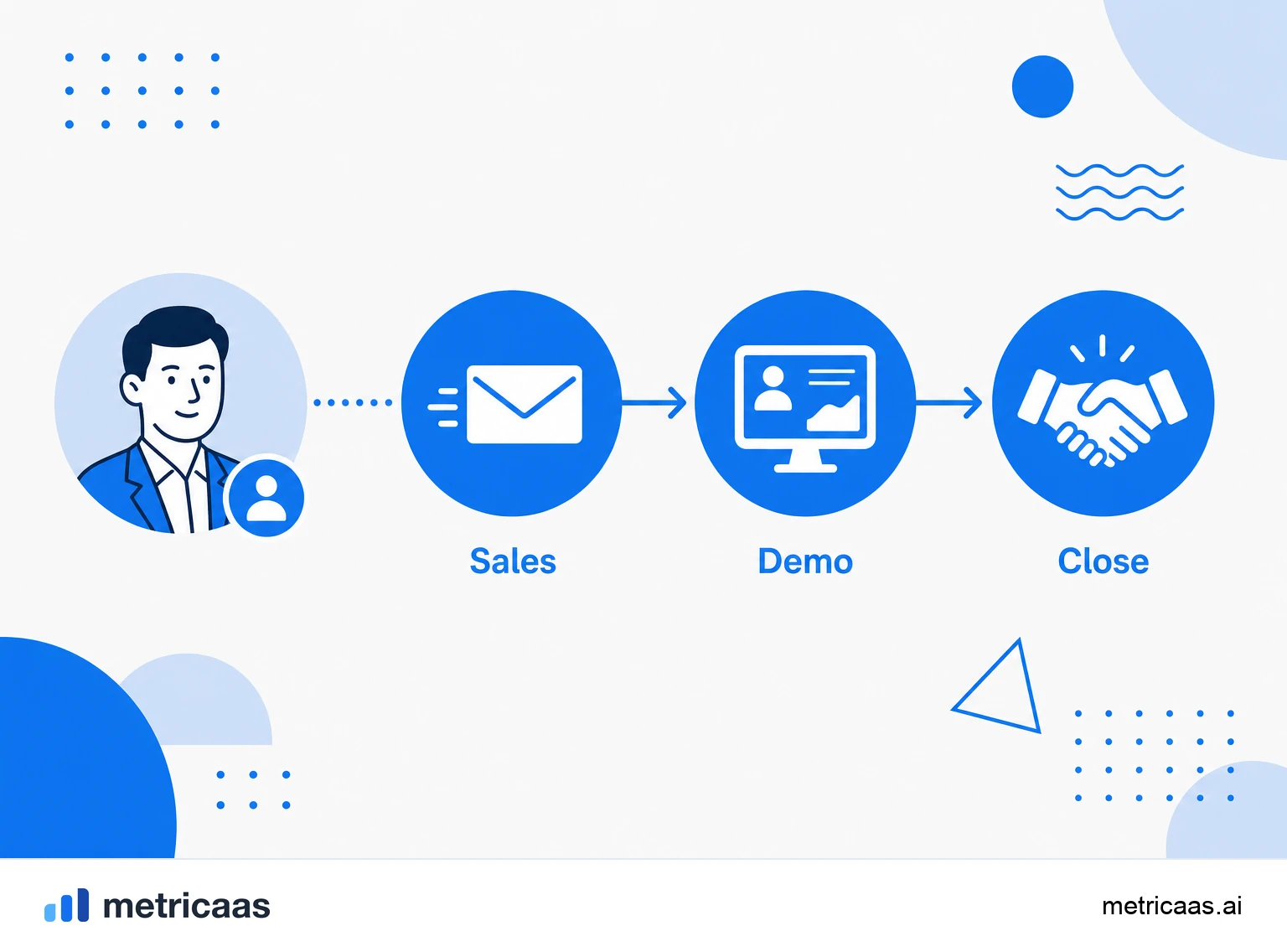
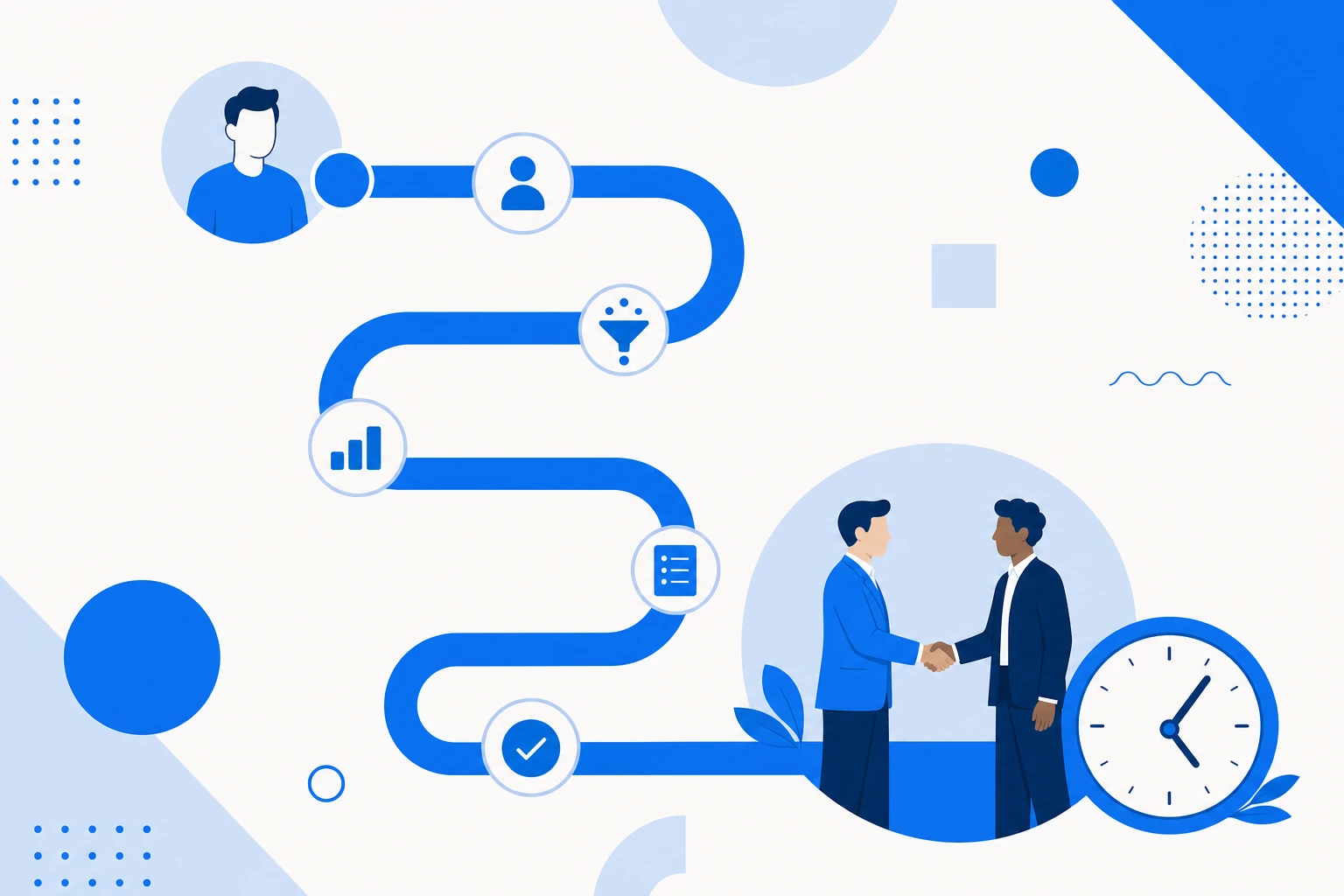
In SLG, revenue comes from a funnel run by people. Each lead moves through stages led by salespeople, and the team only books the sale when the buyer signs.
- Prospecting: SDRs generate and qualify accounts with potential.
- Discovery and demo: a rep understands the pain and shows the product solving it.
- Proposal: price, scope and terms are tailored to that customer.
- Negotiation and close: contract, discount and terms up to the "yes".
This journey has a sales cycle that can last weeks or months, and every demo, proposal and meeting costs hours of expensive people. That is why SLG pushes CAC up: the model only pays off when the contract value justifies the effort to close it.
SLG and PLG: the differences
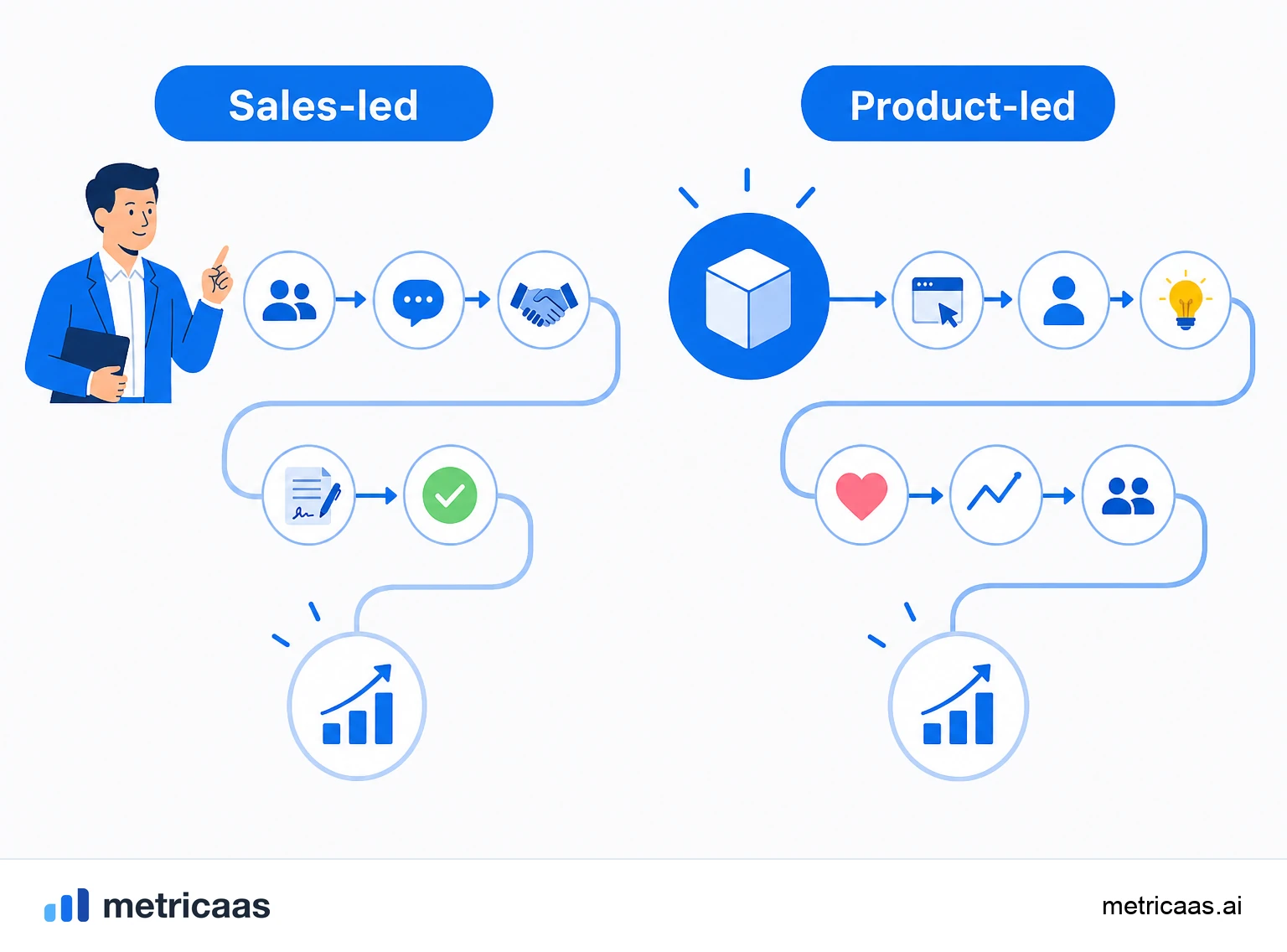
The opposite of SLG is product-led growth (PLG), a term popularized by OpenView, in which the product itself attracts, converts and expands users through trials, freemium and self-serve. In SLG, people do that work.
- Who drives the purchase: in SLG, the rep; in PLG, the product.
- Typical ticket: SLG targets larger contracts; PLG, smaller entries and volume.
- Speed: SLG has a longer cycle; PLG converts fast and on its own.
- Cost of acquisition: SLG carries the cost of the sales team; PLG spreads it into the product.
Neither is universally better. The choice depends on who buys, how much the product explains on its own, and the size of the deal you want to close.
When SLG makes sense
SLG is the default when the ticket is high and the purchase is complex, what the market calls the enterprise sale. In those cases the product rarely closes on its own, because there are many people and a lot of money in the decision.
- High annual contract values that justify a dedicated rep.
- Multiple decision-makers, from technical to legal and procurement.
- Security, integration and compliance requirements that call for a conversation.
- Products that need configuration, migration or assisted rollout.
It is a large market: according to Gartner, worldwide public cloud spending is set to reach around $723 billion in 2025, and much of the enterprise software in that total is sold by commercial teams. Strategies like account-based marketing (ABM) exist precisely to focus effort on the right accounts within this model.
Product-led plus sales-assisted: combining both
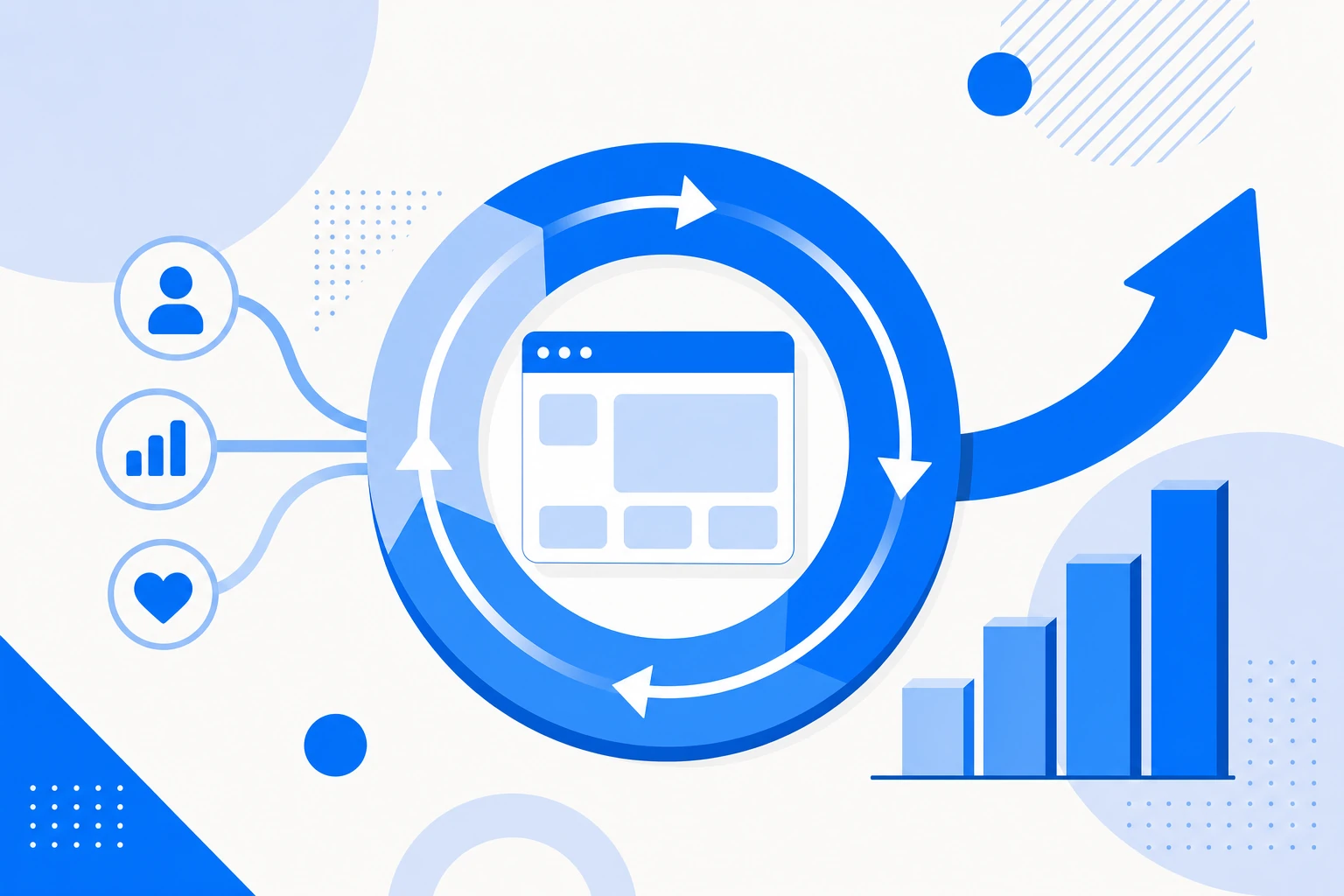
In practice, few businesses are 100% SLG or 100% PLG. The most common setup today is for the product to attract and activate the user on its own, and for the sales team to step in at the right moment to close or expand larger accounts. This is what people call product-led with sales-assisted.
The trigger is usually a usage signal: a trial that turned into heavy use, a team that grew inside the account, a plan limit reached. That is the product-qualified lead the sales force takes over. Firms like Bessemer describe this hybrid as the norm in SaaS, not the exception, because it combines the low cost of product-led growth with SLG ability to close large contracts.
What SLG demands from your metrics
A sales engine is expensive, so SLG lives or dies by efficiency. You have to track closely how much it costs to acquire each customer, how long it takes to close, and how quickly that cost pays back.
David Skok classic SaaS guidance, on ForEntrepreneurs, recommends keeping the ratio of customer value to CAC above 3 and recovering the acquisition cost in under 12 months. In a sales model, that means watching funnel conversion, cycle length and how much each rep closes. When the ticket grows but the cycle stretches in the same proportion, SLG stops paying off, and that is where the metrics warn you before the cash does.
Frequently asked questions
It is the growth model in which a sales team drives acquisition and expansion, using demos, proposals and negotiation to guide the buyer to the contract. People close the deal, not the product on its own.
In product-led growth the product itself attracts and converts users through trials and self-serve; in sales-led growth a rep drives the purchase. PLG targets volume and smaller tickets, SLG targets larger, more complex contracts.
When the ticket is high and the purchase is complex: large annual contracts, multiple decision-makers, security and integration requirements, or products that need assisted rollout. In those cases the product rarely closes on its own.
Yes, and it is the most common approach. The product attracts and activates the user on its own, and the sales team steps in at the right moment to close or expand larger accounts. This is product-led with sales-assisted.
CAC, sales cycle length, funnel conversion and the payback time on acquisition cost. The classic rule is to keep the ratio of customer value to CAC above 3 and recover CAC in under 12 months.
Neither is universally better. SLG wins in complex, high-ticket sales; product-led growth wins in volume and low acquisition cost. The choice depends on who buys and how much the product explains on its own.
Related concepts
Product-led growth (PLG)
Product-led growth (PLG) is the growth strategy in which the product itself drives acquisition, activation, conversion and expansion, with little or no sales touch. The user enters through a free trial or a freemium plan, feels the value on their own and becomes a paying customer. The buying signal is no longer a filled-in form but usage: the PQL, the lead qualified by the product.
CAC
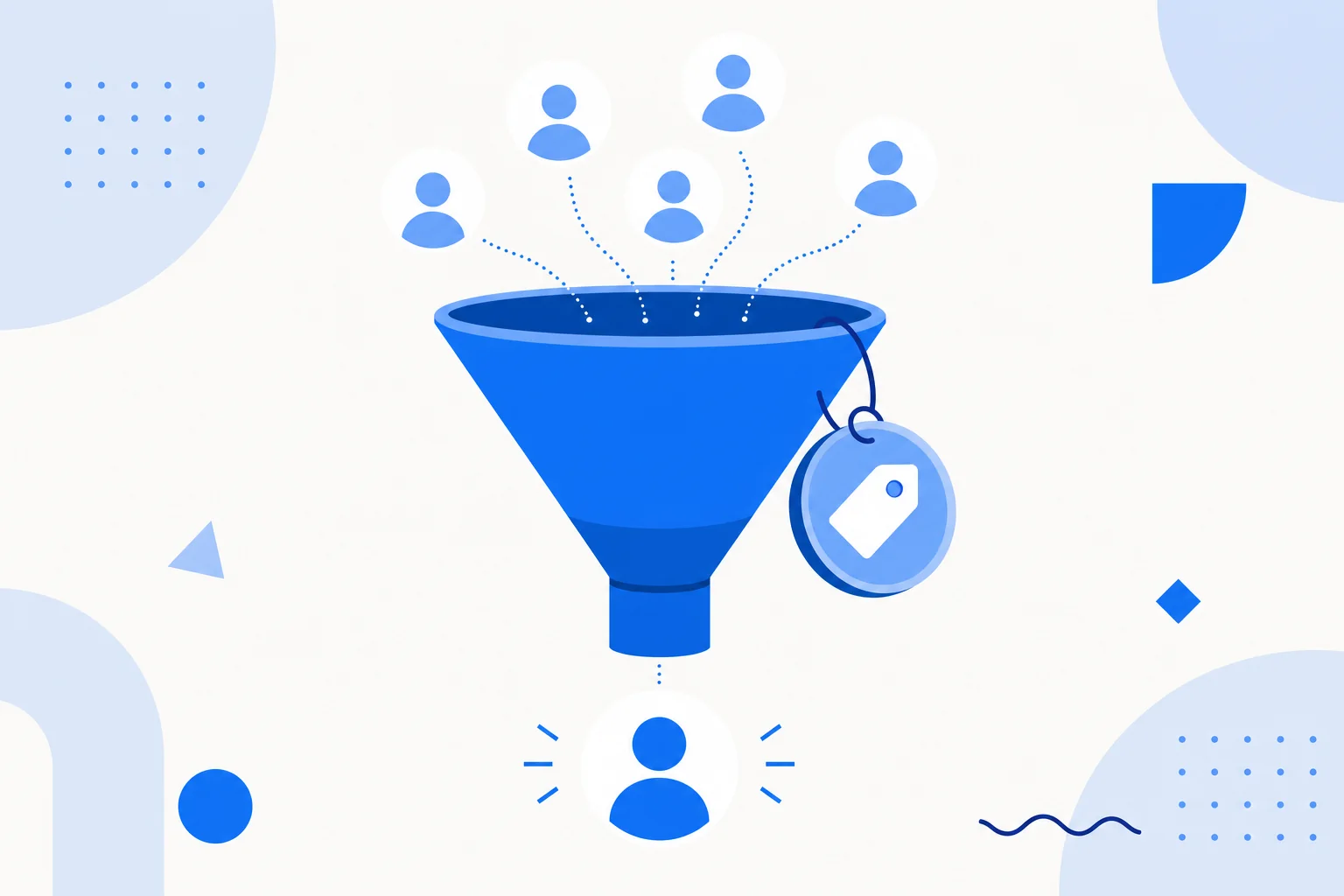
CAC (Customer Acquisition Cost) is how much, on average, you spend to win a new customer. Add up everything invested in marketing and sales over a period and divide by the number of new customers who came in during that period. It is the metric that tells you whether your growth is economically healthy.
Sales cycle
The sales cycle is the average time an opportunity takes from first contact to closed deal, moving through qualification, demo, proposal and negotiation. Short cycles enable a low CAC and fast cash; long cycles need a high deal size to justify the effort. Shortening the cycle improves sales efficiency and CAC payback.