
SaaS: what software as a service is and how it works
By Tiago Costa · Updated on July 9, 2026
Definition
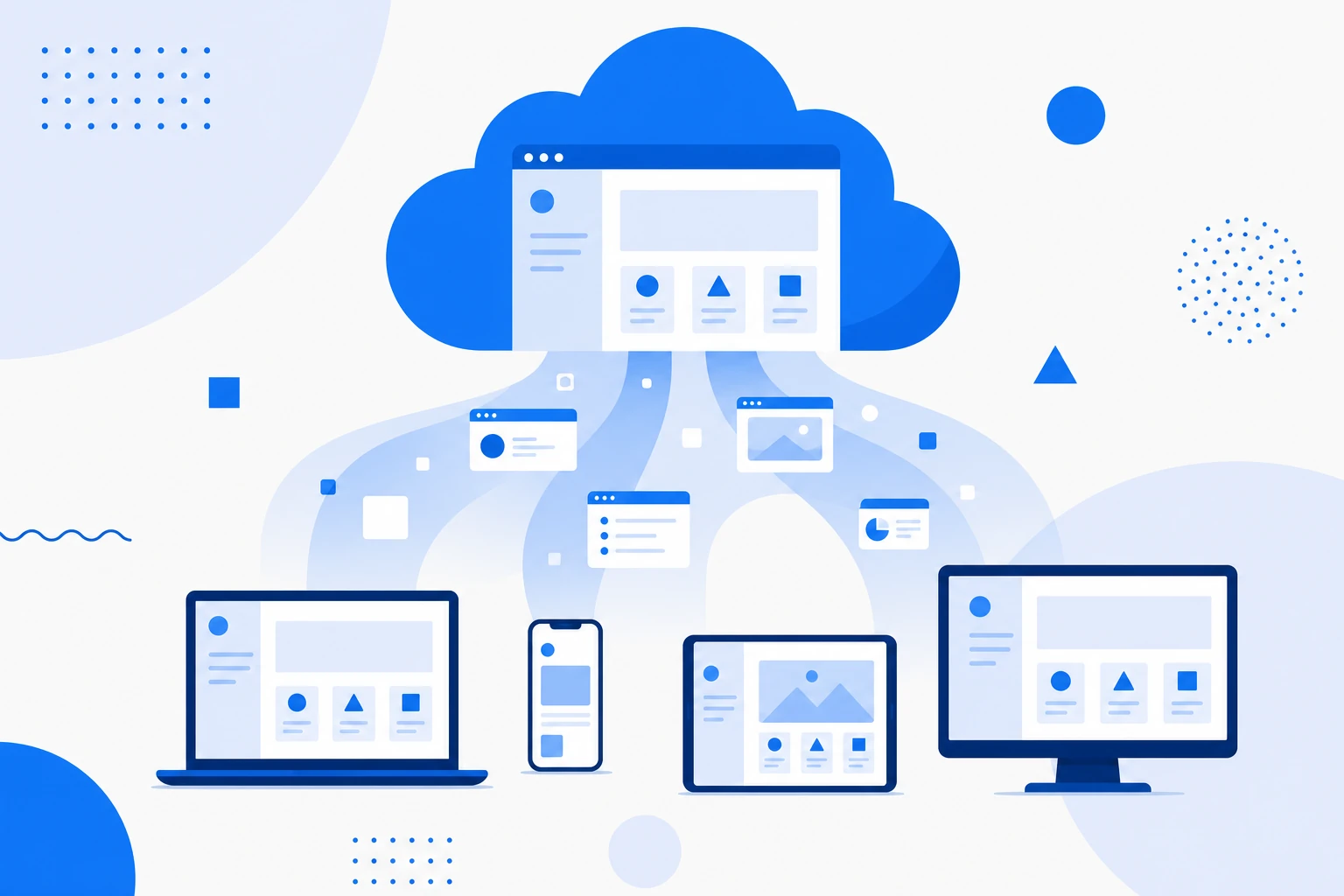
SaaS (Software as a Service) is software delivered over the cloud and billed by recurring subscription, instead of a license sold once.
- Multi-tenant: one codebase serves many customers.
- Updates continuously, with no install on each machine.
- Turns one-off sales into recurring revenue.
What SaaS is
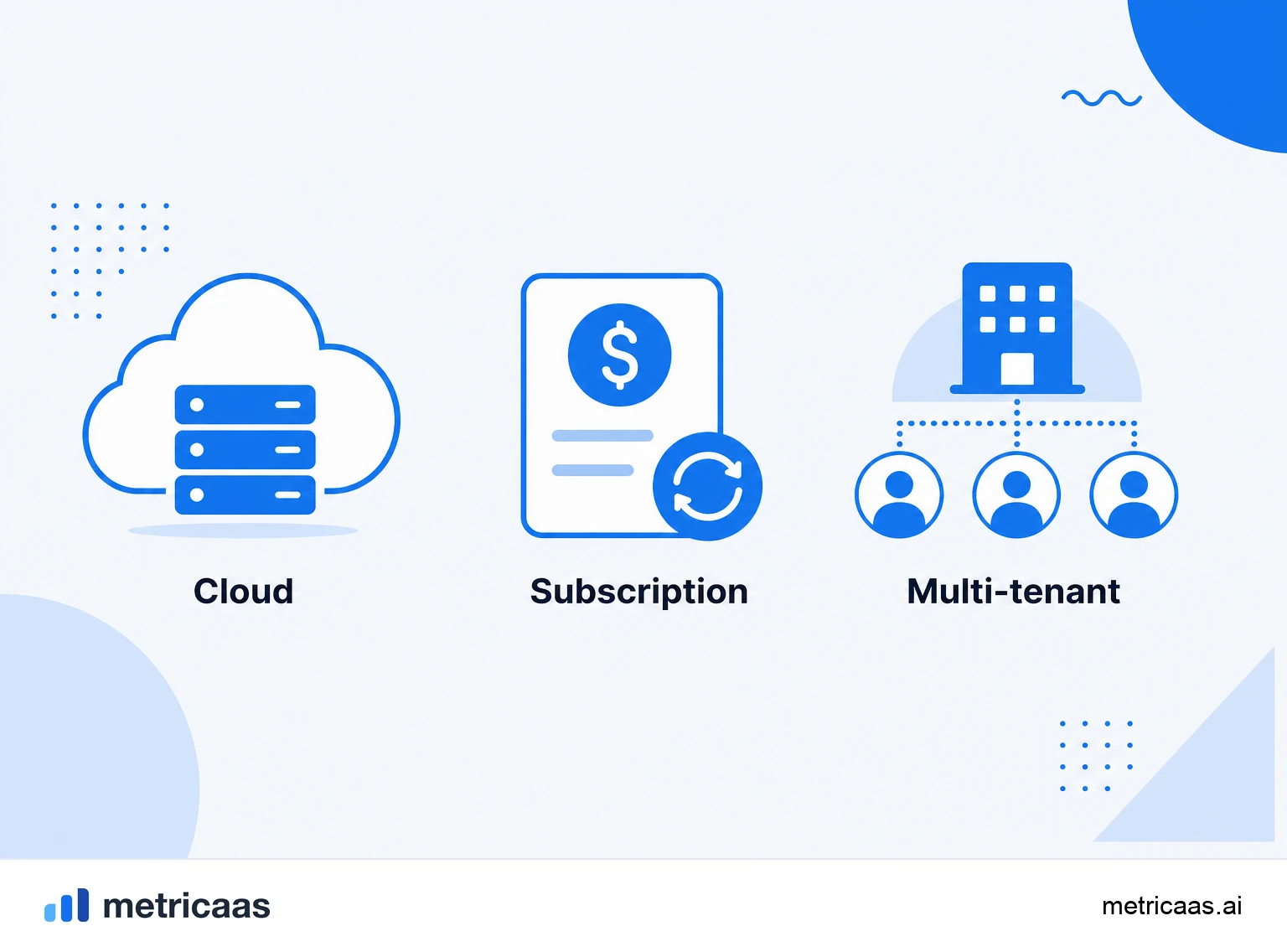
SaaS (Software as a Service) is a model where software is delivered over the internet and billed by recurring subscription, instead of sold as a one-time license installed on each machine. The customer accesses the application through the browser, and the provider handles servers, updates and security.
In practice, you do not buy the program, you subscribe to access it. This swap of ownership for access is what turns a one-off sale into recurring revenue and what makes SaaS the dominant format of business software today.
How the SaaS model works
Three traits define the model. It runs in the cloud, so the same product is available from anywhere with no local install. It is multi-tenant, meaning a single codebase and infrastructure serves many customers at once, each with isolated data. And it updates continuously, so everyone always runs the latest version, with no migration projects.
- Cloud: access through the browser, the provider operates the infrastructure.
- Multi-tenant: one base serves many customers, which makes scaling cheaper.
- Subscription: the customer pays monthly or yearly while using it.
- Continuous updates: improvements shipped without stopping the service.
SaaS and licensed software: the difference
In the old perpetual-license model, the customer paid once, installed it, and the software was theirs, with updates sold separately. In SaaS, the customer pays recurringly for access, and value accrues over the relationship, not in a single transaction.
That difference changes everything on the finance side. Revenue stops being a sales spike and becomes a predictable flow, measured in ARR. In exchange for that predictability, the provider takes on the job of keeping the customer happy month after month, because they can cancel at any time.
Examples and types of SaaS
SaaS shows up in nearly every software category. There are tools for customer relationship management, email marketing, project management, accounting, payroll and team communication, all sold by subscription and accessed through the browser. The model splits into two broad families.
- B2B SaaS: sells to companies, with larger contracts and longer sales cycles.
- B2C SaaS: sells straight to consumers, with many lower-ticket customers.
Streaming services like Netflix use the same recurring-subscription logic, but are usually classified as media rather than pure SaaS, because they deliver content instead of a work tool. The boundary is not always rigid, what matters is the recurring-revenue model behind it.
Why SaaS changed business metrics
Because SaaS revenue is recurring and cancelable, measuring the business by closed sales is not enough. What matters is how much revenue holds and grows over time. That is why SaaS created its own vocabulary of metrics.
- Churn measures how many customers or how much revenue is lost each period.
- Net Revenue Retention (NRR) shows whether the existing customer base grows on its own, even before new sales.
- Customer lifetime value became the ruler for deciding how much it is worth spending to acquire a customer.
It is no accident that the private SaaS survey by KeyBanc Capital Markets tracks net revenue retention as one of the key signals of the model health.
Advantages and challenges of SaaS
For the seller, the big advantage is predictability: recurring revenue lets you plan cash, hiring and growth on a stable base. For the buyer, SaaS cuts the upfront investment, removes server maintenance and guarantees always being on the newest version. The challenge is that revenue must be won back every cycle, so retention and customer experience stop being a detail and become the center of the business.
The size of this market explains the interest. According to Gartner, worldwide spending on SaaS applications is set to approach $300 billion in 2025, and investment firms like Bessemer treat SaaS recurring revenue as one of the most predictable asset classes in software. That predictability is what sustains the model and makes every retention metric so important.
Frequently asked questions
It is software delivered over the cloud and billed by recurring subscription. The customer accesses it through the browser while the provider handles infrastructure, updates and security, with no local install.
Netflix uses the same recurring-subscription model, but is usually classified as a streaming or media service, because it delivers content, not a software tool. It shares the SaaS DNA without being pure SaaS.
Tools for customer management, email marketing, project management, accounting and team communication, all sold by subscription and accessed through the browser, are typical examples of SaaS.
Traditional software is a license bought once and installed. SaaS is access paid recurringly, runs in the cloud and updates continuously, turning the one-off sale into recurring revenue.
It is SaaS that sells to other companies rather than the end consumer. It tends to have larger contracts, longer sales cycles and a strong focus on retention measured by churn and NRR.
Related concepts
MRR
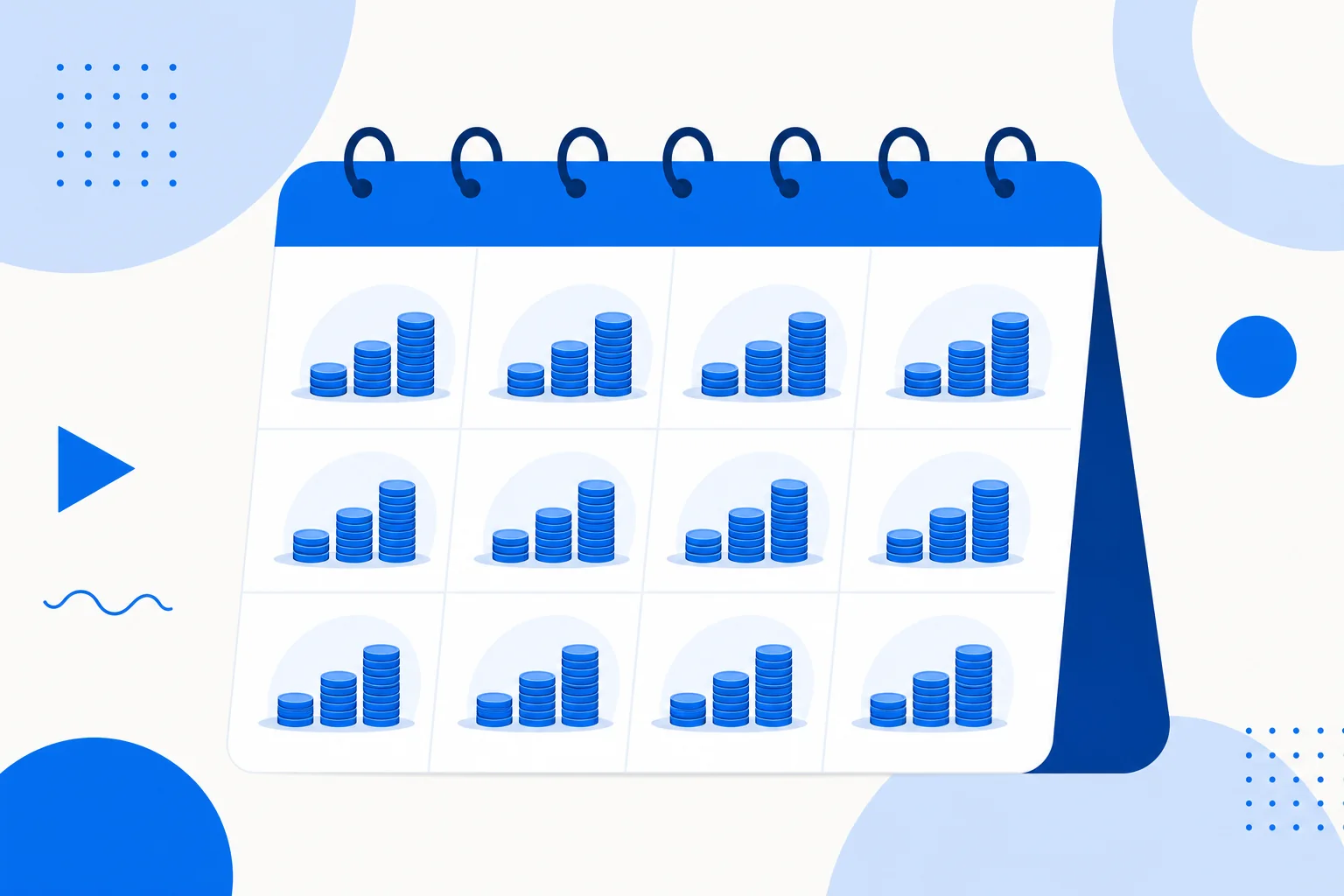
MRR (Monthly Recurring Revenue) is the monthly recurring revenue of a SaaS: the sum of all active subscriptions normalized to a month. It is the core metric of a subscription business because it shows, predictably, how much the company earns on a recurring basis each month, without counting one-off charges.
ARR
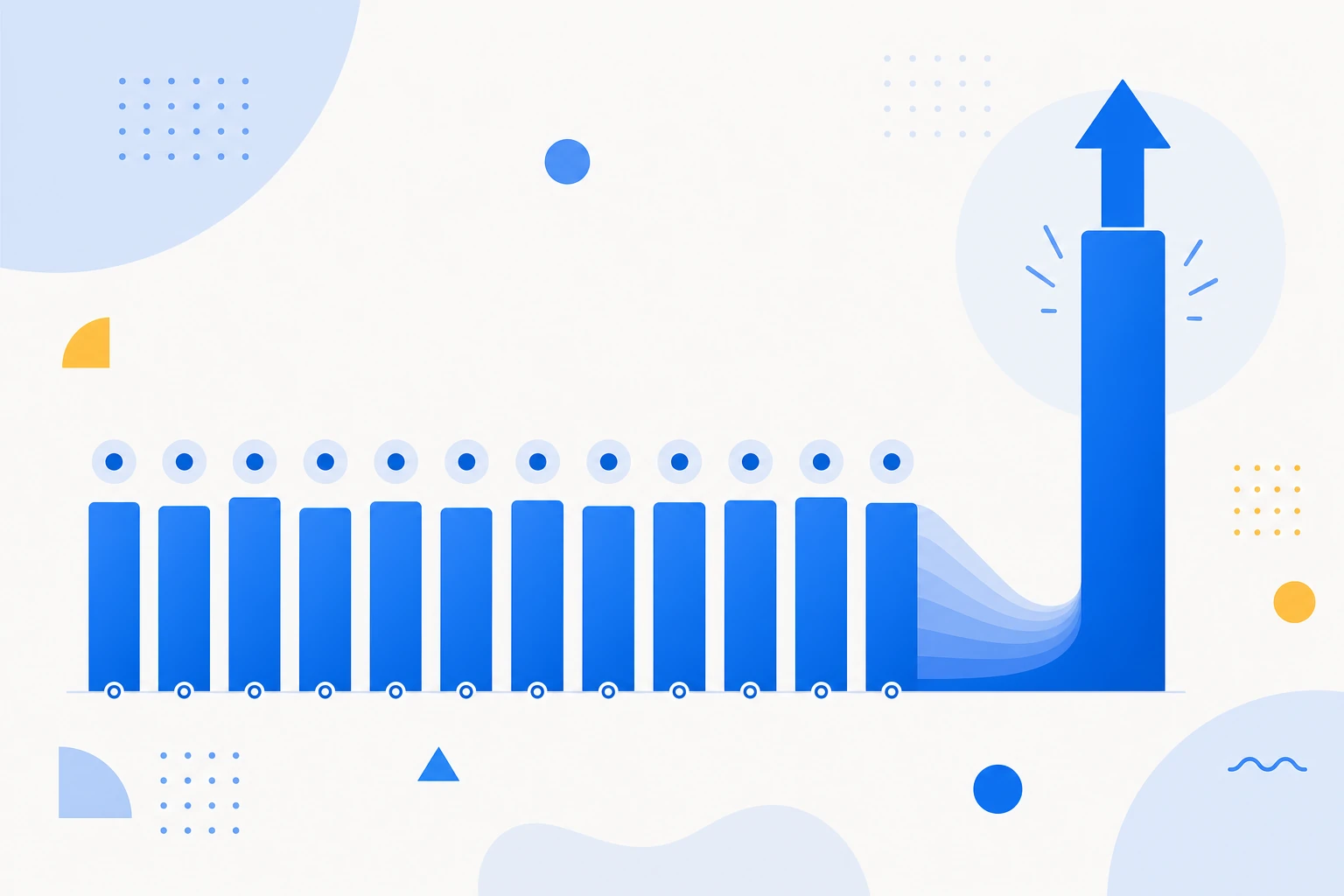
ARR (Annual Recurring Revenue) is the annual recurring revenue of a SaaS: MRR multiplied by 12. It represents how much the company earns on a recurring basis over a year, counting only active subscriptions, with no one-off charges. It is the metric of choice for companies selling annual contracts and the standard language of investors.
Churn
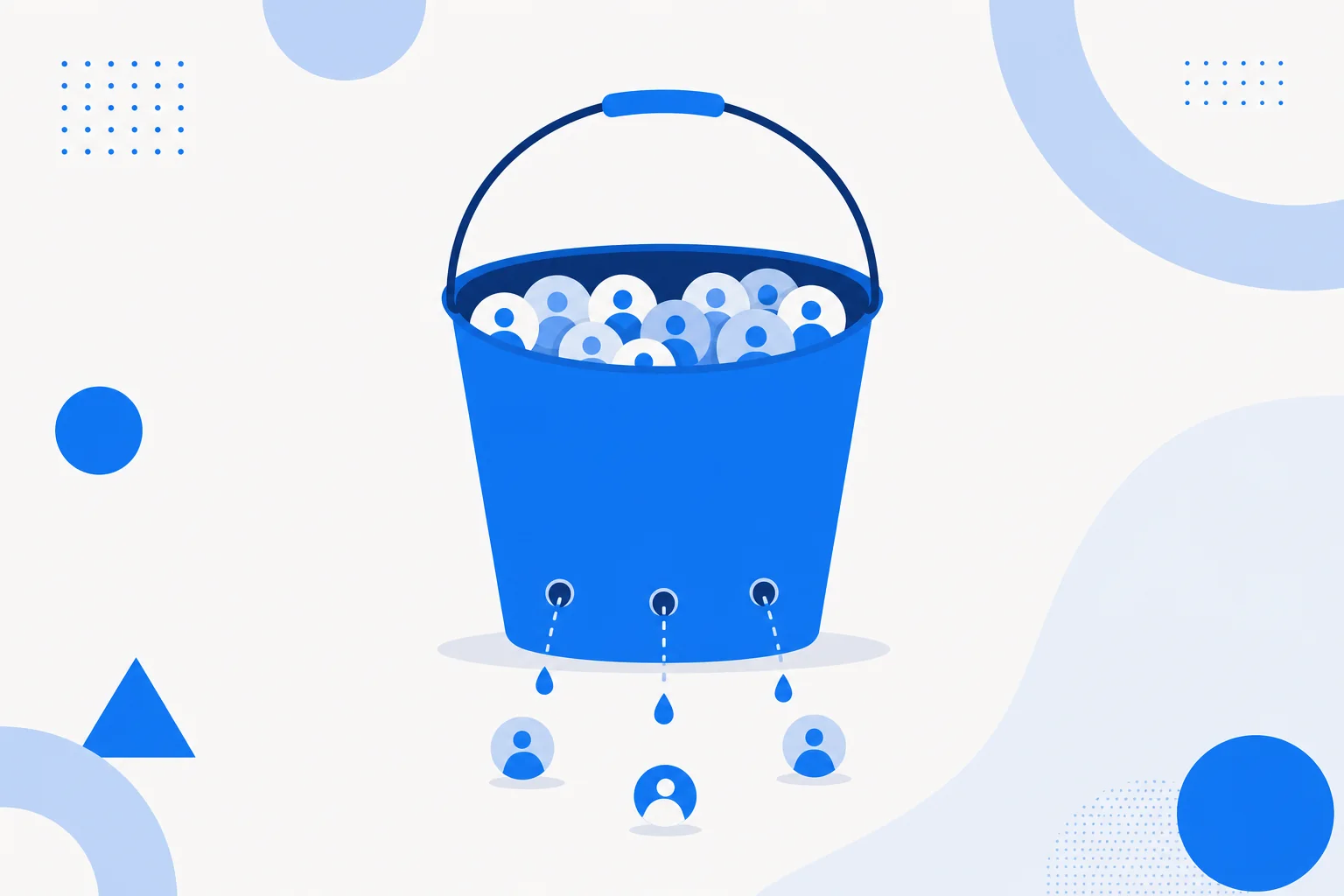
Churn is the loss of customers or revenue in a period. In a SaaS, it measures how many customers cancel (customer churn) or how much recurring revenue disappears (revenue churn). It is the metric that reveals whether growth is sustainable: the higher the churn, the more new sales you need just to avoid shrinking.