
OPEX and CAPEX: what they are and the difference between expense and investment
By Tiago Costa · Updated on July 9, 2026
Definition
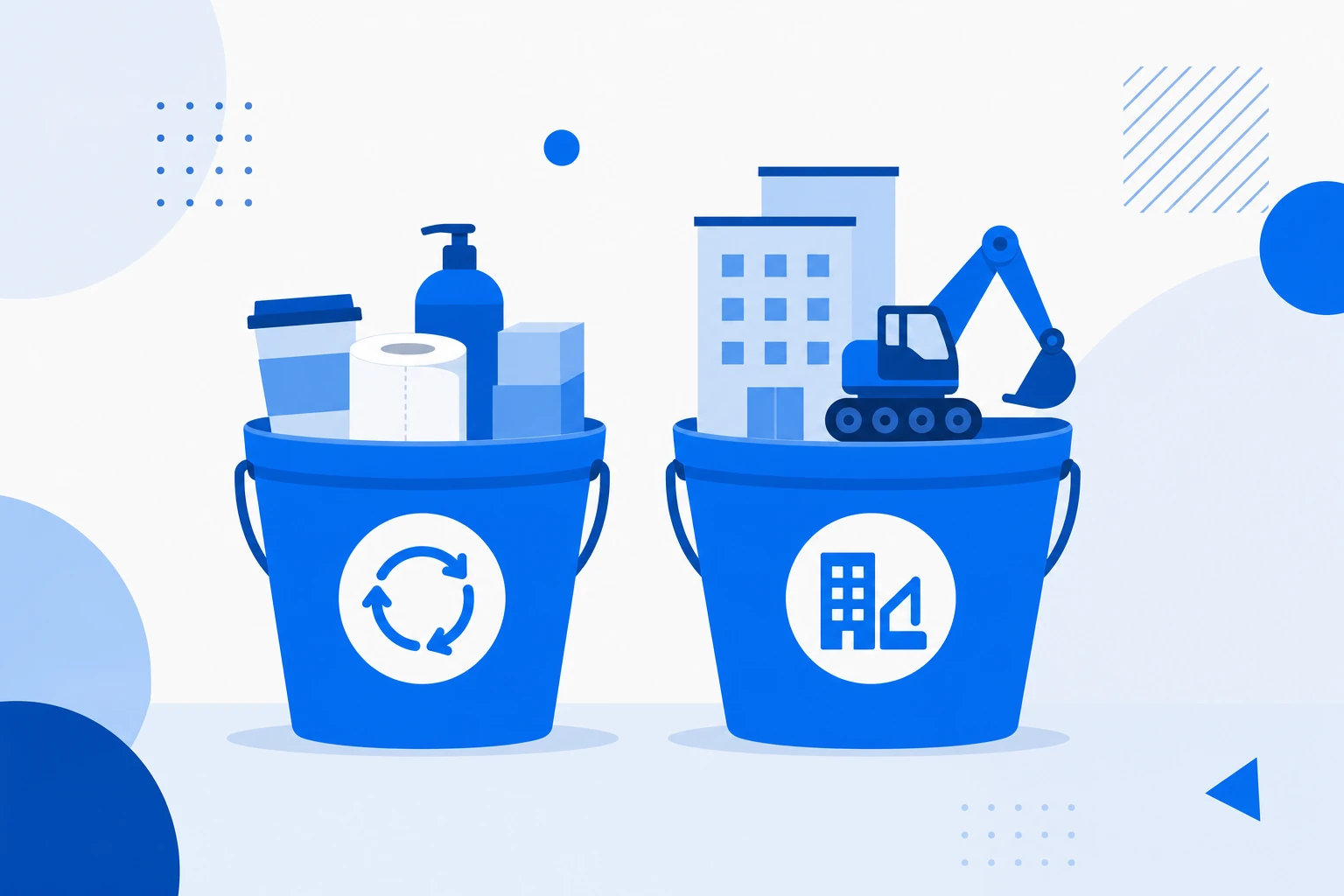
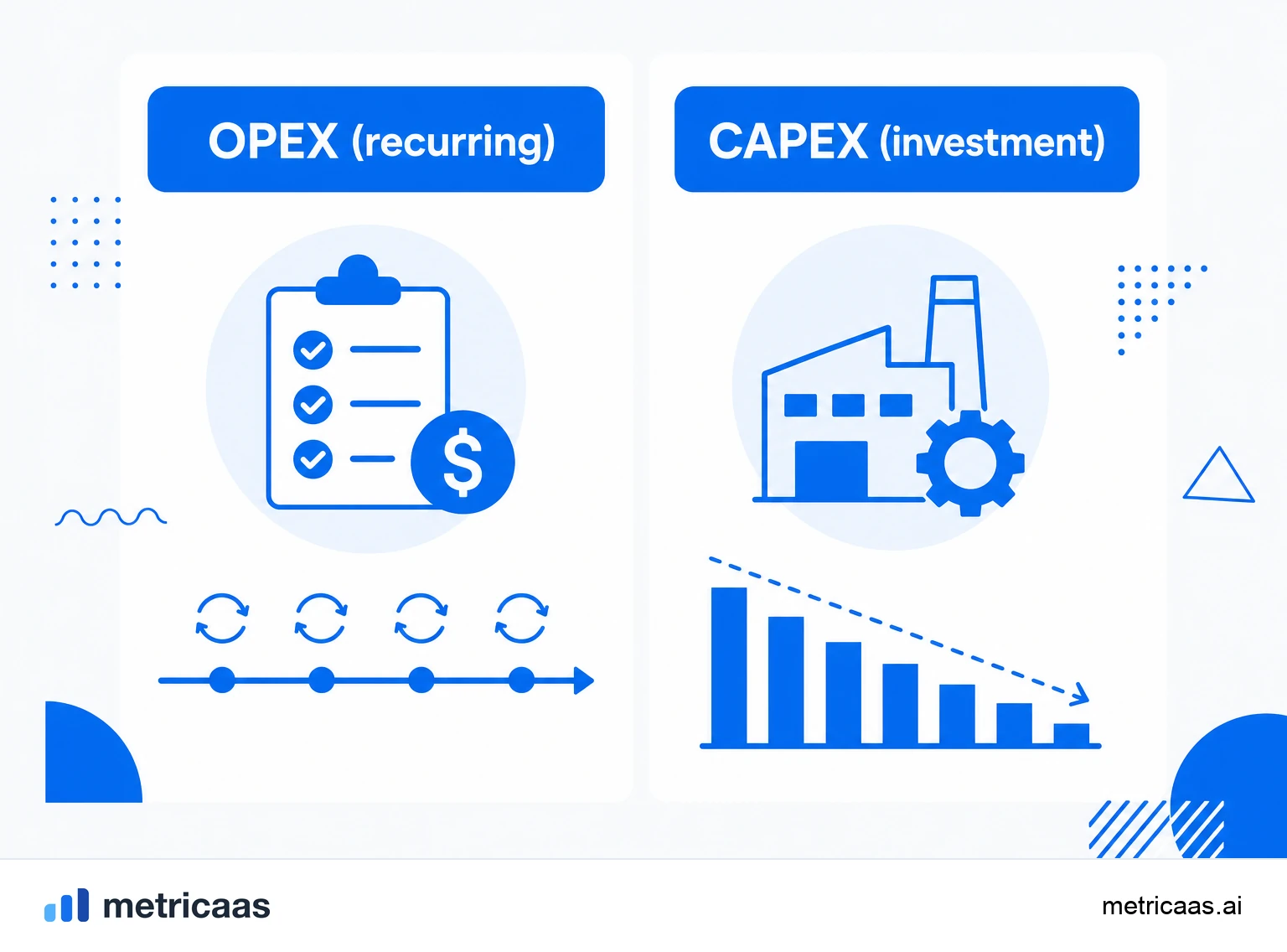
OPEX (operating expenses) are recurring costs booked in the period; CAPEX (capital expenditure) is capital investment in long-lived assets, capitalized and depreciated over time.
- OPEX hits profit immediately; CAPEX becomes an asset and depreciates gradually.
- OPEX sits in operating cash flow; CAPEX in investing cash flow.
- SaaS is mostly OPEX, because it rents cloud instead of buying assets.
What OPEX and CAPEX are
OPEX (operating expenses) and CAPEX (capital expenditure) are the two big ways to classify where a company money goes. OPEX is the recurring spend that keeps the operation running day to day: salaries, commissions, marketing, cloud bills, rent. CAPEX is the durable investment in assets that serve for several years: owned servers, machines, buildings, a perpetual license.
The difference is not just accounting vocabulary. It changes when and how the spend shows up in the numbers. OPEX is booked as expense in the very period it happens, while CAPEX is capitalized on the balance sheet and turns into expense little by little, through depreciation or amortization, over the useful life of the asset. Understanding that boundary is what separates truly reading an income statement from just watching the bank balance.
How each shows up in the accounts
An OPEX cost of $100k this month cuts this month profit by $100k. It flows in full through the income statement, in the period, and drops the result immediately. A CAPEX of $100k does not hit the result all at once: the amount goes onto the balance sheet as an asset and is spread into depreciation slices over the years of use, say $20k a year for five years.
- OPEX: expense in the period, immediate impact on profit, leaves cash when it is paid.
- CAPEX: becomes an asset, diluted impact on profit via depreciation, but the cash all leaves at the moment of purchase.
That is why the two land in different places in the cash flow statement. OPEX lives in operating cash flow; CAPEX shows up in investing cash flow and is exactly what you subtract from operating cash flow to get to free cash flow. Two companies with the same profit can have very different cash, depending on how much CAPEX each one burns.
Examples of OPEX and CAPEX
In practice the rule is simple: if the spend is consumed in the period and has to repeat to keep the operation going, it is OPEX. If it buys something that will generate value for several years, it is CAPEX.
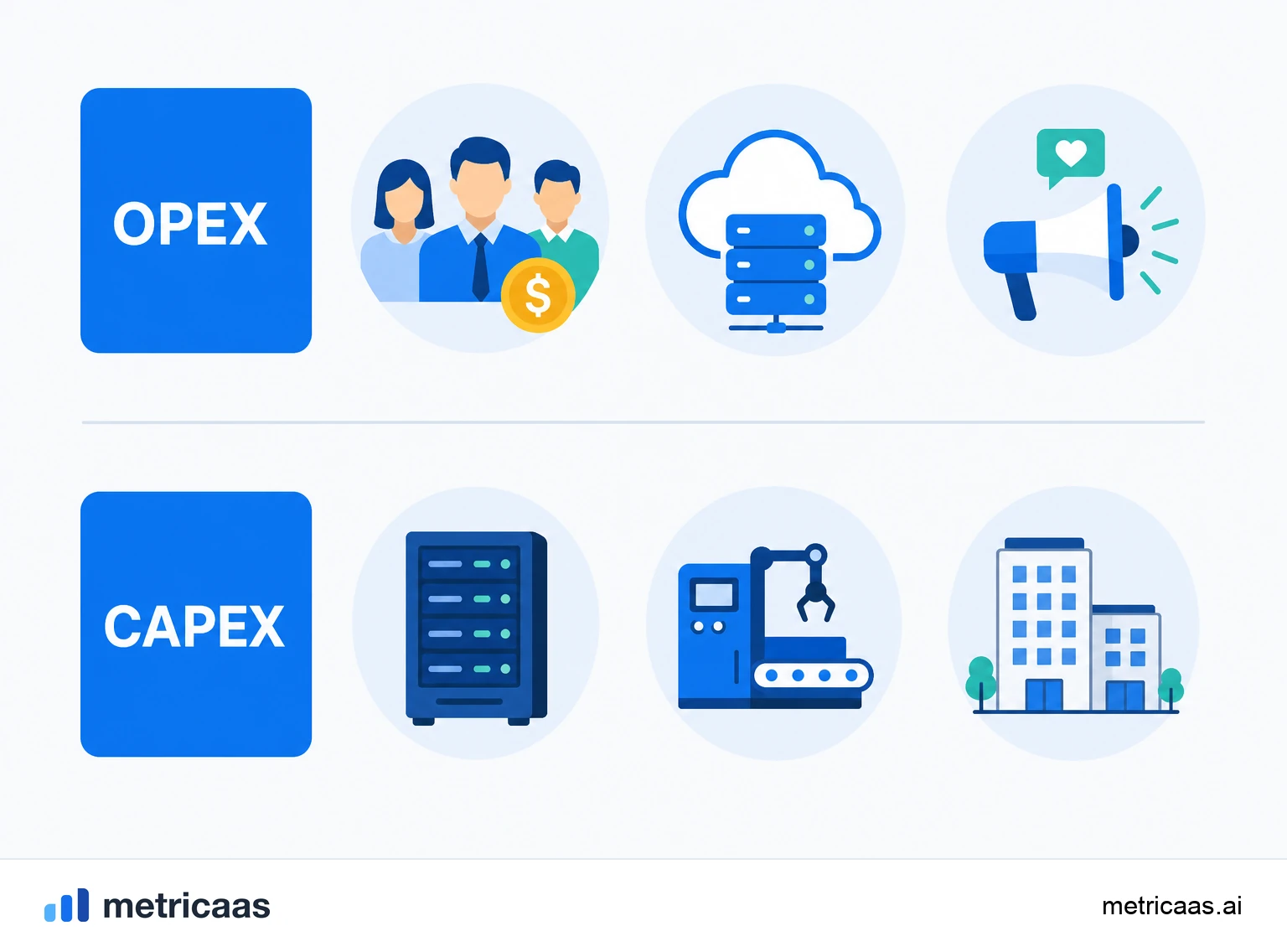
- Typical OPEX: payroll, commissions, paid media, software subscriptions, cloud hosting, rent, utilities, support.
- Typical CAPEX: owned servers and data centers, laptops and equipment, construction and refits, vehicles, buying a perpetual license or a patent.
The same item can fall on either side depending on the model. A laptop bought outright and used for three years tends to be CAPEX; the same laptop leased on a monthly fee is OPEX. An owned server in the rack is CAPEX; the same capacity rented in the cloud is OPEX. The deciding question is not what you use, but whether you bought an asset or rented a service.
Why SaaS is mostly OPEX
A modern software business has almost no CAPEX. It does not build data centers or buy machines: it rents cloud compute, pays for tools by subscription and spends most of its money on people. Engineering salaries, sales and marketing teams are all OPEX, booked in the period. That is why the cost structure of a SaaS is read almost entirely off the income statement, with very little depreciation of physical assets behind it.
This migration from CAPEX to OPEX is, in large part, the work of the cloud itself. What used to require buying servers, a heavy upfront CAPEX, became a monthly bill that rises and falls with usage, a flexible OPEX. According to Gartner, worldwide public cloud spending is set to approach $723 billion in 2025, a sign of how much investment has moved off company balance sheets and turned into recurring expense. Firms like McKinsey describe the same shift as trading fixed assets for elastic services.
The R&D capitalization nuance
Not every software cost is pure OPEX. Accounting rules allow, under certain conditions, capitalizing part of software development: the engineering cost of a new feature can be treated as CAPEX, become an asset and be amortized later, instead of hitting the period result all at once. Exploratory research stays OPEX; the development phase of something with defined technical feasibility is the part that can be capitalized.
This matters because it changes the look of the numbers without changing the cash. Capitalizing R&D raises short-term book profit, because there is less expense now, and creates an amortization line later. Two identical SaaS companies can show different margins purely by the choice to capitalize or not. That is why investors tend to look at R&D spend consistently across companies, and why metrics that neutralize these accounting effects have gained so much ground.
How OPEX and CAPEX affect your metrics
The line between OPEX and CAPEX reappears in almost every financial metric. EBITDA exists precisely to neutralize the depreciation and amortization that come from CAPEX, showing the operating result before those effects. Operating margin, by contrast, already includes depreciation and therefore feels the weight of past CAPEX.
It is also worth separating OPEX from COGS: COGS is the direct cost of delivering the service, such as the cloud that runs the product, support and processing fees, while structural OPEX covers sales, marketing, R&D and administration. And because CAPEX consumes cash right away but does not show up in profit all at once, it is the link that explains why a profitable company can have low free cash flow. Reading result and cash together is what avoids wrong conclusions.
Frequently asked questions
OPEX are recurring operating expenses booked in the period, such as salaries, cloud and marketing. CAPEX is capital investment in long-lived assets, capitalized on the balance sheet and depreciated over time.
OPEX: payroll, paid media, cloud hosting, rent, support. CAPEX: owned servers, equipment, construction, vehicles and buying a perpetual license or a patent.
Salaries are OPEX: a recurring expense booked in the period itself. The exception is part of the engineering cost that develops software, which under certain conditions can be capitalized as CAPEX.
It depends on how you obtain it. Bought outright and used for several years, it is CAPEX and gets depreciated. Leased on a monthly fee, it is OPEX and enters as expense in the period.
By summing all operating expenses in the period: people, sales, marketing, cloud, rent and the like. Investment in long-lived assets is left out, since that is CAPEX.
Because a SaaS rents cloud and tools instead of buying assets, and spends most of its money on people. Almost everything becomes a recurring expense of the period, with very little CAPEX.
Related concepts
COGS
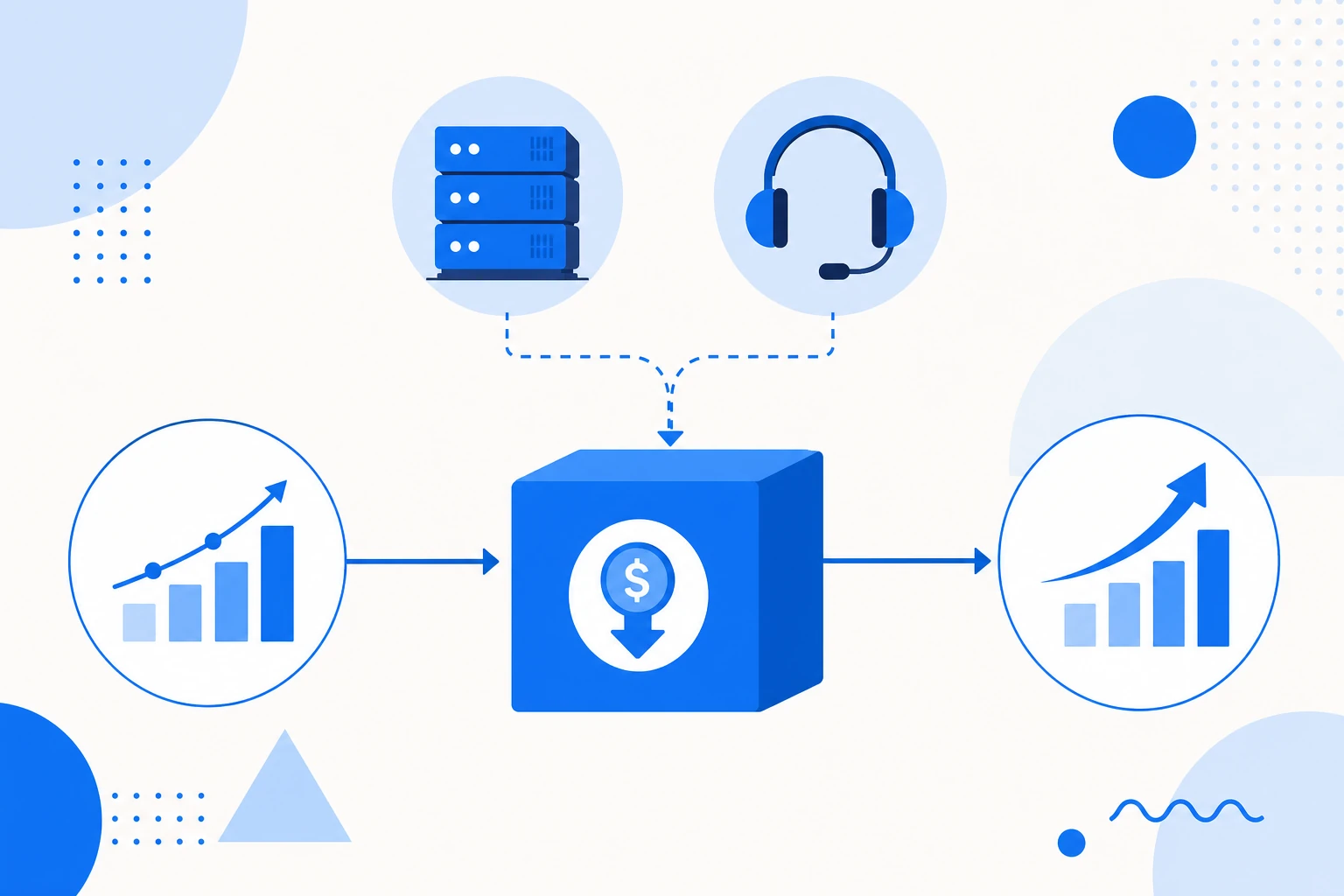
COGS (Cost of Goods Sold) is the direct cost of delivering a SaaS service: hosting and infrastructure, customer support, third-party fees and payment processing. It does not include sales, marketing or R&D, which are OpEx. It is the base of gross margin: revenue minus COGS equals gross profit.
Operating margin
Operating margin is operating profit divided by revenue: how much of each dollar of revenue is left after paying the cost of service (COGS) and operating expenses (OPEX), before interest and taxes. It measures the profitability of the operation itself, with no effect from capital structure or taxes. In SaaS, it is the profitability component that adds to growth in the Rule of 40.
Free cash flow
Free cash flow (FCF) is the cash left from operations after paying for capital investments (capex). It is the money truly available to pay down debt, reward investors or reinvest in growth. A SaaS that generates positive FCF funds itself and depends less on raising rounds.