
MicroSaaS: what it is, examples and how to build one
By Tiago Costa · Updated on July 9, 2026

Definition
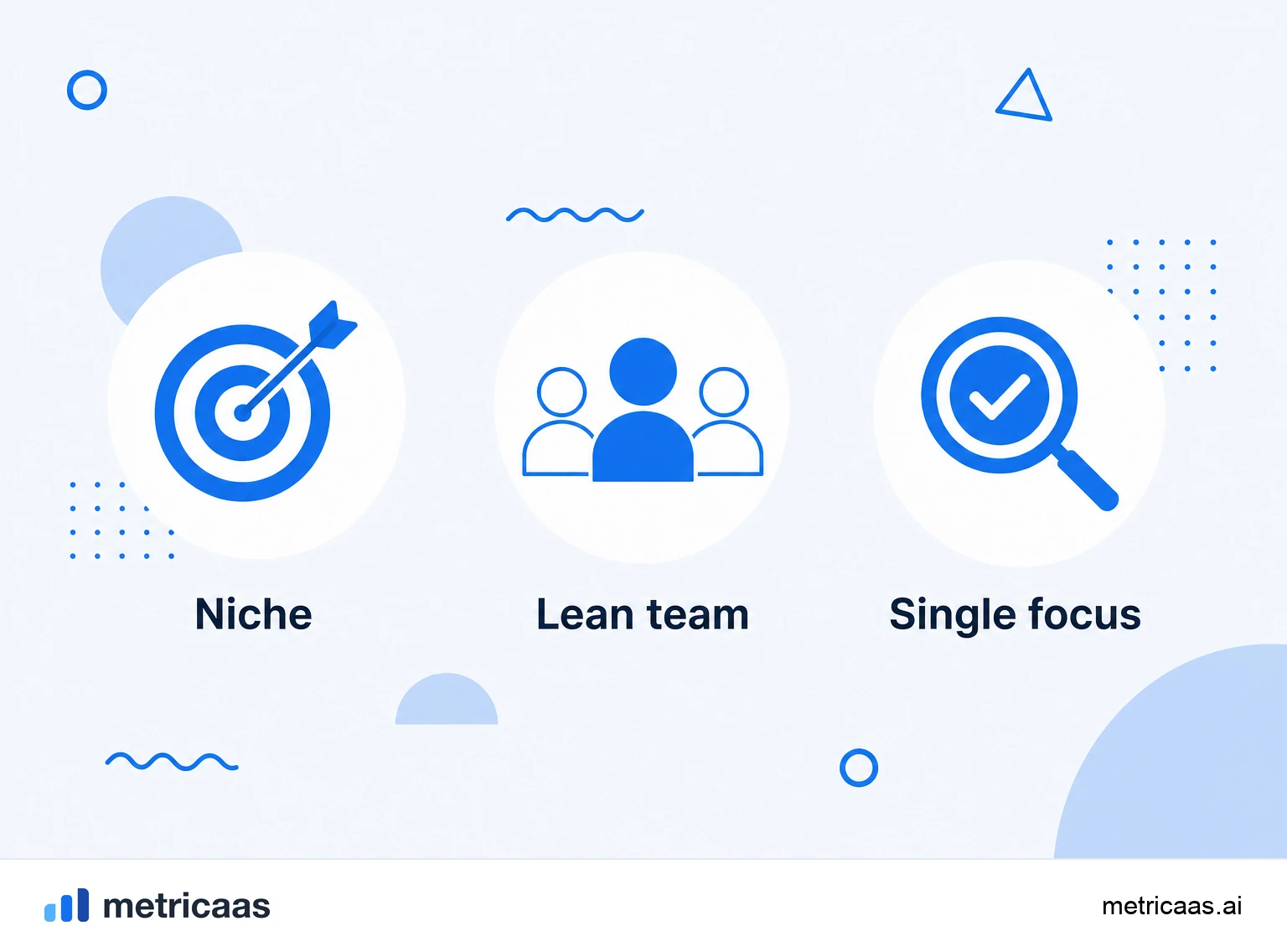
MicroSaaS is a lean, niche SaaS run by a minimal team and almost always bootstrapped.
- Solves one specific problem for a narrow audience.
- Prioritizes focus, high margins and low fixed costs over massive scale.
- Lives on efficiency: few people, few costs, one clear ICP.
What MicroSaaS is
MicroSaaS is a deliberately small version of the SaaS model: subscription software that serves a specific niche, solves one well-defined problem and is run by a minimal team, sometimes a single person. Instead of chasing a huge market, it picks a narrow audience and serves it very well.
The word "micro" refers not only to the size of the product but to the size of the operation. A MicroSaaS is almost always bootstrapped, funded from its own cash, with no investment rounds. That forces the company to be profitable early and to keep its structure light.
MicroSaaS vs traditional SaaS
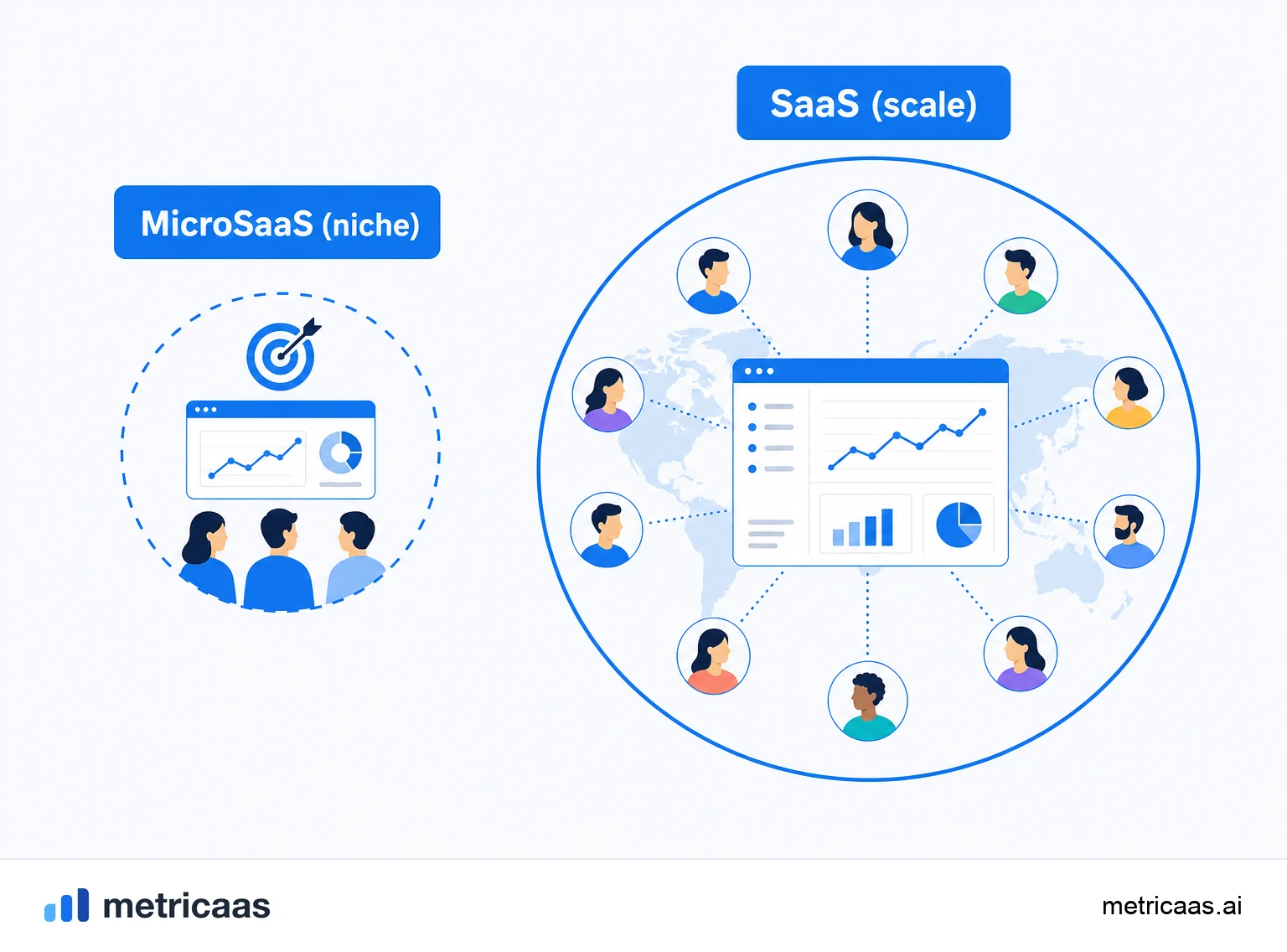
The difference between a MicroSaaS and a traditional SaaS is not in the technology but in the ambition and the structure. Classic SaaS chases a broad market, usually raises venture capital and builds large sales, product and support teams. MicroSaaS does the opposite: it aims at a niche, keeps the team tiny and grows on its own revenue.
- Scope: traditional SaaS solves many problems; MicroSaaS solves one, very well.
- Team: dozens or hundreds of people versus one to a few.
- Capital: venture capital versus own cash.
- Goal: dominate a large market versus live well off a niche.
The economics of a MicroSaaS
What makes MicroSaaS attractive is the economics. Because software has near-zero marginal cost and the operation is lean, a large share of revenue turns into profit. With no heavy payroll or inflated acquisition spend, the business can be profitable on revenue that would be irrelevant to a venture-backed company.
The metric that captures this efficiency is ARR per employee: how much recurring revenue each person sustains. In a well-run MicroSaaS that number is very high, because the same person handles product, support and marketing. According to the firm OpenView, small, focused teams tend to show capital efficiency well above average, and that is exactly where the model shines.
How to build a MicroSaaS
Building a MicroSaaS starts by finding a niche with real pain, not by picking a technology. The typical path is to spot a recurring problem in a specific audience, often one you live yourself, and design a simple product that solves it end to end.
- Pick the niche and ICP: a single, well-defined ideal customer profile.
- Validate before building: confirm there is willingness to pay.
- Build the minimum: a lean product that solves the core problem.
- Distribute through the product: with product-led growth (PLG), the software itself attracts and converts, with no sales team.
You do not have to know how to code. No-code tools let you launch a working MicroSaaS without writing code, which has lowered the barrier to entry dramatically in recent years.
MicroSaaS examples and ideas
The most successful MicroSaaS products are often invisible to the general public because they serve specific niches. Think of a tool that generates captions for one kind of social network, a plugin that automates invoices for sellers on one platform, an app that organizes schedules for small clinics or an add-on that improves reports inside another piece of software.
The pattern repeats: a narrow problem, a clear audience and a solution that does one thing very well. Good MicroSaaS ideas tend to come from pains you observe up close, from active communities or from gaps in popular tools. The niche does not need to be impressive in size; it needs people willing to pay every month.
Metrics that matter in a MicroSaaS
Even lean, a MicroSaaS is run by numbers. The most important metrics are the same as for any subscription business, only applied to a tiny operation where every cancellation weighs more.
- MRR: monthly recurring revenue, the pulse of the business.
- Churn: because the audience is narrow, retaining is vital.
- Margin and fixed cost: what is left after the bills.
Because the model lives on efficiency, watching these metrics closely is what separates a profitable MicroSaaS from an expensive hobby. The subscription software market remains huge: according to Gartner, worldwide spending on SaaS applications is set to approach $300 billion in 2025, leaving plenty of room for small, focused products.
Frequently asked questions
It is a lean, niche SaaS: subscription software that solves one specific problem for a narrow audience, run by a minimal team and almost always bootstrapped.
Traditional SaaS chases a broad market, usually raises venture capital and has large teams. MicroSaaS aims at a niche, keeps the team tiny and grows on its own revenue.
Find a niche with real pain and a clear ICP, validate that there is willingness to pay, build the minimum product that solves the core problem and distribute through the product itself.
Niche tools such as a caption generator for one social network, an invoicing plugin for sellers on one platform, or an add-on that improves reports inside another piece of software.
Yes. No-code tools let you launch a working MicroSaaS without writing code, which has significantly lowered the barrier to entry for non-developers.
It can be, and early. Because software has near-zero marginal cost and the operation is lean, a large share of revenue turns into profit, even on small revenue.
Related concepts
SaaS
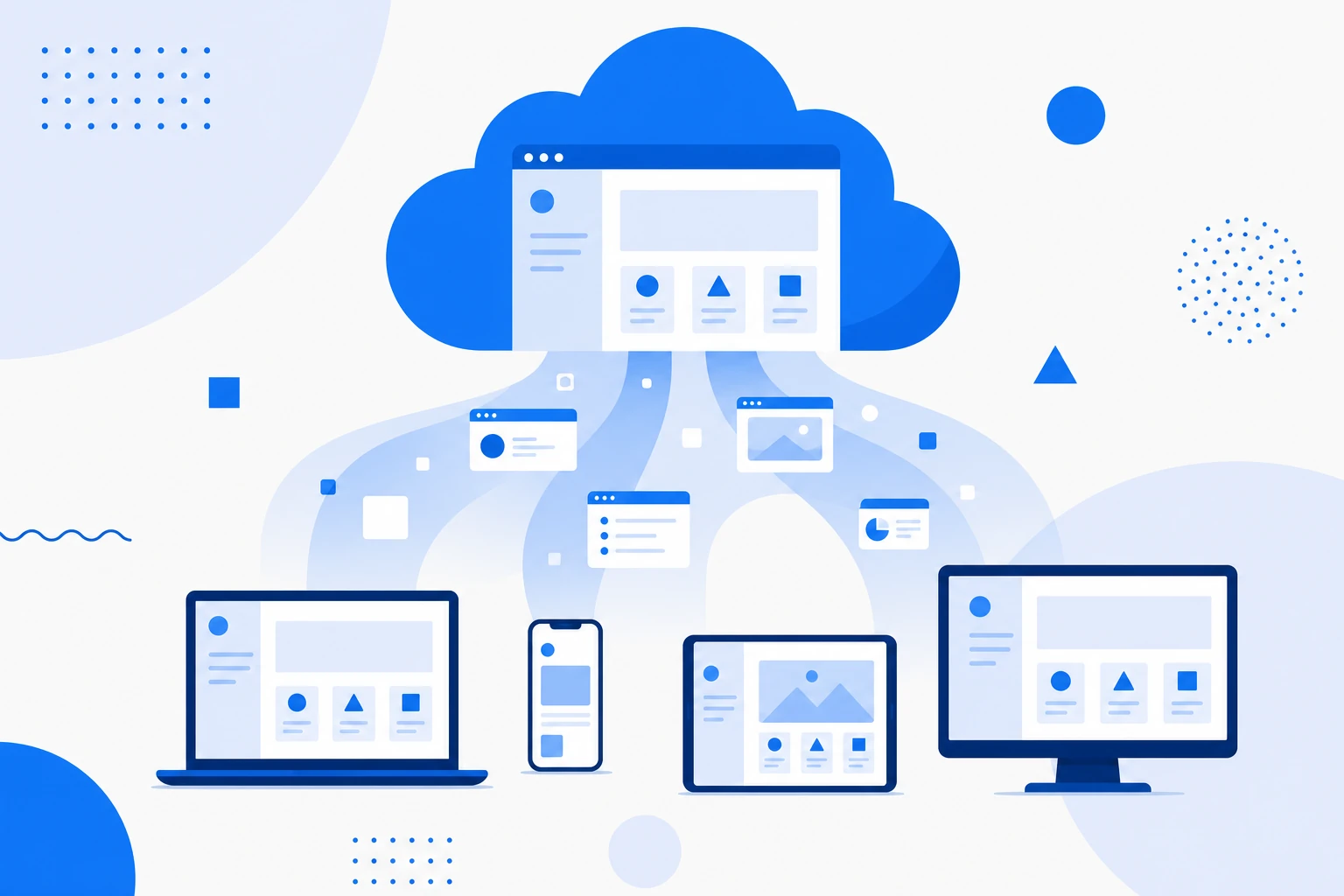
SaaS (Software as a Service) is the model where software is delivered over the cloud and billed by recurring subscription, instead of sold as a one-time installed license. It is multi-tenant, meaning a single codebase serves many customers, and it updates continuously. This model turns one-off sales into recurring revenue and is what makes metrics like MRR, churn and NRR central.

Bootstrapping
Bootstrapping is growing a company with your own resources and revenue from customers, without raising outside capital from funds or angel investors. It trades speed for control: there is no dilution, decisions stay with the founders and cash discipline is higher. It requires reaching healthy unit economics early, because the runway is your own revenue.
Product-led growth (PLG)
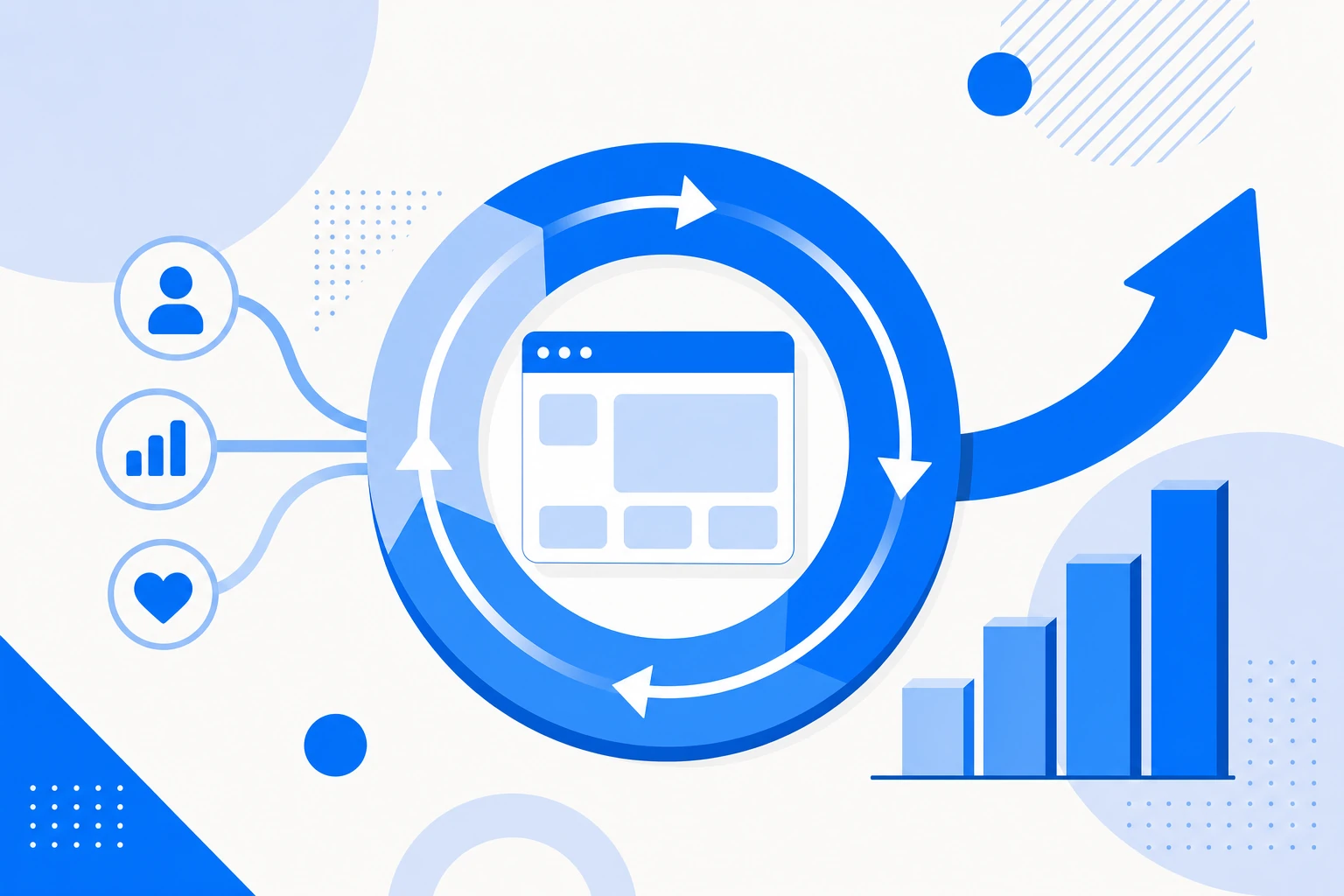
Product-led growth (PLG) is the growth strategy in which the product itself drives acquisition, activation, conversion and expansion, with little or no sales touch. The user enters through a free trial or a freemium plan, feels the value on their own and becomes a paying customer. The buying signal is no longer a filled-in form but usage: the PQL, the lead qualified by the product.