
Flywheel: what the growth flywheel is and how it works
By Tiago Costa · Updated on July 9, 2026
Definition
The flywheel (growth flywheel) is a model in which each gain feeds the next and builds momentum that spins on its own over time.
- It puts retention and referral at the center, not the one-off sale.
- Happy customers become the main acquisition channel.
- Network effects and a strong NRR are the fuel.
What a flywheel is
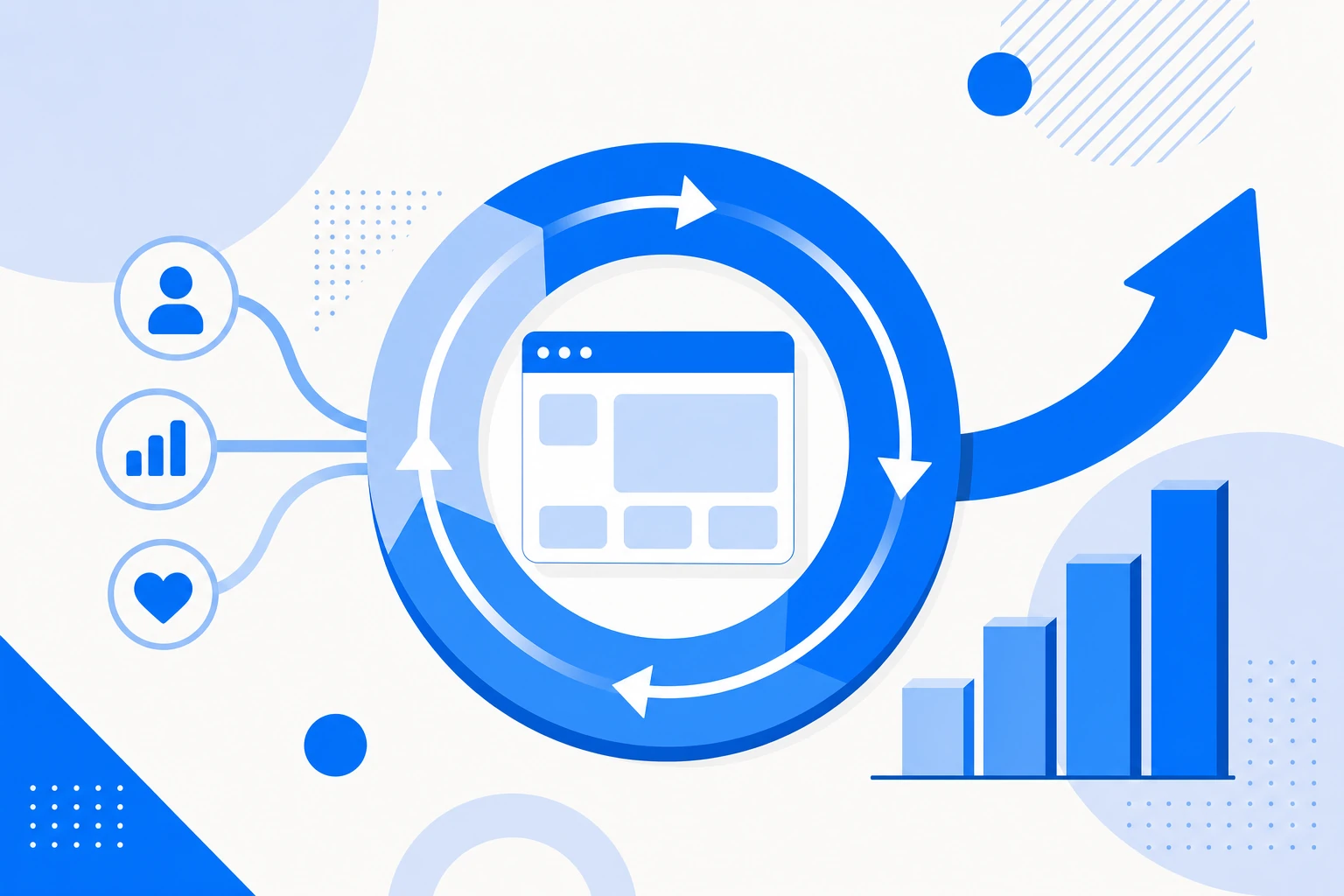
The flywheel, or growth flywheel, describes a business in which every positive result feeds the next. Instead of treating growth as a straight line that starts in marketing and ends at the sale, the model sees it as a loop: happy customers refer new customers, who arrive at a lower cost and generate revenue to improve the product, which produces even more happy customers. Each turn builds more momentum than the last.
The flywheel idea was popularized by Jim Collins in Good to Great: a system that is heavy to turn at first but, once it gains speed, keeps moving with less and less effort. Applied to SaaS, this means the first customers are expensive and hard won, but every customer who stays and recommends makes the next one easier to reach.
Flywheel and funnel: the shift in logic
The classic funnel treats the journey as a path with an end: attract, convert, sell and move on to the next. The customer drops out the bottom and attention returns to the top. The flywheel rejects that linear logic and puts the customer at the center, because in a subscription model the sale is only the start of the relationship, not the end.
- Funnel: energy concentrated on attracting and closing; post-sale revenue is an afterthought.
- Flywheel: energy spread across attracting, delighting and retaining, because those who stay power the next turn.
In practice, the difference shows up in where the company invests. A funnel business spends almost everything on acquisition; a flywheel business recognizes that retention and referral, by lowering the cost of growing, are worth as much as a new campaign.
How the flywheel spins
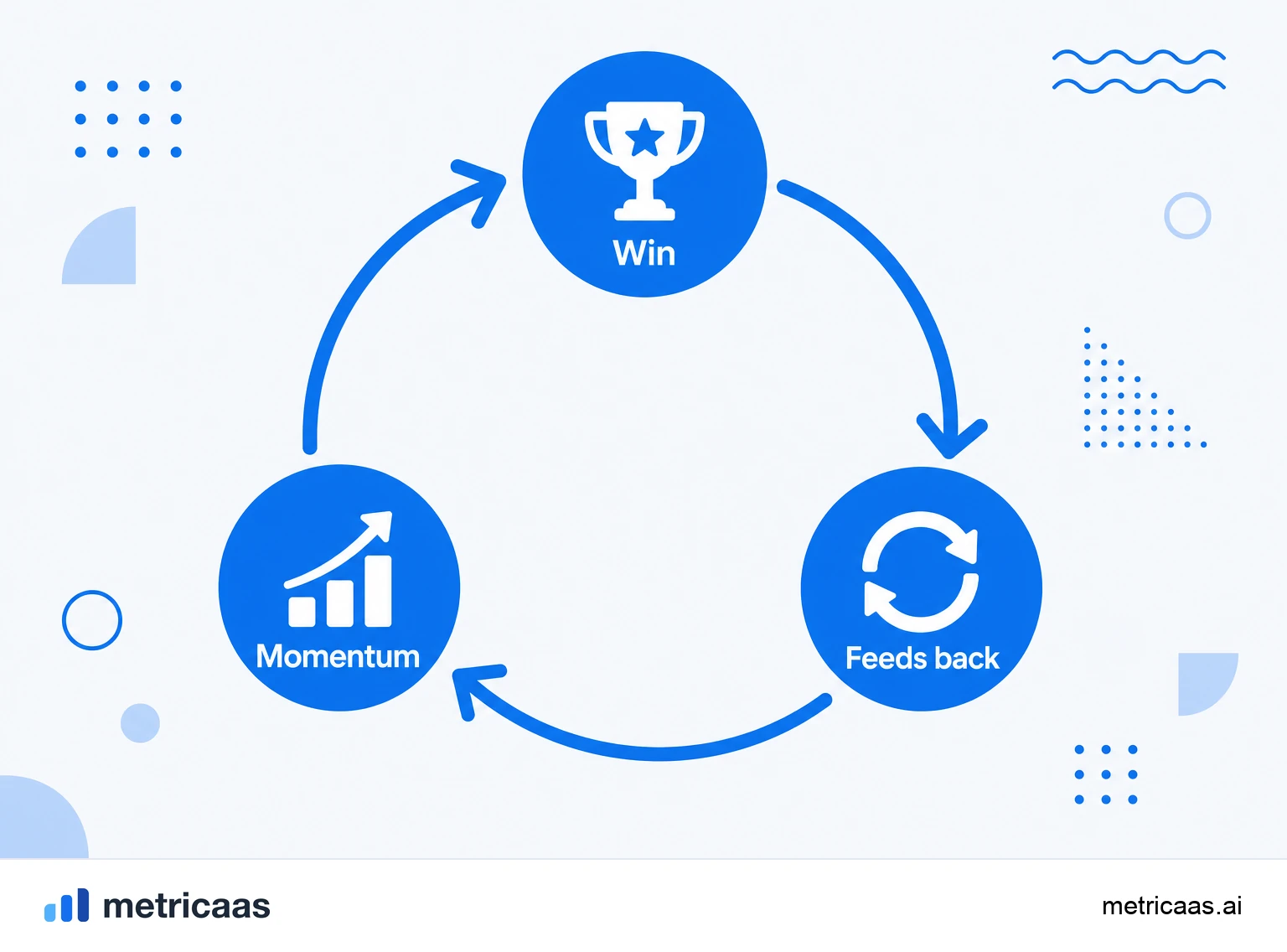
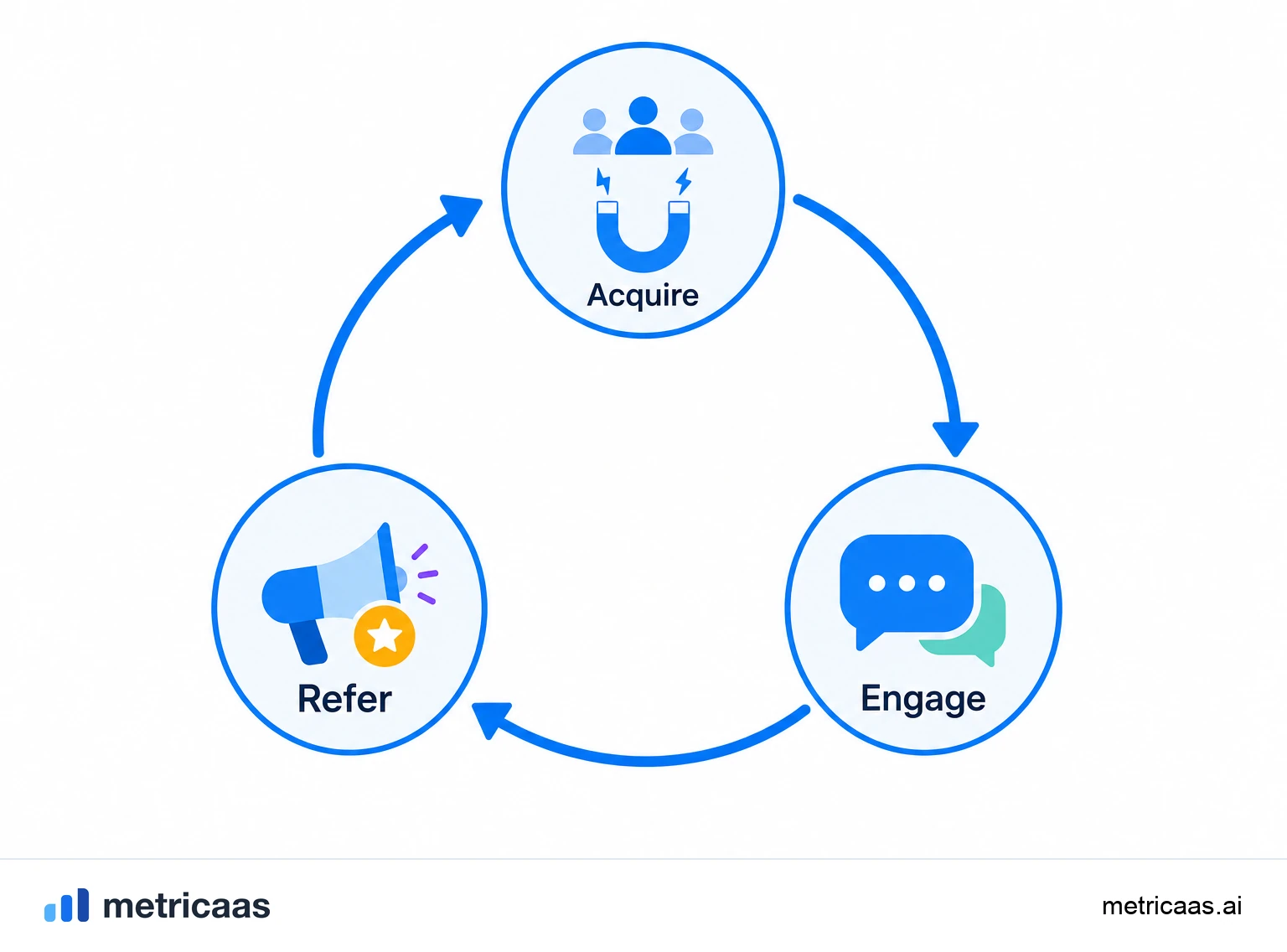
The flywheel turns in stages that feed one another. A simple way to describe the loop:
- Attract: content, word of mouth and the product itself bring in new users, often through product-led growth, when the product sells itself.
- Activate and delight: the user reaches value quickly and becomes a loyal customer.
- Refer: happy customers bring others in, lowering the cost of acquisition.
- Reinvest: recurring revenue flows back into the product and the experience, feeding the next turn.
The less friction between stages, the faster the flywheel spins. Every point of friction, a confusing onboarding, slow support, a referral that never happens, steals momentum from the whole loop.
The fuel: retention and referral
What keeps the flywheel spinning is not acquisition but retention. A customer who stays generates expansion revenue, refers new customers and eases the pressure to replace the ones who churned. That is why Net Revenue Retention (NRR) is the best gauge of a healthy flywheel: when the base grows on its own, before counting any new sales, the loop sustains itself.
Network effects speed everything up, because each new customer raises the product value for the rest. It is no accident that the private SaaS survey by KeyBanc Capital Markets shows net revenue retention above 100% among the strongest companies: a base that expands on its own is the fuel that turns the flywheel with ever less effort.
The flywheel and the advantage that compounds
A flywheel that has already gained speed is hard to copy. The accumulated momentum, a loyal base, steady referrals, data that improves the product, creates an advantage that deepens over time and works like a moat around the business. Competitors starting from zero have to push their own flywheel against inertia, while the leader only has to keep it spinning.
Firms like Bessemer often tie this kind of self-reinforcing growth to capital efficiency: when referral and expansion account for a meaningful share of growth, every dollar spent on acquisition goes further. The flywheel does not remove the cost of growing, but it makes that cost fall with every turn.
How to build and measure the flywheel
Building a flywheel starts by identifying your core loop: which gain, and when, makes the next gain more likely. From there, the work is to remove friction and measure every stage, rather than looking only at the top of the funnel.
- Measure retention and expansion, not just new sales.
- Track how many customers arrive through referral, and why the others do not refer.
- Cut the time to value, because delighting quickly is what triggers the next turn.
A common variation in modern products is the data flywheel: more usage generates more data, which improves the product, which attracts more usage. Whatever the core loop, the principle is the same: find the cycle that feeds itself and invest in making it spin faster.
Frequently asked questions
It is a model in which each gain feeds the next and builds momentum that spins on its own over time: happy customers drive referrals, which lower the cost of acquisition and free up revenue to reinvest in the product.
The funnel ends at the sale and returns to the top; the flywheel puts the customer at the center and treats retention and referral as the core of growth, because in a subscription the sale is only the start of the relationship.
A SaaS where happy users refer colleagues, who adopt the product and bring in others, while recurring revenue funds improvements that retain everyone. Each turn brings new customers at a lower cost.
Retention and referral. A customer who stays drives expansion revenue and brings in new customers, so a strong NRR and network effects are the fuel that keeps the loop in motion.
It is a loop where more usage generates more data, which improves the product, which attracts more usage. It is the same self-reinforcing logic of the growth flywheel applied to product data.
Related concepts

Moat
A moat (competitive moat) is the structural advantage that protects a company from being copied and sustains its margins over time. In SaaS, the most common types are network effects, switching costs, brand, scale and proprietary data. A wide moat shows up in the metrics as high retention and strong NRR.
Network effects
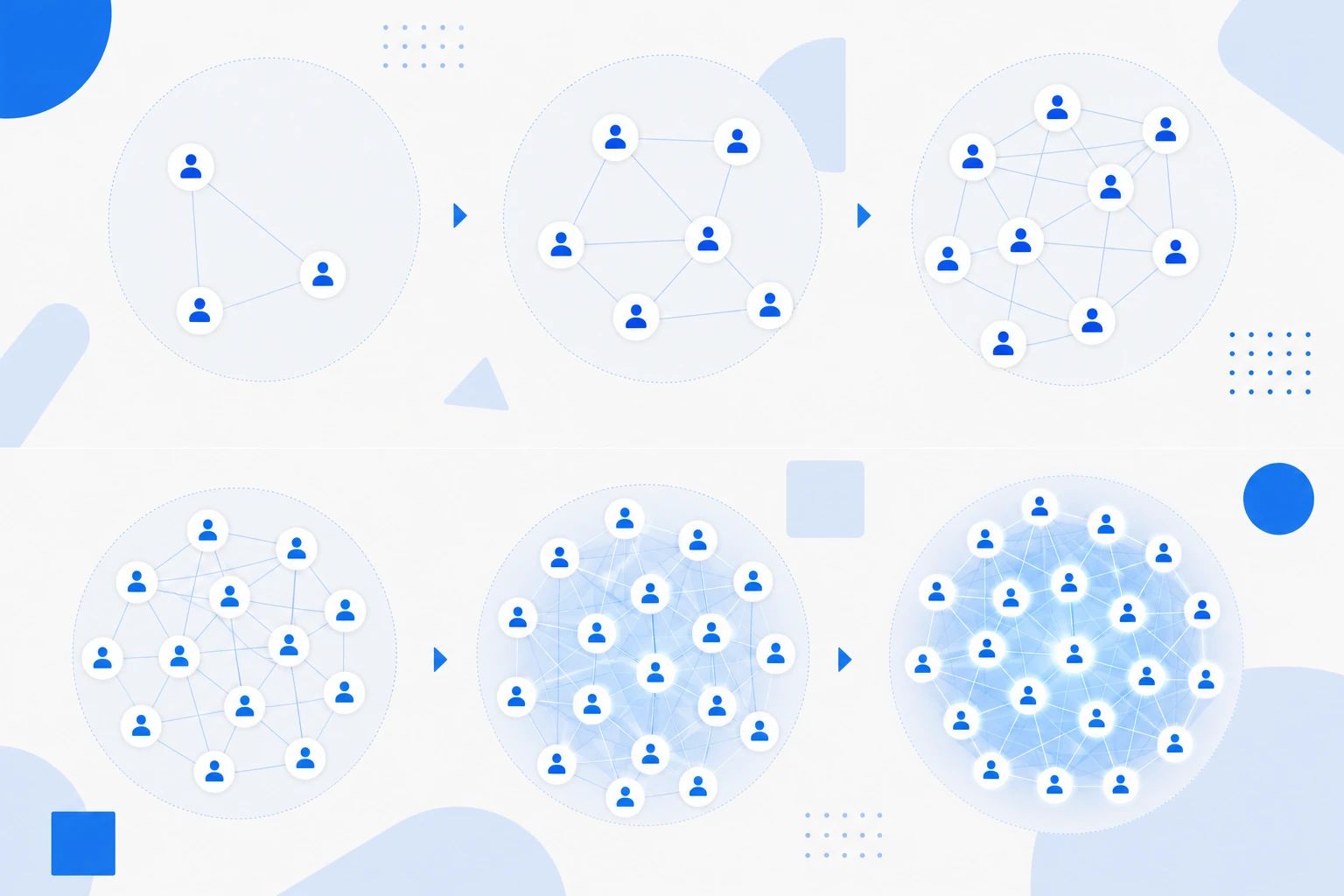
Network effects happen when each new user increases the value of the product for everyone else, creating a loop where more value attracts more users who generate even more value. They can be direct, when users interact on the same network, or indirect, when one side of the market attracts the other. They are one of the strongest moats a SaaS can have, because they get harder to copy as the network grows.
Product-led growth (PLG)
Product-led growth (PLG) is the growth strategy in which the product itself drives acquisition, activation, conversion and expansion, with little or no sales touch. The user enters through a free trial or a freemium plan, feels the value on their own and becomes a paying customer. The buying signal is no longer a filled-in form but usage: the PQL, the lead qualified by the product.