
Time to value (TTV): qué es y cómo reducir el tiempo hasta el valor
Por Tiago Costa · Actualizado el 9 de julio de 2026

Definición
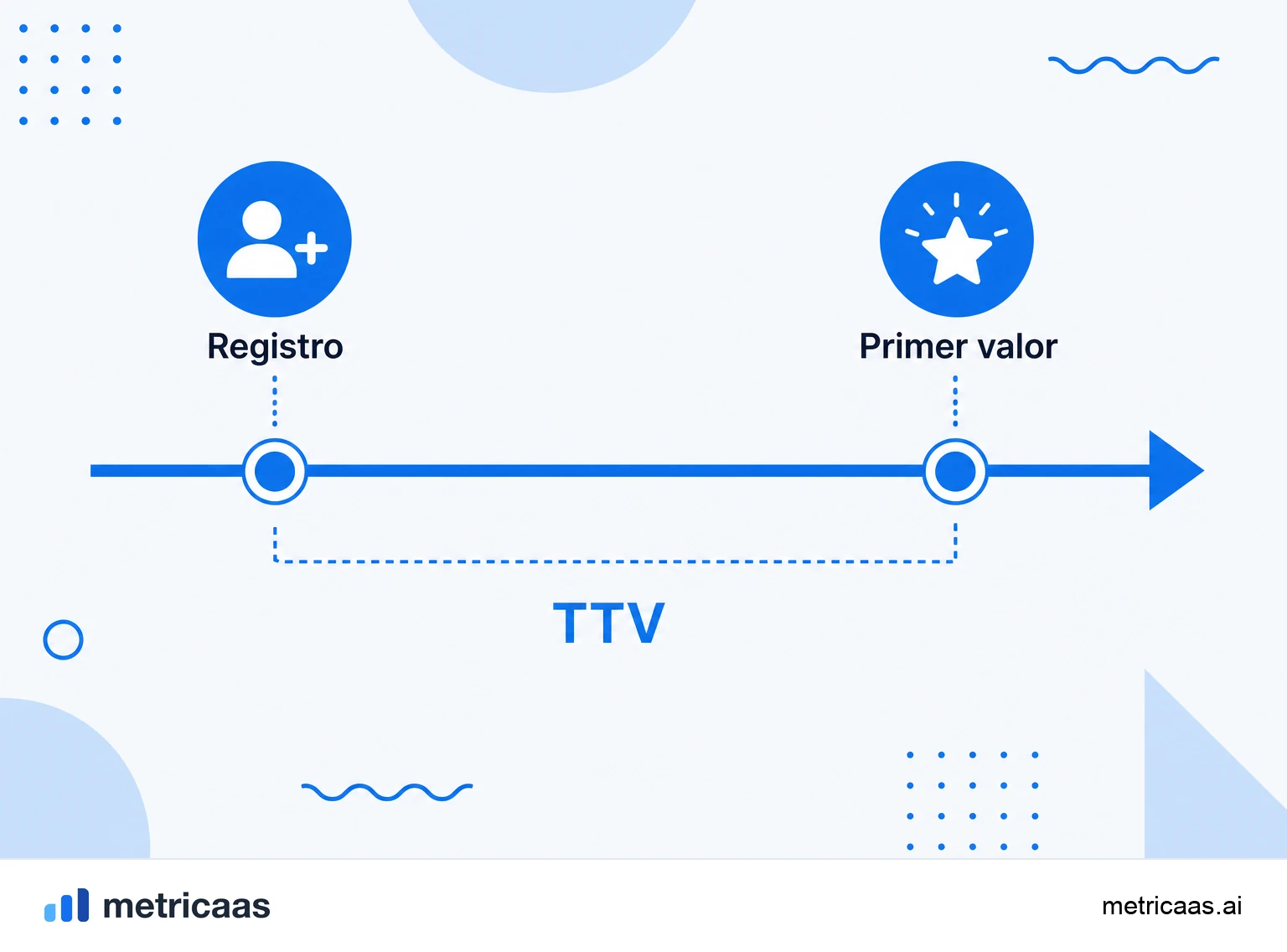
El time to value (TTV) es el tiempo entre el registro y el momento en que el cliente siente el primer valor real del producto.
- Cuenta desde el registro hasta el aha moment, no hasta el pago.
- Un TTV corto eleva la activación, la conversión de trial y la retención.
- Es el objetivo principal del onboarding.
Qué es el time to value
El time to value, o TTV, mide cuánto tarda el cliente desde el registro hasta sentir el primer beneficio real del producto. No es el tiempo hasta pagar ni hasta terminar el registro: es el tiempo hasta que la promesa de la herramienta se convierte en resultado percibido, el instante en que la persona piensa "ahora entiendo para qué sirve esto". Ese instante suele coincidir con el aha moment.
El TTV traduce en tiempo una verdad simple: nadie compra la idea de valor, la gente compra el valor sentido. Cuanto más rápido entrega el producto esa primera ganancia concreta, más fuerte es la convicción de que vale la pena seguir. Por eso el TTV se lee como un termómetro de la experiencia inicial, y no como una métrica financiera.
Time to first value y time to full value
Conviene separar dos momentos que el TTV puede medir. El time to first value es el tiempo hasta la primera señal clara de valor, la ganancia pequeña pero real que prueba la promesa. El time to full value es el tiempo hasta que el cliente usa el producto en todo su potencial, con la rutina montada y el hábito formado.
- Time to first value: el primer "esto funciona", que sostiene la activación y la decisión de seguir.
- Time to full value: el valor completo, que sostiene la expansión y la retención a largo plazo.
Ambos importan, pero en fases distintas. Al principio, acortar el time to first value es lo que salva el trial. Después, acortar el time to full value es lo que convierte a un usuario curioso en un cliente que depende del producto.
Por qué un TTV corto activa, convierte y retiene
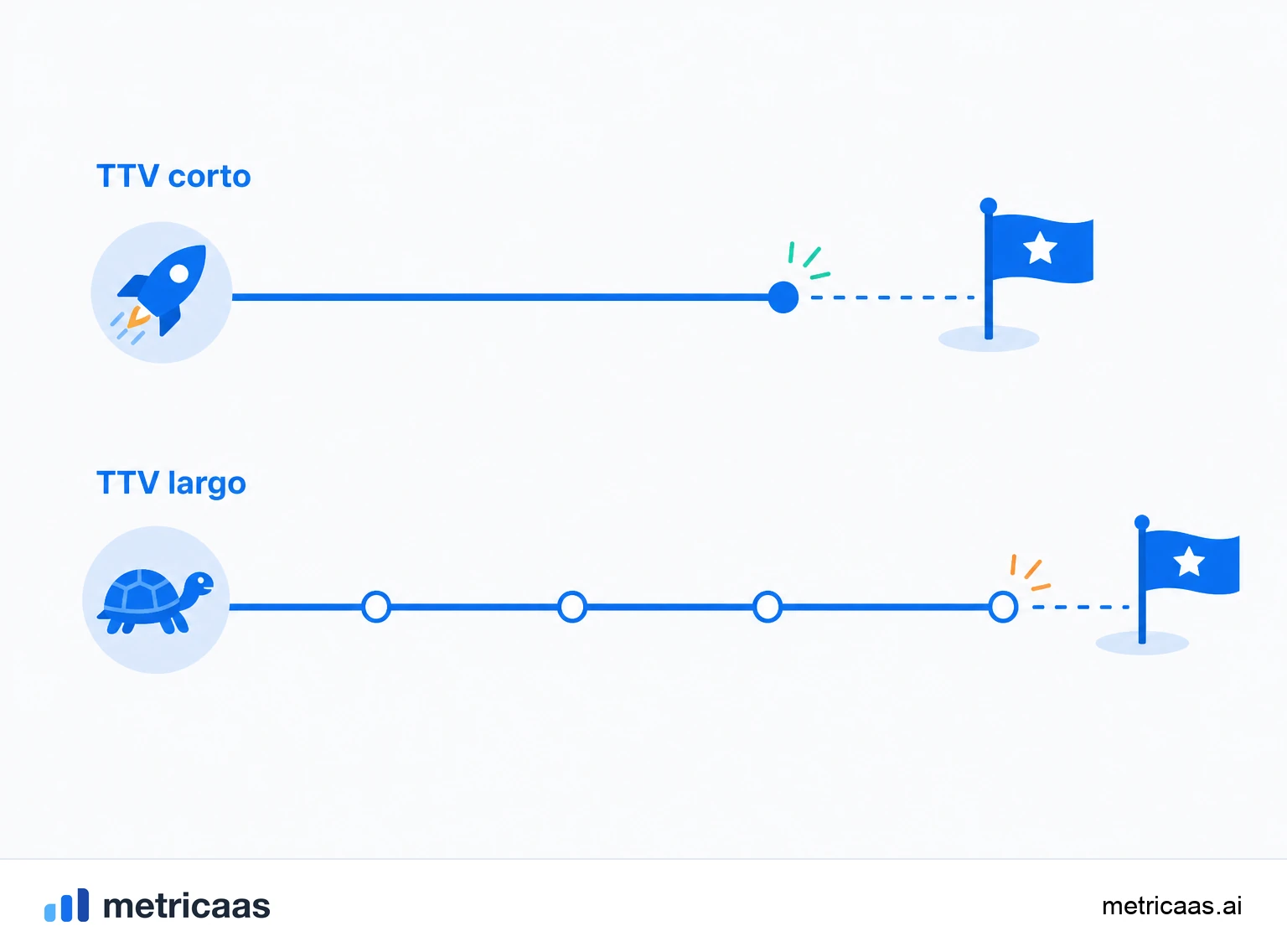
Un TTV corto actúa sobre las tres palancas iniciales del negocio a la vez. Eleva la tasa de activación, porque el cliente llega al valor antes de rendirse. Mejora la conversión del trial, porque quien ya sintió el beneficio tiene un motivo concreto para pagar. Y protege la retención, porque un comienzo que entrega valor crea hábito, y el hábito es lo opuesto al churn.
La lógica es de atención y memoria. En los primeros minutos y días, la paciencia del usuario es escasa y el recuerdo de la promesa que lo trajo sigue vivo. Si el valor llega dentro de esa ventana, la promesa se confirma. Si tarda, la ventana se cierra, la promesa se enfría y el abandono se vuelve el camino más fácil. No por casualidad, referencias de retención como SaaS Capital muestran que la retención de ingresos saludable empieza mucho antes de la renovación, en la primera experiencia.
Cómo el onboarding acorta el TTV
Reducir el TTV es la misión práctica del onboarding. Un buen onboarding no intenta mostrar todo: diseña el camino más corto posible hasta el primer valor y quita de ese camino todo lo que no sea esencial para llegar allí. Cada pantalla, campo y clic entre el registro y el aha moment se trata como un costo, no como un recurso.
- Lleva al usuario a un primer resultado real en la primera sesión, no en la quinta.
- Usa datos de ejemplo, plantillas e importaciones para que el valor aparezca antes del trabajo de configuración.
- Aplaza todo lo que no sea prerrequisito del valor, como completar el perfil, invitar al equipo o explorar ajustes avanzados.
La señal de un onboarding bien calibrado es simple: el cliente vive el momento "funcionó" antes de sentir el peso de la configuración. Cuando eso pasa, el resto del setup deja de ser una barrera y se vuelve consecuencia natural del interés ya despertado.
Cada paso antes del valor cuesta conversión
Cada paso que separa el registro del valor es un punto donde alguien se rinde. Formularios largos, verificaciones, tutoriales obligatorios y pantallas de configuración parecen inofensivos por separado, pero sumados estiran el TTV y crean un embudo de fricción donde la conversión se fuga en cada etapa.
Por eso la pregunta correcta no es "qué más podemos pedir antes de liberar el producto", sino "cuál es el mínimo absoluto para que el cliente vea valor". Cada pedido anticipado debe justificar su costo en conversión perdida. Los benchmarks de eficiencia de adquisición y activación, como los reunidos por Benchmarkit, refuerzan que las ganancias de activación al inicio del embudo se pagan a lo largo de toda la vida del cliente. Mover una etapa de fricción de antes a después del valor suele rendir más conversión que cualquier cambio en la pantalla de precios.
Cómo medir y reducir el TTV
Medir el TTV empieza por definir el evento de valor, el hito que representa el primer beneficio real en tu producto, y no una métrica de vanidad. Con ese hito definido, el TTV es la diferencia de tiempo entre el registro y el momento en que el cliente lo cruza, normalmente reportado como la mediana de la base, más honesta que el promedio porque no la distorsionan unos pocos casos extremos.
- Define el evento de valor con claridad, algo que solo ocurre cuando el cliente de verdad obtuvo una ganancia.
- Mide la mediana del tiempo hasta ese evento, por cohorte de registro.
- Encuentra el paso donde la mayoría se traba y ataca esa etapa específica.
Reducir el TTV es, entonces, un ciclo: mapear el camino hasta el valor, hallar el punto de mayor pérdida, quitar o aplazar la fricción y medir de nuevo. Cada ronda acerca el valor al registro y, con él, suben la activación, la conversión del trial y la retención que sostienen el negocio.
Preguntas frecuentes
Es el tiempo entre el registro y el momento en que el cliente siente el primer valor real del producto, el aha moment. Mide la experiencia inicial, no el tiempo hasta pagar.
Se define un evento de valor (el primer beneficio real) y se mide el tiempo entre el registro y el momento en que el cliente cruza ese hito, normalmente por la mediana de la base por cohorte.
El time to first value es el tiempo hasta la primera señal clara de valor; el time to full value es el tiempo hasta que el cliente usa el producto en todo su potencial, con el hábito formado.
El TTM es lo que tarda la empresa en lanzar un producto al mercado; el TTV es lo que tarda el cliente, tras el registro, en obtener valor de ese producto.
Diseñando el camino más corto hasta el primer valor y quitando pasos que no son prerrequisito de él, como formularios largos y ajustes avanzados, que se dejan para después del aha moment.
Porque eleva la tasa de activación, mejora la conversión de trial y protege la retención a la vez: quien siente valor pronto crea hábito y tiene menos motivos para hacer churn.
Conceptos relacionados

Onboarding
El onboarding es el proceso que lleva al nuevo cliente desde la bienvenida hasta el primer valor, el aha moment, y de ahí al hábito de uso. Un buen onboarding reduce el time to value y eleva la activación y la retención, mientras que uno deficiente es una de las mayores causas de churn temprano. Puede ser self-serve, guiado por el producto, o asistido por personas.

Aha moment
El Aha moment es el instante en que un usuario percibe por primera vez el valor real de un producto, el clic que convierte a un curioso en un usuario comprometido. Identificar qué acción concreta representa ese momento y llevar al usuario hasta ella lo más rápido posible es la base de la activación y la retención. Ejemplos clásicos son enviar el primer mensaje, invitar al primer compañero o importar los primeros datos.

Tasa de activación
La tasa de activación es el porcentaje de nuevos usuarios que llegan al primer valor real del producto (el aha moment o hito de setup) dentro de un plazo definido. Es el puente entre adquisición y retención: quien activa tiende a quedarse, quien no activa suele hacer churn. Por eso es uno de los mayores previsores de retención y el cuello de botella silencioso de la conversión de trial en SaaS.