
MVP: o que é o produto mínimo viável e como construir
Por Tiago Costa · Atualizado em 9 de julho de 2026

Definição
MVP (Minimum Viable Product, ou produto mínimo viável) é a menor versão de um produto que já entrega valor e permite aprender com usuários reais.
- Testa a hipótese central antes de construir o produto completo.
- Não é um produto capenga: é o mínimo que já resolve o problema.
- Encurta o ciclo de aprendizado rumo ao product-market fit.
O que é um MVP
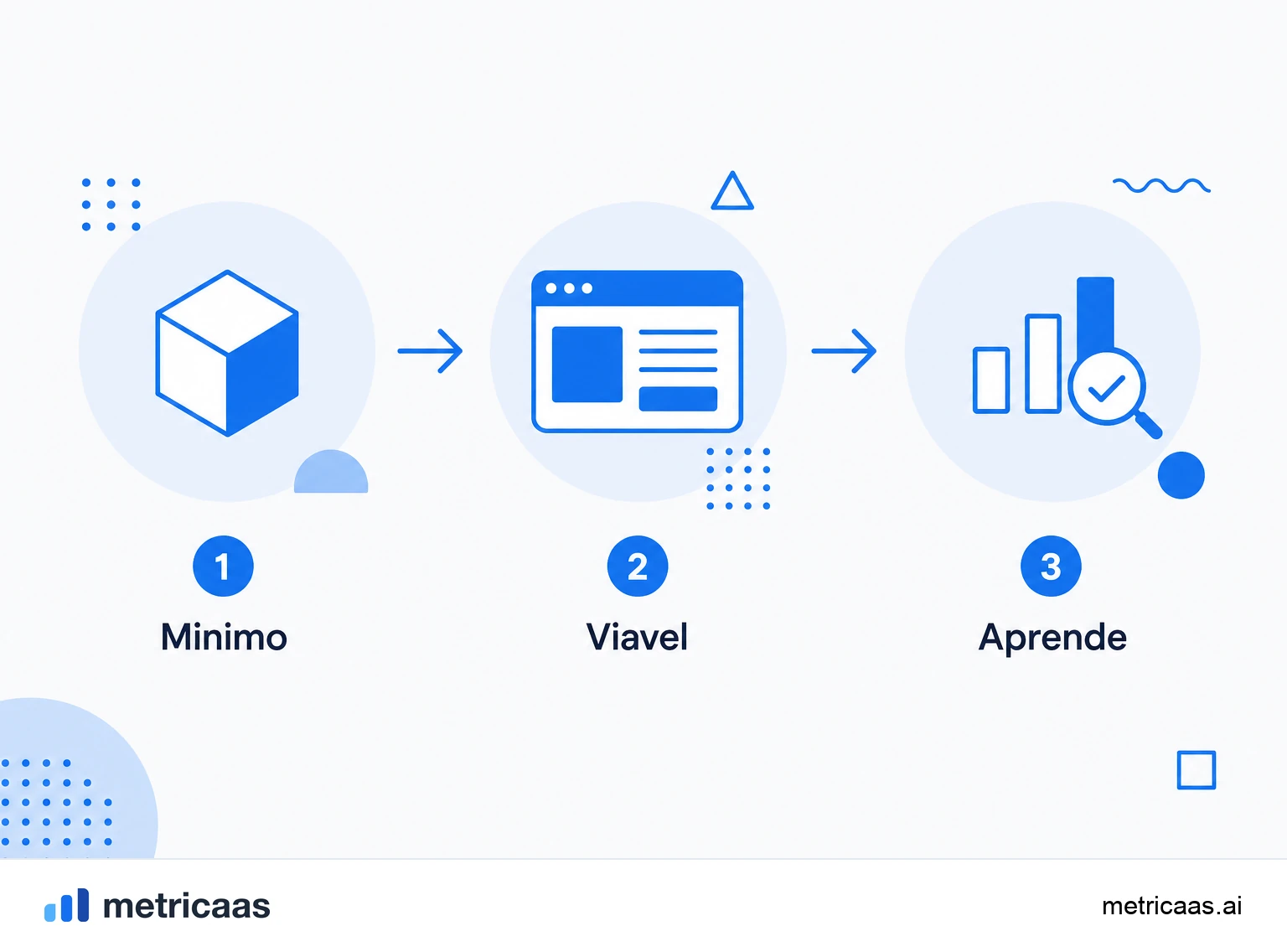
O MVP, sigla de Minimum Viable Product (produto mínimo viável), é a versão mais enxuta de um produto capaz de entregar o valor central para os primeiros usuários e, ao mesmo tempo, gerar aprendizado. A ideia foi popularizada por Eric Ries no livro The Lean Startup: em vez de passar meses construindo tudo o que se imagina, você lança o mínimo que já resolve o problema e observa como as pessoas reais reagem.
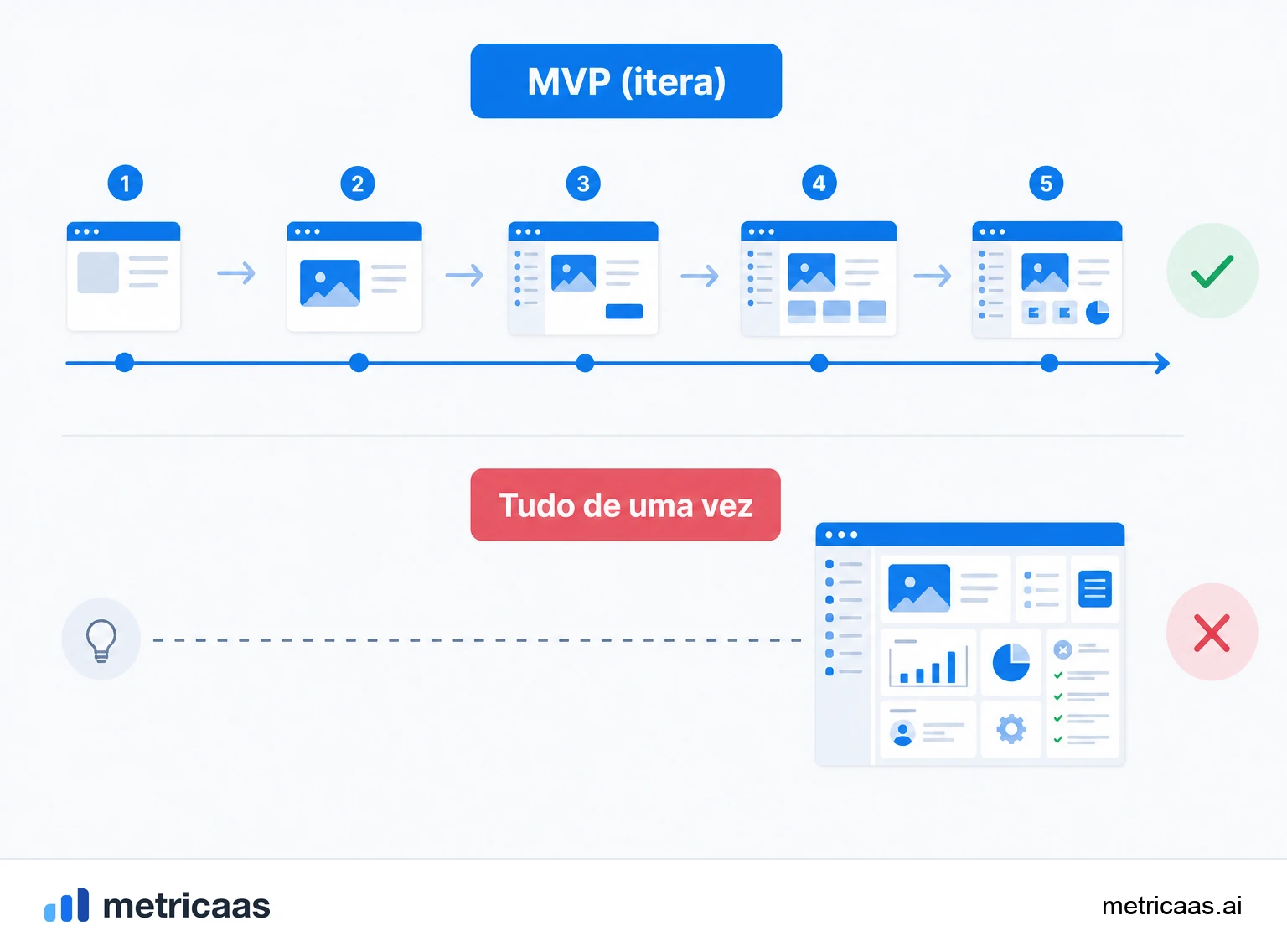
O objetivo não é economizar por economizar, e sim reduzir o risco. Cada funcionalidade a mais que você adia é uma aposta que ainda não precisou fazer. Num SaaS, isso significa colocar no ar o fluxo essencial que comprova (ou derruba) a hipótese principal com o menor esforço possível.
Como construir um MVP em 4 passos
Construir um MVP é um processo de hipótese e teste, não um mero corte de escopo. Um roteiro simples costuma seguir quatro passos:
- 1. Definir a hipótese. Qual problema você resolve, para quem, e por que a solução atual não basta.
- 2. Isolar o valor central. A única funcionalidade que, se funcionar, prova que vale a pena continuar.
- 3. Construir o mínimo. A menor versão que entrega esse valor de ponta a ponta, com qualidade suficiente para ser usada de verdade.
- 4. Medir e aprender. Colocar diante de usuários reais e observar comportamento, não só opinião.
O passo quatro é o que separa um MVP de um simples protótipo. Sem medir o que as pessoas de fato fazem, você construiu uma demonstração, não um experimento.
O que um MVP não é
O erro mais comum é confundir mínimo com malfeito. Um MVP não é um produto quebrado nem uma versão pela metade que frustra quem tenta usar. O V de viável importa tanto quanto o M de mínimo: o que você entrega precisa funcionar bem o suficiente para o usuário chegar ao valor e para você confiar no que aprendeu.
Também não é um projeto interminável. Alguns times usam o rótulo MVP para justificar meses de desenvolvimento sem nunca mostrar nada a ninguém. Se não há usuários reais interagindo e gerando aprendizado, não é um MVP: é só um produto incompleto adiando o momento da verdade.
MVP e a busca por product-market fit
O MVP existe a serviço de uma pergunta maior: existe um mercado que quer isto? Ele é a primeira ferramenta concreta na jornada rumo ao product-market fit. Transforma uma opinião interna (achamos que as pessoas querem X) em evidência de mercado (as pessoas usam, pagam e voltam).
Uma das razões mais citadas para startups fracassarem, segundo levantamentos da CB Insights, é construir algo que o mercado não quer. O MVP ataca justamente esse risco. Fundos como a Sequoia e a a16z reforçam que a validação vem antes da escala: primeiro prove que há demanda, depois invista em crescer. Métricas de comportamento, como a taxa de ativação, ajudam a ler se os primeiros usuários realmente chegam ao valor prometido.
Tipos e exemplos de MVP
MVP não é sinônimo de código. Muitas vezes a forma mais rápida de testar uma hipótese não envolve construir o produto de verdade. Alguns formatos clássicos:
- Landing page: uma página que descreve a oferta e mede quantas pessoas se cadastram ou tentam comprar.
- Concierge: a equipe entrega o serviço manualmente, nos bastidores, antes de automatizar.
- Mágico de Oz: o usuário vê algo que parece automático, mas há gente operando por trás.
- Produto de escopo único: um app que faz uma coisa só, muito bem.
Grandes empresas nasceram assim. O caso mais lembrado é o de um vídeo que demonstrava a ideia de sincronização de arquivos antes de o produto existir, usado para medir o interesse real. O que todos têm em comum é o mesmo princípio: gastar o mínimo para aprender o máximo.
Por que o MVP importa no SaaS
No SaaS, lançar rápido e aprender com dados é uma vantagem estrutural: o produto está na nuvem, atualiza continuamente e permite medir cada passo do usuário. O MVP se encaixa perfeitamente nessa lógica, porque o custo de colocar uma versão no ar e observar é baixo, e o custo de construir por anos a coisa errada é altíssimo.
O mercado só cresce: segundo a Gartner, os gastos globais com aplicações SaaS devem se aproximar de US$300 bilhões em 2025. Num mercado desse tamanho, chegar cedo com a solução certa vale mais do que chegar tarde com a solução completa. Modelos de product-led growth levam essa lógica adiante: o próprio produto, começando pelo MVP, vira o motor de aquisição e a taxa de ativação vira o termômetro de que o valor foi entregue.
Perguntas frequentes
MVP é a menor versão de um produto que já entrega o valor central e permite aprender com usuários reais. Existe para testar a hipótese principal antes de investir no produto completo.
Definir a hipótese, isolar o valor central, construir o mínimo que entrega esse valor e medir o comportamento de usuários reais para aprender.
Uma landing page que mede quantas pessoas se cadastram, um serviço entregue manualmente nos bastidores (concierge) ou um app que faz uma coisa só, muito bem. O objetivo é gastar pouco para aprender rápido.
Não. O V de viável importa tanto quanto o M de mínimo: o que você entrega precisa funcionar bem o suficiente para o usuário chegar ao valor. Mínimo não é malfeito.
O protótipo demonstra uma ideia; o MVP é usado por pessoas reais e gera dados de comportamento. O MVP é um experimento de mercado, não só uma maquete.
Ele transforma uma opinião interna em evidência de mercado. Ao observar se usuários reais usam, pagam e voltam, o MVP mostra se existe demanda antes de escalar.
Conceitos relacionados

Product-market fit (PMF)
Product-market fit (PMF) é o encaixe entre o produto e uma demanda real e forte de mercado, o ponto em que o produto passa a puxar sozinho. Os sinais são retenção que estabiliza, crescimento orgânico e boca a boca, e uma parcela grande de usuários que ficaria muito desapontada sem o produto. Sem PMF, escalar a aquisição só acelera o churn.

SaaS
SaaS (Software as a Service) é o modelo em que o software é entregue pela nuvem e cobrado por assinatura recorrente, em vez de vendido como uma licença única instalada. É multi-tenant, ou seja, uma mesma base de código serve muitos clientes, e se atualiza continuamente. Esse modelo transforma a venda pontual em receita recorrente e é o que faz métricas como MRR, churn e NRR serem centrais.

Product-led growth (PLG)
Product-led growth (PLG) é a estratégia de crescimento em que o próprio produto conduz aquisição, ativação, conversão e expansão, com pouca ou nenhuma intermediação de vendas. O usuário entra por um free trial ou por um plano freemium, sente o valor sozinho e vira cliente pagante. O sinal de compra deixa de ser o formulário preenchido e passa a ser o uso: o PQL, o lead qualificado pelo produto.