
White-label: what it is, how it works and when to use it in SaaS
By Tiago Costa · Updated on July 9, 2026

Definition
White-label is a product you develop and another company resells under its own brand, delivering it to customers as if it were its own.
- Opens a distribution channel through partners and agencies.
- Generates revenue without building the brand end to end.
- Costs less contact with the end customer and less brand control.
What white-label is
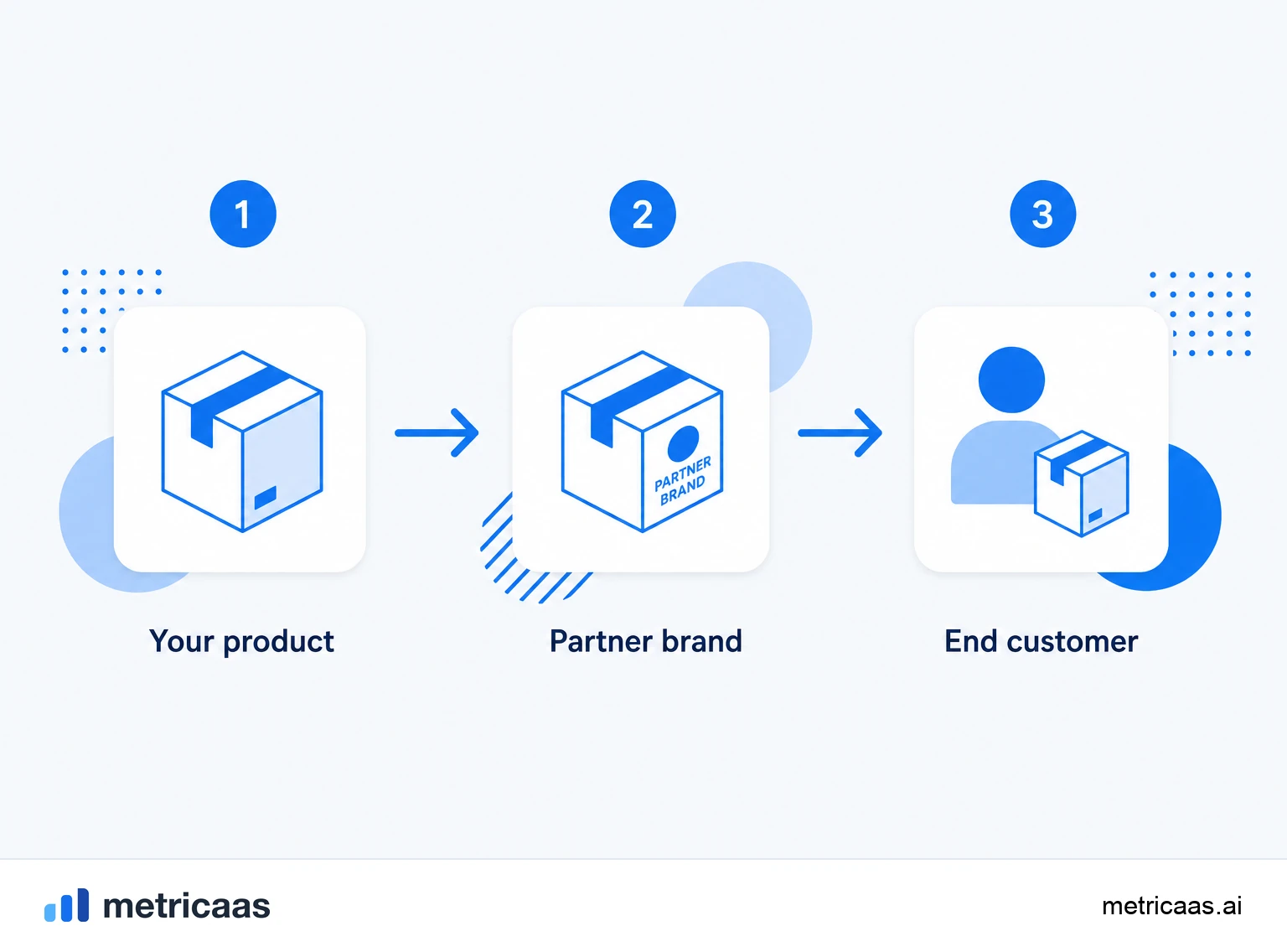
In white-label, one company develops a product and another resells it under its own brand, delivering it to its customers as if it were its own. The name comes from the idea of a blank label: the maker leaves the tag empty so the reseller can put its own visual identity, domain and logo on it.
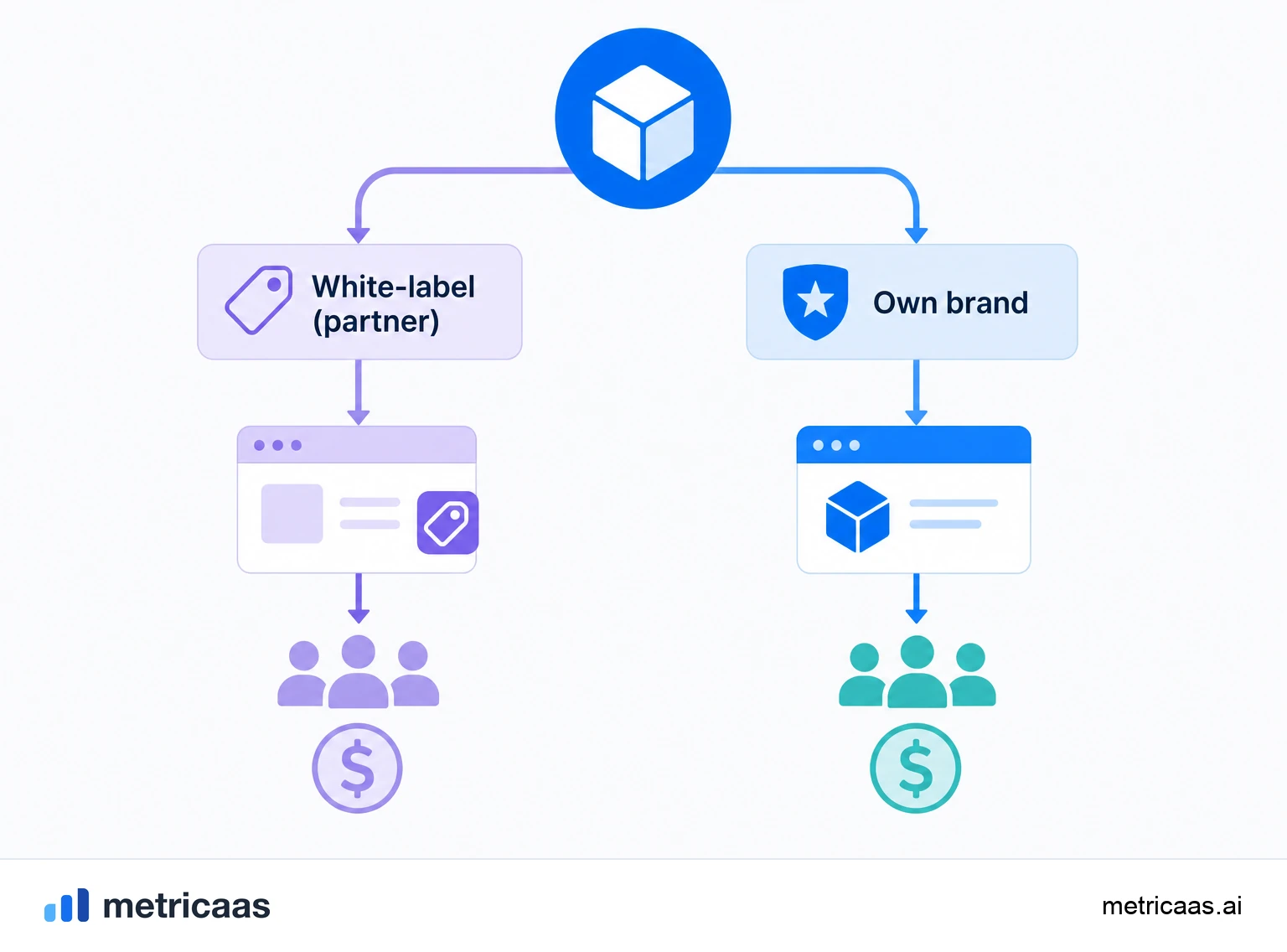
In software, a white-label SaaS is a platform that runs behind the scenes but shows up wearing the reseller's face. The agency or partner bills its own customers, owns the relationship and presents the product as theirs, while the maker stays invisible, running the technology.
How the white-label model works
The model has three roles: the maker, who builds and maintains the product; the reselling partner (an agency, a consultancy or another SaaS), who puts its own brand on it; and the end customer, who uses the service without knowing who is behind it. The partner sets price, packaging and front-line support; the maker delivers the platform, updates and infrastructure.
- Maker: develops, hosts and evolves the product.
- Reseller: applies the brand, prices it and sells to the end customer.
- End customer: uses the solution under the reseller's brand.
Payment usually comes from a per-license fee, a wholesale price with margin for the partner, or a revenue split. Contracts define the SLA, customization limits and who owns support.
White-label, OEM and private label: the differences
The three terms are neighbors and are sometimes confused. In white-label, the product is generic and sold to many resellers, each putting its own brand on the same base. In private label, the product is built to order for a single reseller, with exclusivity and more customization. OEM (original equipment manufacturer) describes a component or technology embedded inside another product, not resold on its own.
In practice, the difference between white-label and private label is the degree of exclusivity and customization. White-label is standardized and scalable, made for many partners at once; private label is dedicated, more expensive to produce and reserved for one partner. OEM shows up when your technology becomes a part of another company's technology.
Advantages and trade-offs of white-label
For the maker, white-label opens a distribution channel without having to build an entire marketing and sales operation from scratch: each partner brings its own book of customers. For the reseller, it is the chance to offer a complete solution and charge for it without spending months on development.
- Upside: scale through partners, new revenue, quick entry into markets and verticals.
- Downside: less contact with the end customer, split margin and less control over the experience and the brand.
The biggest trade-off is strategic. By staying invisible, the maker gives up the direct relationship and the data of whoever uses the product, and comes to depend on partners to grow. It is a trade of control for reach.
White-label and your SaaS metrics
The white-label channel changes how you read your metrics. Revenue starts coming from wholesale contracts with partners rather than individual subscribers, so ARPA per partner tends to be much higher than that of a self-serve customer, but concentrated in a few accounts.
This channel is also an Expansion engine: as the partner grows and takes the product to more end customers, revenue from that account rises without a new acquisition effort. Selling white-label as an Add-on to the existing plan, or packaging extra modules for partners, is a common way to grow that per-account value over time.
When to adopt white-label
White-label makes sense when there is a network of partners able to distribute the product and when the market is big enough to justify sharing margin in exchange for reach. The SaaS model is already huge and keeps growing: according to Gartner, worldwide spending on SaaS applications is set to approach $300 billion in 2025, which makes reseller channels increasingly attractive.
Before opening the channel, it is worth checking three things: whether the product is mature and stable enough to run under another brand, whether the operation can handle support and SLA for third parties, and whether the economics still work after splitting margin with the partner. Venture firms like Bessemer and consultancies like Bain often note that a partner channel scales revenue, but only when the product already stands on its own.
Frequently asked questions
It is a product that one company develops but another resells under its own brand, delivering it to customers as if it were its own. It opens a distribution channel through partners and agencies.
It is a software platform that runs behind the scenes but shows up under the reseller's brand. The partner bills its own customers and owns the relationship, while the maker stays invisible.
White-label is standardized and sold to many resellers at once; private label is built to order for a single reseller, with exclusivity and more customization.
Usually through a per-license fee, a wholesale price with margin for the partner, or a revenue split defined in the contract, along with the SLA and customization limits.
It makes sense when there is a partner network to distribute the product and the market justifies sharing margin for reach. The trade is gaining scale in exchange for less contact with the end customer and less brand control.
Related concepts
SaaS
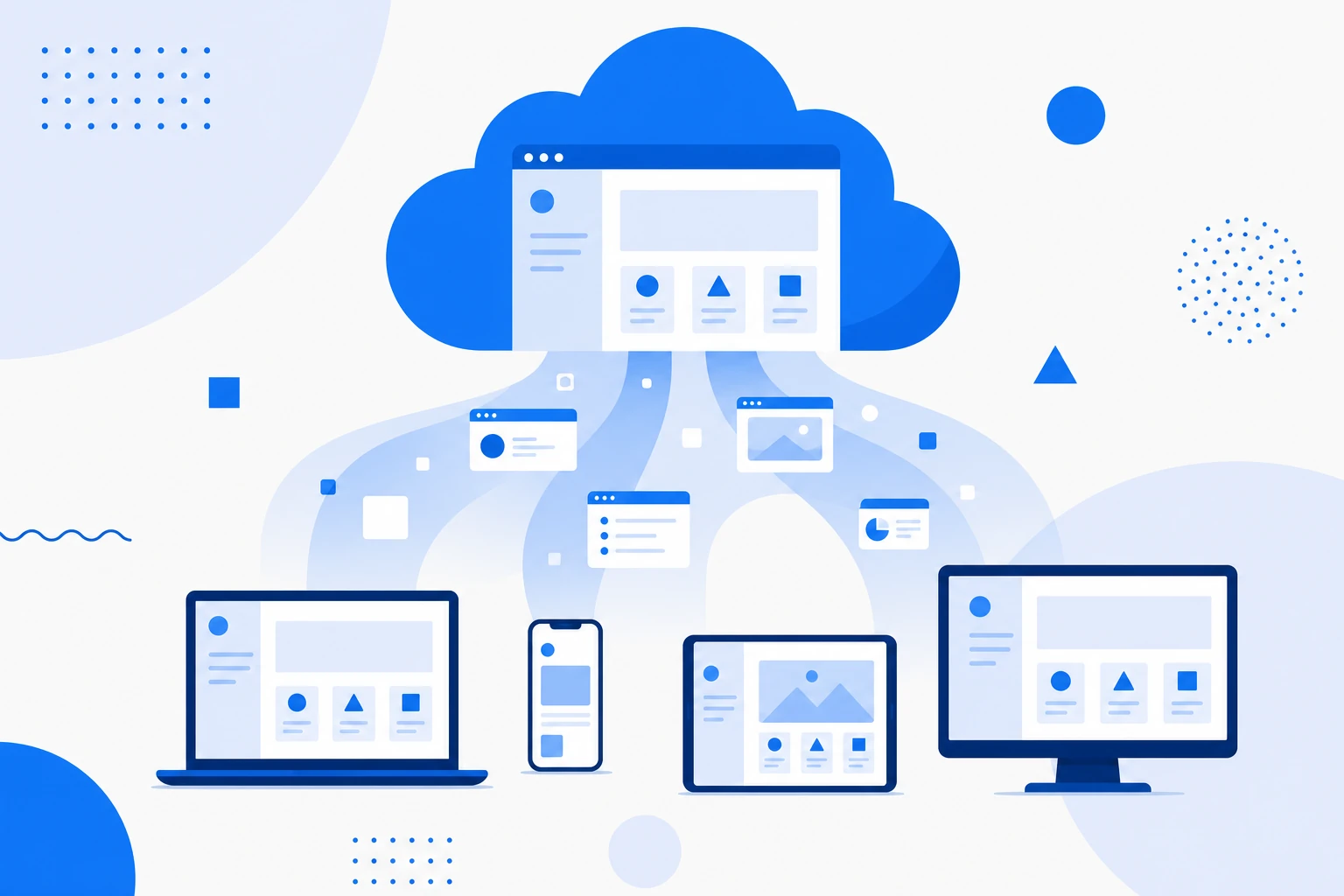
SaaS (Software as a Service) is the model where software is delivered over the cloud and billed by recurring subscription, instead of sold as a one-time installed license. It is multi-tenant, meaning a single codebase serves many customers, and it updates continuously. This model turns one-off sales into recurring revenue and is what makes metrics like MRR, churn and NRR central.

ARPA
ARPA (Average Revenue Per Account) is a SaaS recurring revenue divided by the number of active accounts. It shows how much each account generates, on average, per month or year. It is the metric that reveals the typical value of a customer and one of the main levers for growing revenue without relying only on new sales.

Expansion
Expansion (expansion revenue or expansion MRR) is the additional recurring revenue that comes from customers you already have, without relying on new sales. It comes from upsell (higher plan), cross-sell (more products), add-ons and usage growth. It is the force that pushes net revenue retention above 100% and makes the base grow on its own.