
Gross profit: what it is, how to calculate it and why SaaS margins are high
By Tiago Costa · Updated on July 9, 2026
Definition
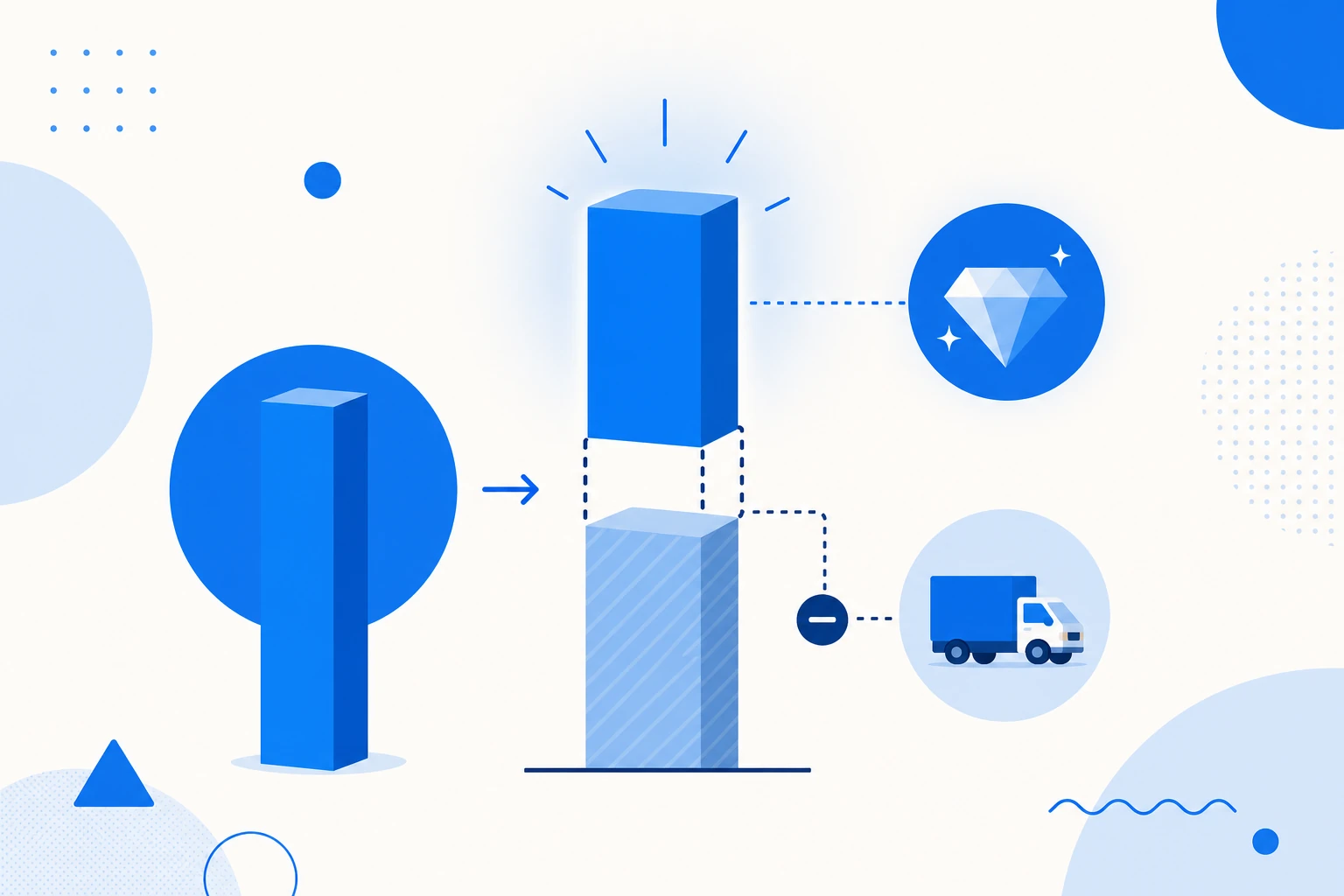
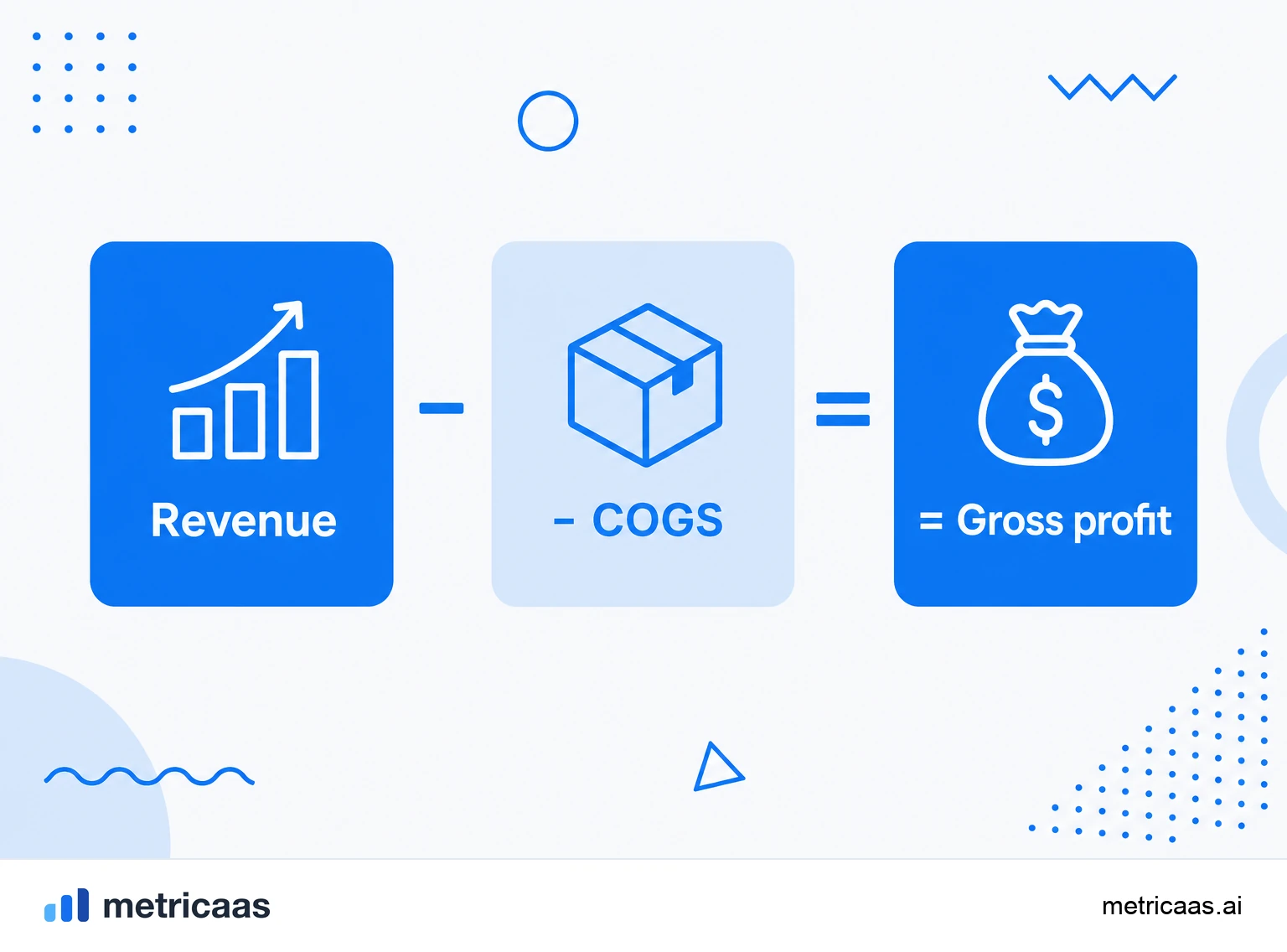
Gross profit is revenue minus COGS, the direct cost of delivering the service.
- It is the first profit line on the income statement, before expenses, interest and taxes.
- Divided by revenue, it becomes the gross margin.
- In SaaS it tends to be high, because serving one more customer costs little.
What gross profit is
Gross profit is what is left of revenue after subtracting the direct cost of producing and delivering what you sell, the COGS. It answers a simple question: of every dollar that comes in, how much remains before paying the sales team, marketing, the office and taxes? It is the first profitability filter of a business.
Note that gross profit does not measure the company final profit. It isolates only the efficiency of delivering the product. A high gross profit shows that the core of the operation generates plenty of room to fund everything else; a low gross profit means almost all the revenue is consumed just to keep the service running, leaving little for growth.
How to calculate gross profit
The formula is direct: gross profit is revenue minus the cost of the products or services sold.
- Gross profit = Revenue - COGS.
- Add up all the revenue recognized in the period.
- Subtract the COGS, the direct cost to serve: hosting and cloud infrastructure, payment processing fees, technical support and the customer success team tied to delivery.
Example: a company that earns $1 million and spends $200k on direct cost has $800k of gross profit. What goes into COGS is the part that takes judgment. Salespeople salaries, campaigns and rent are not a direct cost of delivering the service, so they stay out and appear only further down the income statement.
Gross profit on the income statement: the first profit line
On the income statement, gross profit is the first profit line, right below revenue. It is formed before any operating expense, before interest and before taxes. That is why it is called the first profit line: everything that follows starts from it.
This position at the top makes gross profit an early thermometer. If it is already weak, no saving in marketing or administration will rescue the bottom line, because the room simply does not exist from the start. If it is strong, the company has margin to invest in growth without burning cash. Dividing gross profit by revenue gives the gross margin, the percentage and comparable version of the same number.
From gross profit to net income
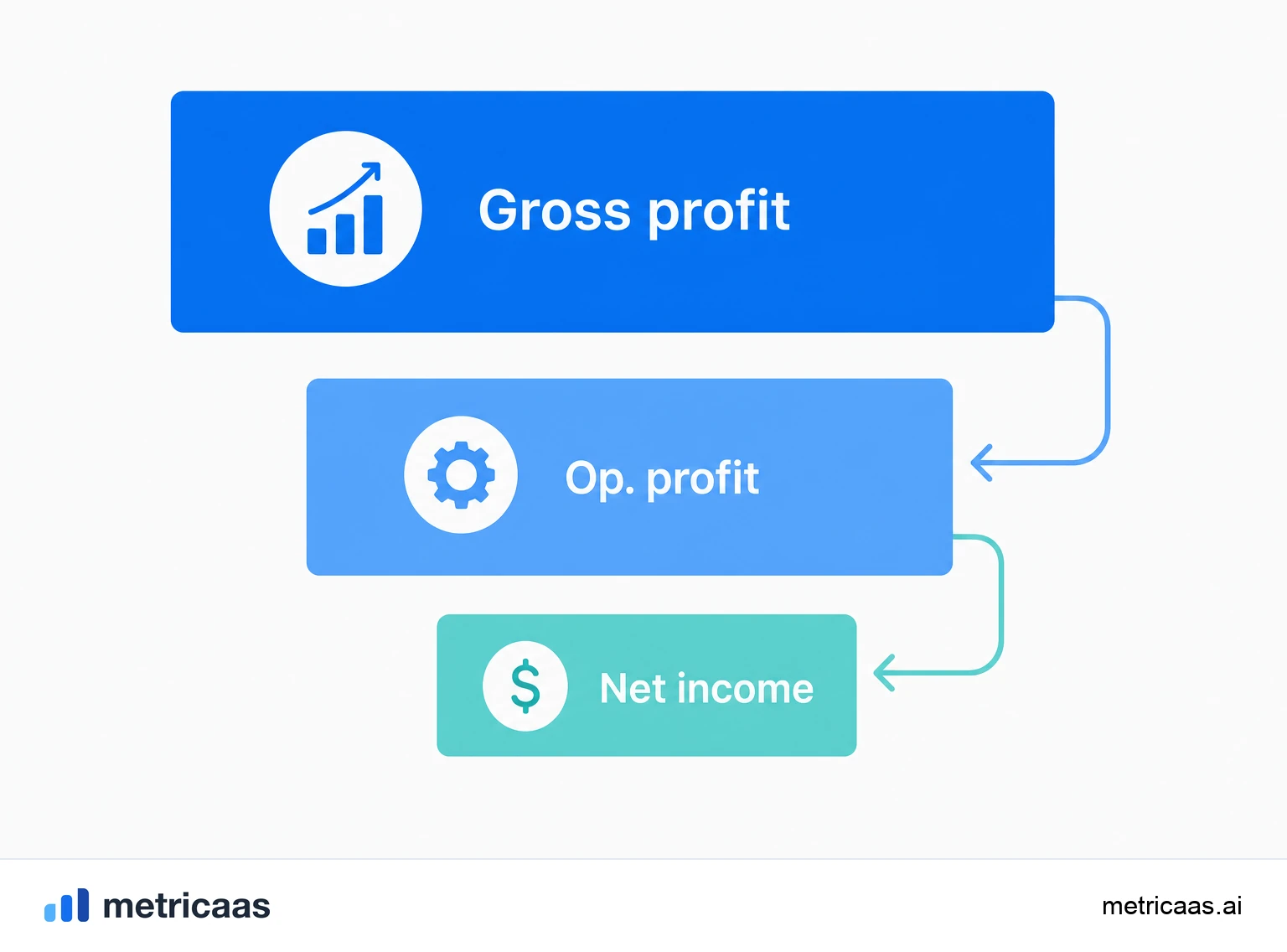
Gross profit is the starting point of a cascade. From it, the income statement keeps subtracting layers of expense until it reaches the bottom line.
- Gross profit: revenue minus the direct cost (COGS).
- Operating profit: gross profit minus the expenses of running the business (sales, marketing, R&D, administration). Divided by revenue, it becomes the operating margin.
- Net income: what is left after interest and taxes, the famous bottom line.
Confusing these levels is a classic mistake. A company can have very high gross profit and still end up in the red, if it spends too much to grow. That is why gross profit and net income tell different stories: one measures the health of the product, the other measures the health of the whole company.
Why SaaS gross profit is high
Software scales in a way almost no other sector can. Once the product is built, serving one more customer costs very little: a bit more cloud, a bit more support, and little beyond that. The direct cost does not grow at the same speed as revenue, and that is why the gross profit of a SaaS tends to be disproportionately high.
In practice, this translates into gross margins rarely seen in physical businesses. Surveys of private SaaS companies, such as the one by KeyBanc Capital Markets, show median gross margins well above 70%, and the benchmarks compiled by Benchmarkit point in the same direction. A retailer rarely gets past 30% or 40%; a healthy SaaS begins where retail ends.
Gross profit, gross margin and what to do with the number
Gross profit on its own is an absolute figure, and absolute figures are hard to compare across companies of different sizes. That is why it almost never travels alone: divide it by revenue and you get the gross margin, which turns dollars into a percentage that can be compared with competitors, with the company own past and with industry benchmarks.
Tracking gross profit over time reveals trends that revenue alone hides. If revenue grows but gross profit grows more slowly, something in the cost to serve is weighing in: poorly optimized infrastructure, bloated support or prices set too low. Watching this line is watching the base of all the profitability that comes after.
Frequently asked questions
Gross profit = Revenue - COGS. Add up all the revenue in the period and subtract the direct cost of delivering the service. Sales, marketing and administration expenses stay out.
It is what is left of revenue after subtracting the direct cost of delivering the product or service. It measures the efficiency of the core operation, before all other expenses.
Gross profit removes only the direct cost (COGS). Net income is the bottom line, after all expenses, interest and taxes. One measures the product, the other measures the whole company.
It means that, of every $100 of revenue, $20 remain as gross profit and $80 go to the direct cost to serve. For SaaS, 20% would be very low; the norm sits above 70%.
No. Revenue is all the money that comes in. Gross profit is what is left of that revenue after subtracting the direct cost of delivering the service.
Because serving one more customer costs very little once the software is built. The direct cost grows much more slowly than revenue, which lifts gross profit.
Related concepts

Gross margin
Gross margin is the share of revenue left after the direct cost of delivering the service: (revenue minus COGS) divided by revenue, as a percentage. Pure SaaS usually runs between 70% and 85% or more, and that headroom is what sustains the model, feeds LTV and funds reinvestment in growth.
COGS
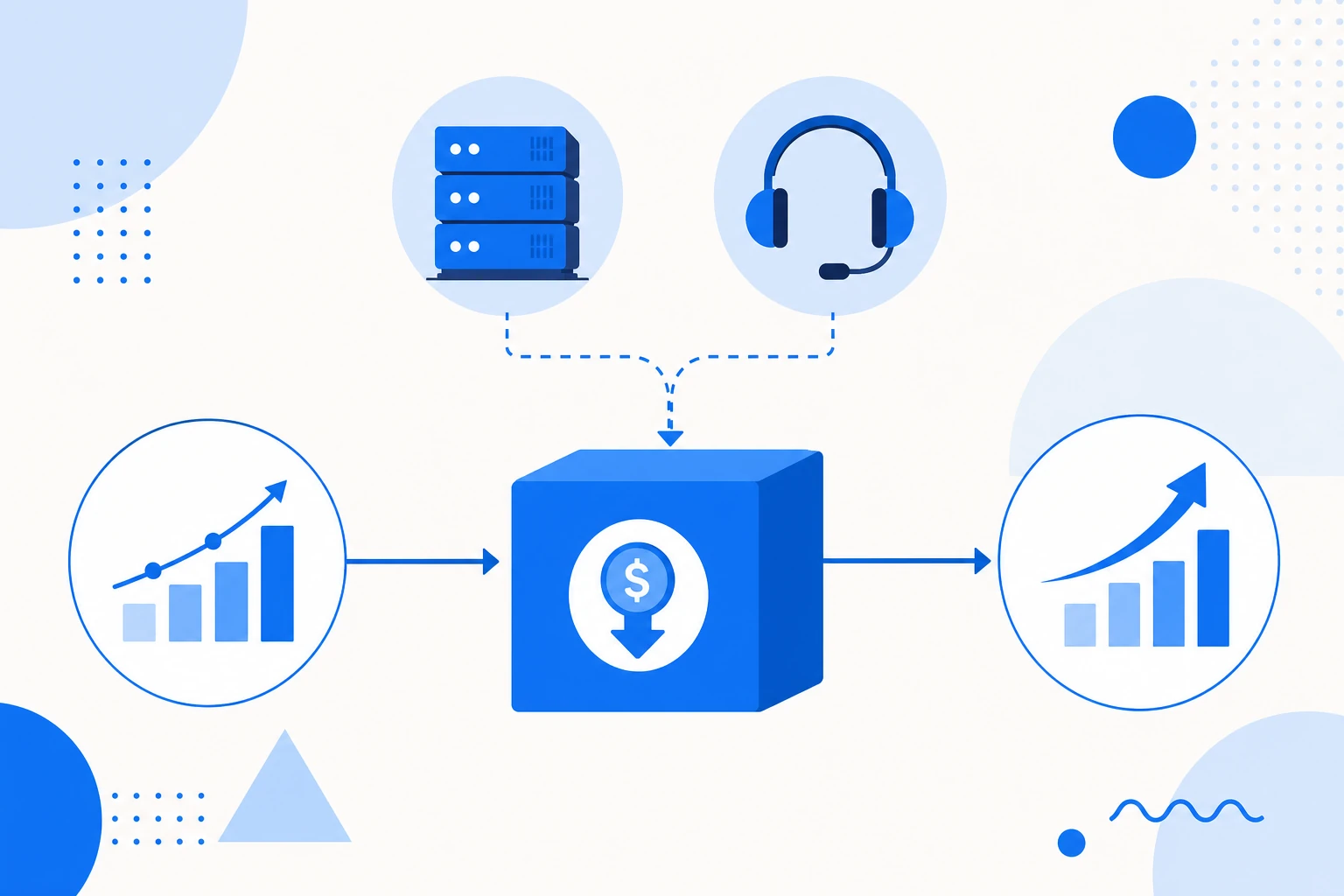
COGS (Cost of Goods Sold) is the direct cost of delivering a SaaS service: hosting and infrastructure, customer support, third-party fees and payment processing. It does not include sales, marketing or R&D, which are OpEx. It is the base of gross margin: revenue minus COGS equals gross profit.

Net income
Net income is the last line of the income statement, the so-called bottom line: what is left of revenue after subtracting all costs, operating expenses, interest and taxes. It is the final accounting profit, different from cash (because it follows accrual accounting) and from EBITDA (which excludes interest, taxes, depreciation and amortization). Many growth-stage SaaS run negative net income while reinvesting to capture market.