
Cross-sell: what cross-selling is and how to use it in SaaS
By Tiago Costa · Updated on July 9, 2026

Definition
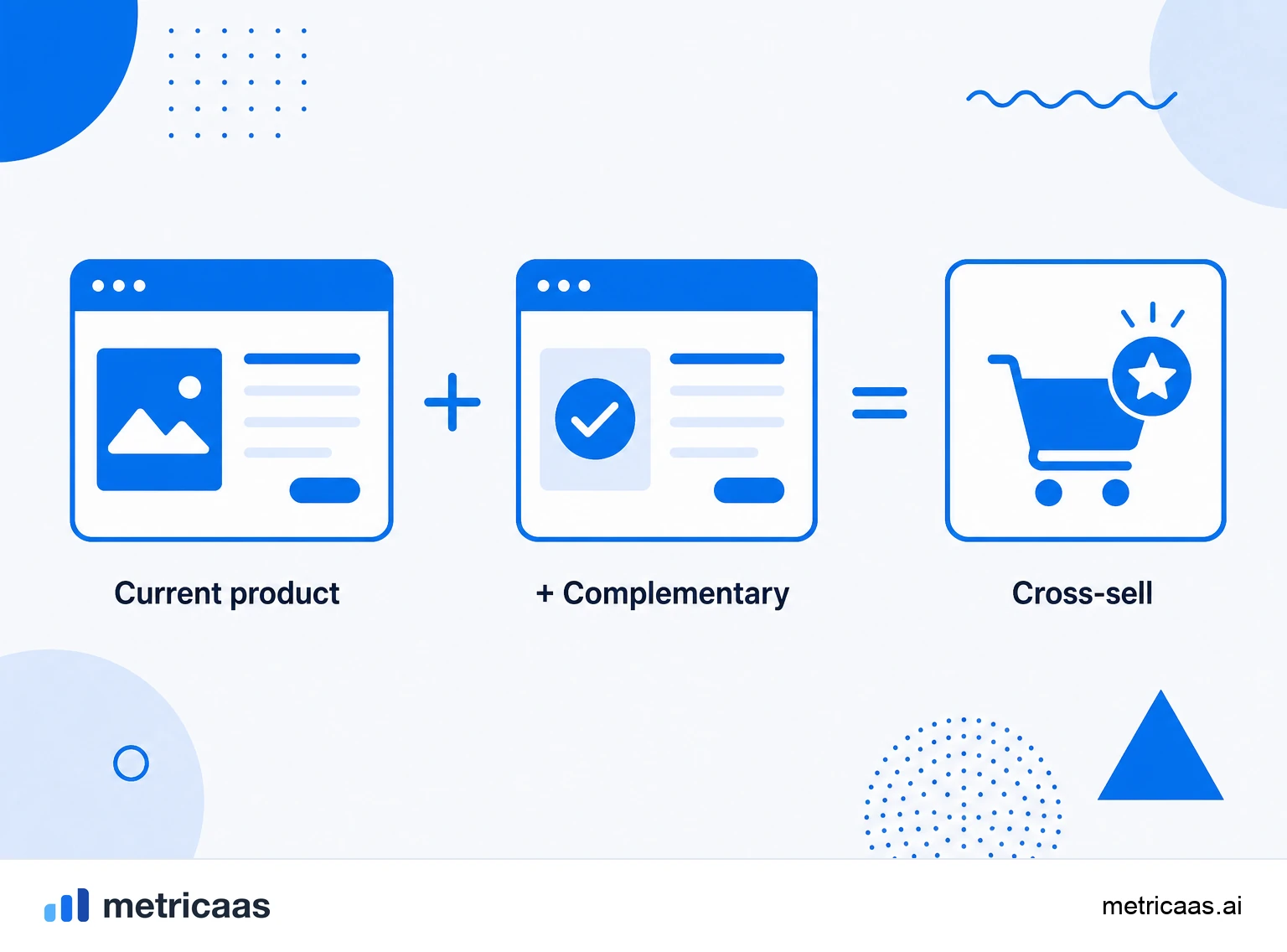
Cross-sell (cross-selling) is selling a complementary product, module or add-on to a customer who already has another.
- Grows revenue per account without a plan change.
- More products per customer usually means more retention.
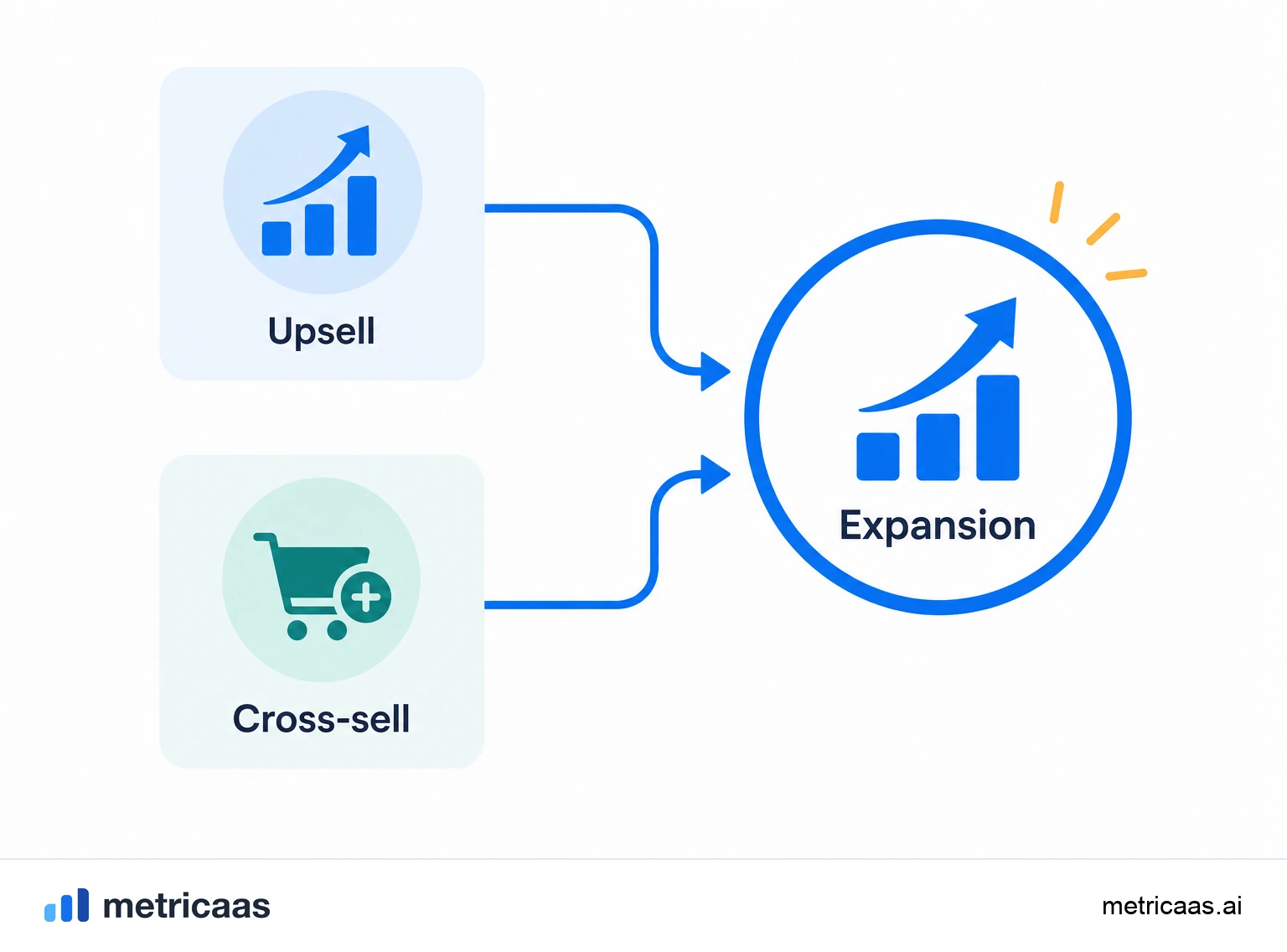
- With upsell, it forms base expansion.
What cross-sell is
Cross-sell, or cross-selling, is the practice of offering a customer who already uses one product a second, complementary item: another product, a new module or an add-on. The goal is not to convince the customer to spend more on what they already have, but to widen the set of problems they solve with you.
Think of an email marketing tool that starts selling a CRM too, or a management platform that offers a tax module. What ties these offers together is complementarity: each product makes the other worth more, and the customer wins by concentrating more of their workflow with a single vendor.
Cross-sell and upsell: what is the difference
Cross-sell and upsell are cousins, but they point in different directions. Upsell sells more of the same: a higher plan, more seats, a bigger limit within the product the customer already uses. Cross-sell sells something alongside: a different product that complements the first.
- Upsell: moves up vertically, the customer swaps for a larger or pricier version of the same line.
- Cross-sell: adds horizontally, the customer picks up a neighboring product without dropping what they had.
In practice the two levers coexist and sometimes blur in the sales pitch. What matters is their shared effect: both grow revenue from accounts that already exist, at a far lower acquisition cost than winning a new customer.
Why cross-sell increases retention
Every extra product a customer adopts creates a new tie to your company. Switching a vendor that solves one thing is easy; switching one that solves three, with data, integrations and teams already used to each, is expensive and risky. That is why more products per account usually means more retention.
This is why cross-sell is a central engine of base expansion: it adds revenue without depending on new customers and, on top of that, protects the revenue you already have. The private SaaS survey by KeyBanc Capital Markets shows the strongest companies with net revenue retention above 100%, the mark of a base that grows from within, largely through cross-sell and upsell.
The right moment for cross-sell
Offering the second product too early annoys; too late leaves money on the table. A good cross-sell springs from a concrete trigger: the customer hit a usage milestone, brushed against a limit, or developed a need that the neighboring product solves better than any alternative.
- First-product onboarding done and usage already consistent.
- Account growth: more people on the team, more volume, new use cases.
- Support or product signals asking for exactly what the complementary item does.
The rule is to offer once the customer has already gotten value from the first product. Cross-sell pushed before that becomes noise; offered at the right moment, it reads like the obvious next piece of the puzzle.
How to build a portfolio that reinforces itself
There is no cross-sell without products to cross. The foundation is a portfolio whose items reinforce each other: every new product makes sense for whoever already uses the previous one and, ideally, works better when combined with it.
- Modules that share the same data and avoid rework.
- Add-ons that extend the core product without a new learning curve.
- Products that tackle neighboring stages of the same workflow.
Portfolios like this create a natural adoption path, where one product opens the door to the next. It is the opposite of a catalog of loose items, where nothing pulls anything and every sale starts from zero.
How to measure cross-sell
Cross-sell does not read from a single number. The most useful angles are the number of products per account and how it evolves, the attach rate (the share of one product customers who adopt the complement) and the effect on average revenue per account.
- Products per account: how many items the average customer uses, and whether that rises over time.
- Attach rate: of every ten customers of product A, how many also adopt B.
- Effect on ARPA: how much cross-sell lifts the average revenue per account.
There is no single, official cross-sell metric; it reads from the set. When all three move together, you have the evidence that the base is genuinely buying more than one product.
Frequently asked questions
Cross-selling is selling a customer who already has one product a second, complementary product, module or add-on. For example, an email marketing tool that also offers a CRM.
Offer the complementary product at the right moment, once the customer has gotten value from the first and shows a usage trigger. It relies on a portfolio of products that reinforce each other.
Upsell sells more of the same (a bigger plan, more seats). Cross-sell sells something alongside: a different, complementary product, with no plan change.
There is no single number. Cross-sell is read from the set: products per account, attach rate and the effect on ARPA.
Yes. The more products a customer uses, the more expensive and risky it is to leave, so more products per account usually lower churn and sustain base expansion.
Related concepts

Upsell
Upsell means moving a customer who already uses your product to a higher plan or more of the same product: more seats, a higher tier, a larger limit. It is one of the main drivers of expansion and of the revenue that pushes NRR above 100%. Unlike cross-sell, which sells a complementary product, upsell deepens the use of what the customer already bought.

Expansion
Expansion (expansion revenue or expansion MRR) is the additional recurring revenue that comes from customers you already have, without relying on new sales. It comes from upsell (higher plan), cross-sell (more products), add-ons and usage growth. It is the force that pushes net revenue retention above 100% and makes the base grow on its own.

ARPA
ARPA (Average Revenue Per Account) is a SaaS recurring revenue divided by the number of active accounts. It shows how much each account generates, on average, per month or year. It is the metric that reveals the typical value of a customer and one of the main levers for growing revenue without relying only on new sales.