
Aha moment: o que é e como levar o usuário até ele
Por Tiago Costa · Atualizado em 9 de julho de 2026

Definição
O Aha moment é o instante em que o usuário percebe pela primeira vez o valor real de um produto, o clique que separa quem só experimentou de quem fica.
- É uma ação concreta e mensurável, não um sentimento vago.
- Quanto mais rápido o usuário chega até ele, maior a chance de ativação.
- Produtos que aceleram esse momento retêm mais e perdem menos clientes.
O que é o Aha moment
O Aha moment (ou momento aha) é o ponto exato em que uma pessoa deixa de ver seu produto como mais uma aba aberta e passa a entender, de forma concreta, por que ele vale a pena. É o instante do "agora entendi", quando a promessa da página de vendas vira uma experiência real. Não é um discurso de marketing nem uma tela bonita: é o momento em que o benefício central do produto acontece de verdade para aquele usuário.
Vale separar o Aha moment do chamado wow moment. O wow moment é a surpresa positiva, o encantamento estético ou emocional; o Aha moment é a compreensão do valor prático. Um usuário pode se encantar com a interface e ainda assim nunca perceber para que o produto serve. O que move a retenção é o segundo, não o primeiro.
Como identificar o Aha moment do seu produto
O Aha moment não se adivinha no quadro branco, se descobre nos dados. A técnica clássica é comparar o comportamento de quem ficou com o de quem abandonou, procurando a ação que os usuários retidos realizam nos primeiros dias e os que dão churn não realizam. Essa ação, quando fortemente correlacionada com a permanência, é a principal candidata a Aha moment.
Alguns cuidados evitam conclusões erradas:
- Procure correlação com retenção real, não com métricas de vaidade como número de logins.
- Defina um limiar claro, do tipo "criou X projetos na primeira semana", e não uma ação genérica.
- Valide a relação de causa: teste se empurrar os usuários para essa ação de fato melhora a taxa de ativação e a retenção, e não só se ela coincide.
Exemplos de Aha moments
O Aha moment é sempre específico do produto, mas os casos mais citados ajudam a reconhecer o padrão: é sempre uma ação simples que entrega o valor central pela primeira vez.
- Mensageria e colaboração: enviar a primeira mensagem ou trocar um número mínimo de mensagens dentro de uma equipe.
- Redes sociais: seguir um número mínimo de contas nos primeiros dias, o que faz o feed finalmente ficar interessante.
- Ferramentas de dados: importar os primeiros dados ou conectar a primeira fonte, quando os gráficos vazios viram um painel útil.
- Produtos de armazenamento: subir o primeiro arquivo e acessá-lo de outro dispositivo.
- Ferramentas de trabalho: convidar o primeiro colega, o que transforma uma conta solo num espaço compartilhado.
Repare no que esses exemplos têm em comum: são ações que só fazem sentido dentro do produto e que, uma vez feitas, deixam o valor evidente. Descobrir a sua versão dessa ação é metade do trabalho.
Aha moment, ativação e onboarding
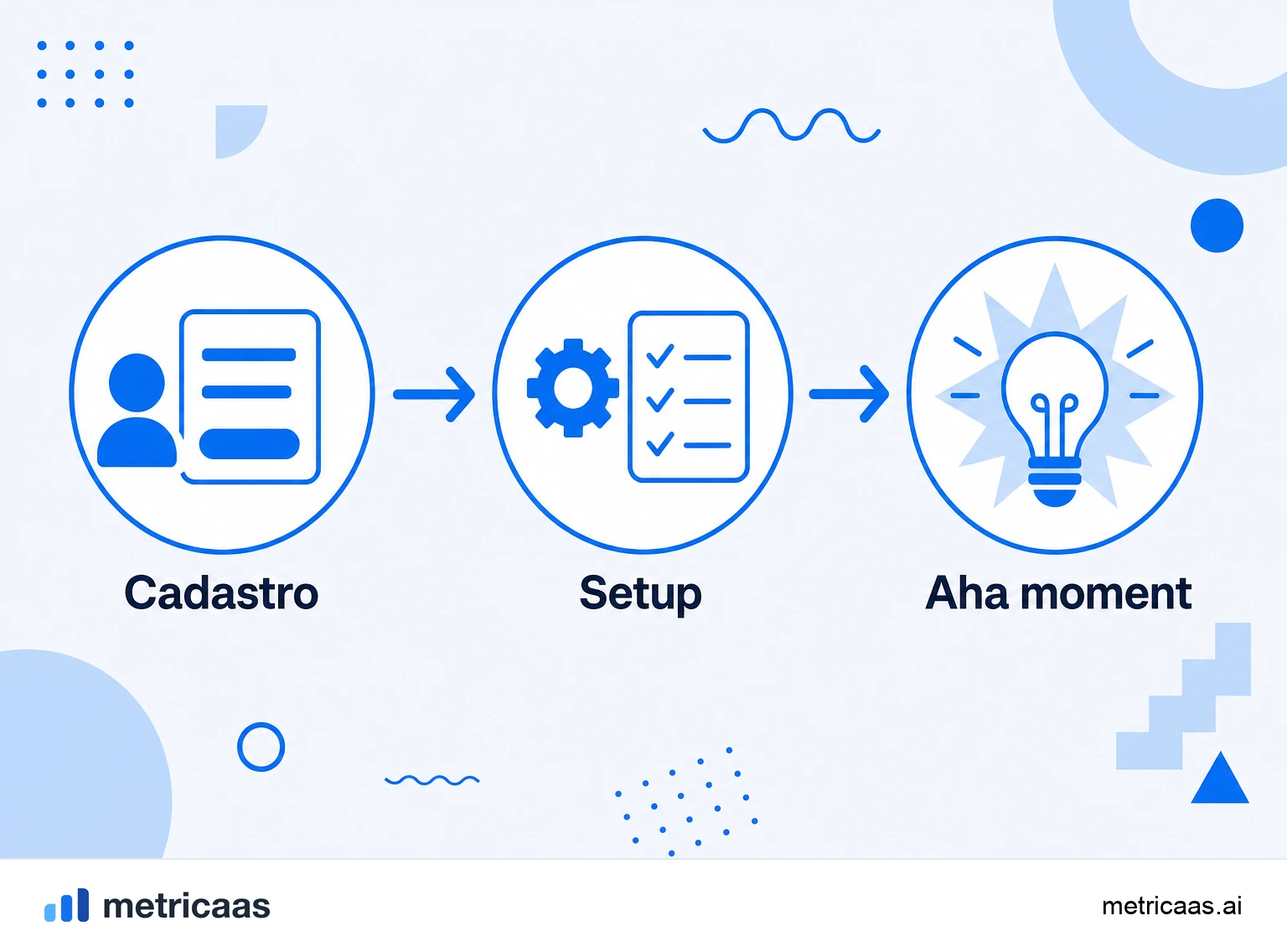
O Aha moment é o coração de três conceitos que costumam ser confundidos. O onboarding é o caminho guiado que você desenha para conduzir o usuário até lá. A taxa de ativação mede a fração de usuários que chegaram ao Aha moment. E o time to value (TTV) mede quanto tempo eles levam para chegar. Em outras palavras, o Aha moment é o destino, e esses três descrevem a estrada.
Essa distinção é prática, não acadêmica. Se você não sabe qual ação é o Aha moment, seu onboarding vira um passeio turístico por funcionalidades, sem foco. Quando você sabe, cada tela do onboarding pode ser cobrada por uma pergunta só: isso aproxima ou afasta o usuário da ação que gera o clique? Reduzir o time to value é, na prática, encurtar a distância até o Aha moment.
Aha moment e retenção
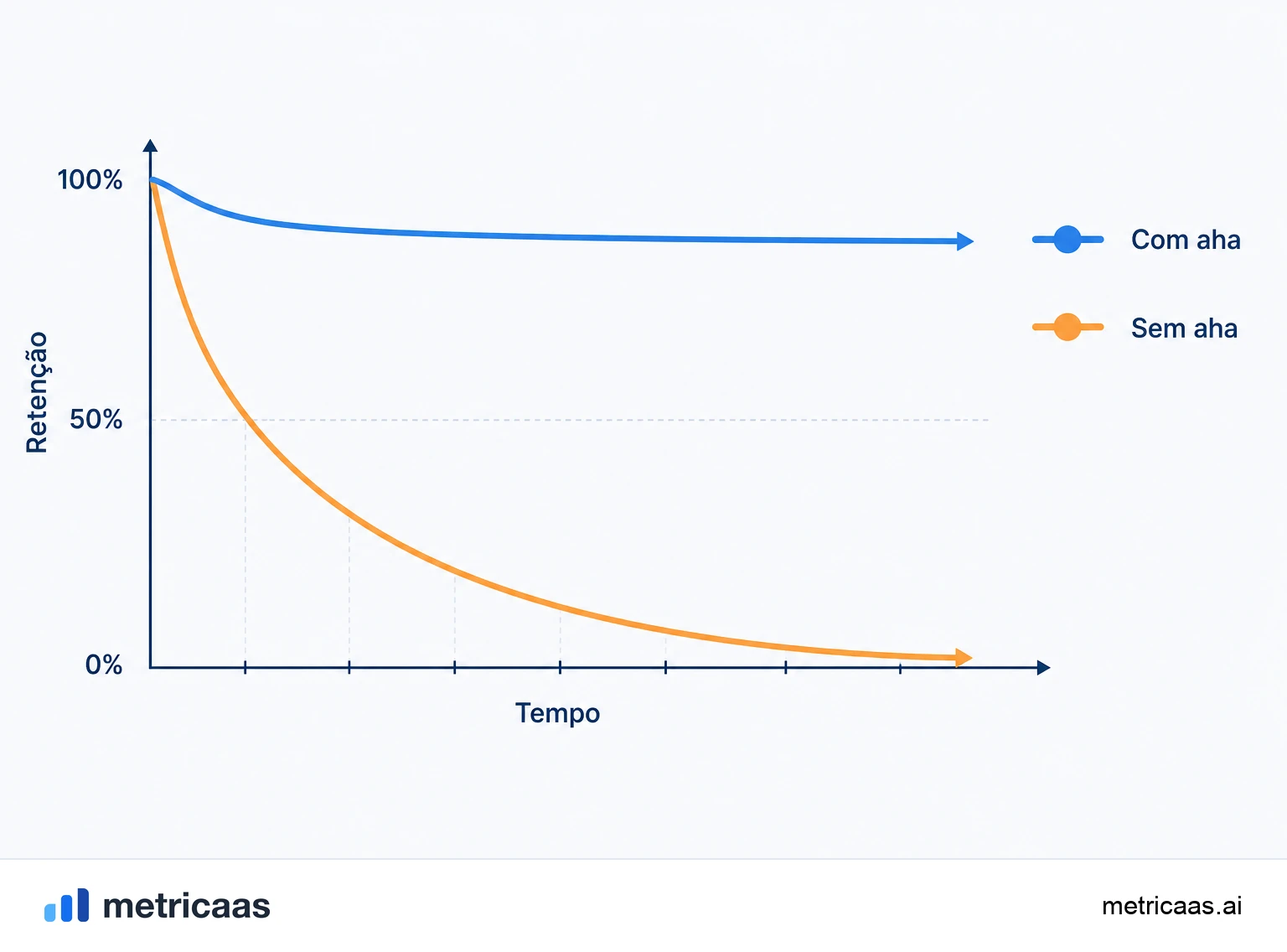
O motivo de tanta atenção ao Aha moment é simples: quem percebe o valor cedo tende a ficar, e quem não percebe some. A maior parte do churn em produtos de autoatendimento acontece justamente com quem se cadastrou e nunca chegou ao momento de valor. Não é falta de necessidade, é falta de experiência do benefício.
Pesquisas de referência do setor reforçam esse elo entre valor percebido cedo e permanência. Estudos de retenção da SaaS Capital mostram que reter receita e clientes é o que separa as empresas SaaS saudáveis das demais, e essa retenção começa na primeira semana de uso, muito antes da renovação. Os benchmarks compilados pela Benchmarkit apontam na mesma direção: ativação e onboarding bem executados aparecem entre os fatores que sustentam crescimento eficiente. Nomes como Bain e OpenView já documentaram o mesmo padrão.
Como acelerar o Aha moment
Depois de identificar a ação que define o Aha moment, todo o trabalho de produto vira uma pergunta: como levar mais usuários até ela, e mais rápido? Reduzir o time to value costuma render mais do que qualquer campanha de aquisição, porque conserta o furo por onde os novos usuários vazam.
- Remova passos: cada campo de formulário e cada tela antes do valor é um ponto de desistência.
- Mostre valor antes de pedir esforço: dados de exemplo, modelos prontos e importações automáticas encurtam o caminho.
- Guie com foco: um onboarding que leva direto à ação-chave bate um tour que mostra tudo.
- Meça e itere: acompanhe a taxa de ativação e o time to value como métricas de produto, não como curiosidade.
O resultado composto é poderoso: cada ponto ganho de ativação melhora a retenção, que sustenta a receita recorrente. O Aha moment é pequeno em duração e enorme em consequência.
Perguntas frequentes
O Aha moment é o instante em que o usuário percebe pela primeira vez o valor real de um produto. É uma ação concreta, como enviar a primeira mensagem ou importar os primeiros dados, que transforma um curioso em usuário engajado.
Comparando o comportamento de quem fica com o de quem abandona e encontrando a ação, feita nos primeiros dias, que se correlaciona com a retenção. Depois vale testar se empurrar os usuários a ela melhora de fato a ativação.
O wow moment é a surpresa ou o encantamento, muitas vezes estético. O Aha moment é a compreensão do valor prático do produto. É o segundo que sustenta a retenção.
Não. O Aha moment é o momento de valor; a taxa de ativação é a métrica que mede quantos usuários chegaram até ele. Um é o destino, o outro é o placar.
Removendo passos antes do valor, mostrando resultado com dados de exemplo e modelos prontos, e desenhando um onboarding focado na ação-chave. Reduzir o time to value é o objetivo.
Porque a maior parte do churn acontece com quem nunca percebeu o valor. Quem chega ao Aha moment cedo tende a ficar; quem não chega tende a abandonar.
Conceitos relacionados

Taxa de ativação
A taxa de ativação é o percentual de novos usuários que atingem o primeiro valor real do produto (o aha moment ou marco de setup) dentro de um prazo definido. É a ponte entre aquisição e retenção: quem ativa tende a ficar, quem não ativa costuma virar churn. Por isso é um dos maiores previsores de retenção e o gargalo silencioso da conversão de trial em SaaS.

Onboarding
Onboarding é o processo que leva o novo cliente das boas-vindas ao primeiro valor, o aha moment, e dali ao hábito de uso. Um bom onboarding reduz o time to value e eleva a ativação e a retenção, enquanto um onboarding fraco é uma das maiores causas de churn precoce. Pode ser self-serve, guiado pelo produto, ou assistido por pessoas.

Time to value (TTV)
Time to value (TTV) é o tempo entre o cadastro e o momento em que o cliente obtém o primeiro valor real do produto, o chamado aha moment. Quanto menor esse intervalo, maior a chance de ativar, converter o trial e reter. Encurtar o TTV é um dos alvos centrais do onboarding, porque cada passo a mais antes do valor derruba a conversão.